
Residential Drainage Solutions for Florida Yards
A heavy St. Augustine rain can turn a small low spot into a muddy mess before the afternoon is over. When water lingers around turf, planting beds, walkways, or your foundation, it is more than an inconvenience. The right residential drainage solutions move excess water where it belongs while protecting the lawn, landscape, and hard-earned curb appeal you enjoy year-round.
Northeast Florida homeowners deal with intense seasonal storms, high humidity, sandy soil in many areas, and properties that may have been graded long before a new patio, pool, garden bed, or addition changed the way water flows. A drainage plan that works well for one yard may not solve the problem next door. That is why the best results start with looking at your specific property, not choosing a one-size-fits-all fix.
Why Yard Drainage Problems Need Prompt Attention
Standing water is often the first warning sign, but it is not the only one. You may notice grass thinning in a wet corner, mulch washing out after storms, puddles near downspouts, soil collecting on the driveway, or water flowing toward the house. These conditions can weaken turf roots, create mosquito-friendly areas, and make routine mowing harder than it needs to be.
Water can also create slow damage that is easy to overlook. Soil erosion can expose roots and shift landscape borders. Constantly wet beds can stress plants that prefer better drainage. Water against a slab or crawlspace should always be taken seriously, especially when it happens repeatedly after ordinary rainfall.
The goal is not to make every inch of the property bone dry. Florida landscapes need water, and healthy lawns depend on a balanced irrigation schedule. The goal is to prevent excess runoff and pooling from staying in the wrong places long enough to damage your property.
Residential Drainage Solutions That Fit the Yard
A professional assessment should identify where water starts, where it travels, and where it can safely discharge. That process helps avoid a common mistake: fixing a puddle in one part of the yard only to send water directly toward a neighbor’s property, a fence line, or another problem area.
Grading and Swales
For broad, shallow drainage issues, adjusting the grade may be the most effective answer. Proper grading encourages water to flow away from the home and through the yard in a controlled direction. A swale is a gently sloped channel that guides stormwater across the property without looking like a ditch.
This option works especially well when the yard has enough open space and the drainage issue covers a wider area. It may require sod replacement, landscape restoration, or irrigation adjustments after the work is done, but it can provide a natural-looking long-term solution.
French Drains for Saturated Areas
A French drain is typically a gravel-filled trench with perforated pipe that collects water below the surface and carries it to an approved outlet. It is often a smart choice for soggy lawn sections, wet planting beds, and areas along fences where water tends to settle.
French drains are effective, but installation details matter. The trench needs the correct slope, pipe, gravel, and outlet location. If the system is too shallow, poorly pitched, or allowed to fill with soil and debris, it will not perform as intended. In a Florida yard, drainage work should also be planned around existing irrigation lines, utility locations, tree roots, and the lawn’s future maintenance needs.
Catch Basins and Channel Drains
Catch basins are surface-level collection boxes placed where water naturally pools. They connect to solid drainage pipe and move water away from patios, driveways, downspouts, or low spots in the landscape. They are particularly useful when runoff collects quickly during a hard storm.
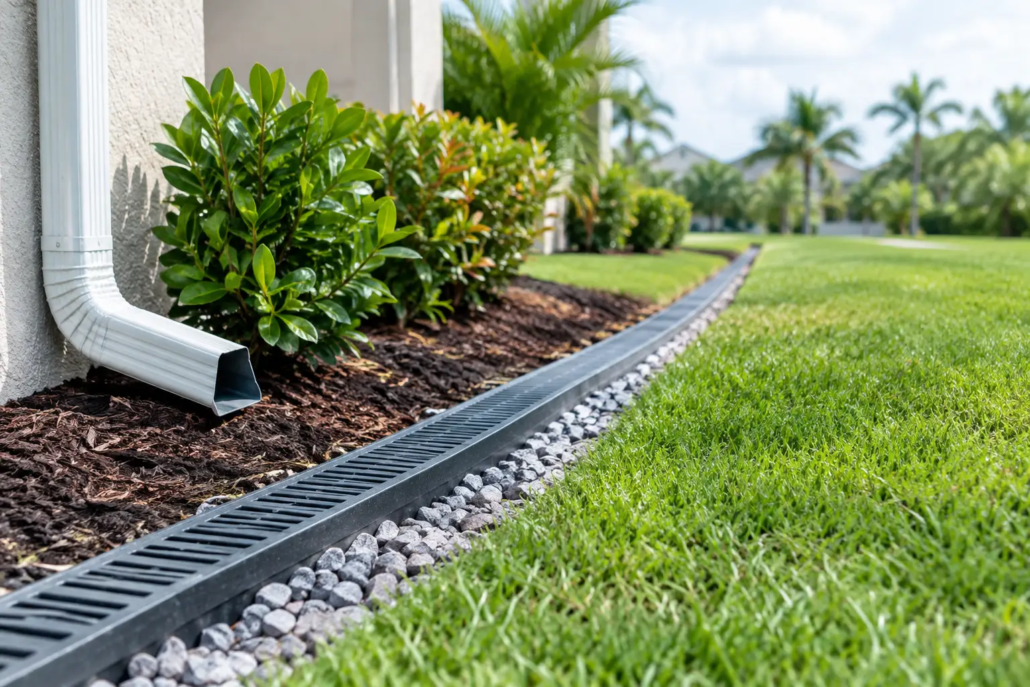
Channel drains are narrow, covered drains commonly installed along the edge of a driveway, pool deck, patio, or garage entrance. They intercept water before it flows across a hard surface or into the structure. For homeowners adding pavers, hardscaping, or a new outdoor living space, including drainage in the design from the beginning can prevent expensive corrections later.
Downspout Extensions and Roof Runoff Control
Roof runoff can overwhelm an otherwise healthy lawn. If downspouts release water at the foundation or onto a small patch of turf, they can create erosion, muddy splash marks, and persistent wet areas. Extensions, buried drain lines, or catch basins can direct that volume farther into a suitable drainage area.
This is often one of the simplest improvements, but it still needs planning. Sending roof water a few feet away is not always enough if the ground slopes back toward the home. The runoff should have a clear path that works during the heaviest rain, not just a light shower.
Choosing the Right Fix for a Florida Property
The best drainage solution depends on the cause of the problem. A low spot in the lawn may need grading and sod repair. Water washing across a driveway may need a channel drain. A backyard that stays wet for days could benefit from a French drain, a catch basin, or a combination of both.
Soil conditions matter as well. Sandy soil can drain quickly in some locations, but compaction, thatch, construction debris, and uneven grading can still trap water near the surface. Clay pockets and heavily shaded areas may hold moisture longer. Irrigation should be checked, too. A broken sprinkler head or an overly frequent watering schedule can make a drainage concern look worse than it is.
Local regulations, easements, retention areas, and neighborhood requirements may affect where water can be directed. A responsible drainage plan protects your home without creating runoff problems for surrounding properties. That is another reason experienced local evaluation is worth the time.
Signs It Is Time to Call a Drainage Professional
Some homeowners can handle small maintenance tasks, such as clearing leaves from gutters or keeping catch basin grates free of debris. But repeated pooling, erosion, or water near the house calls for a closer look. It is time to get professional guidance when you see any of the following:
- Water standing in the lawn more than a day or two after normal rainfall
- Soil or mulch washing away after storms
- Water collecting beside the foundation, garage, patio, or pool deck
- Grass that stays thin, muddy, or yellow in the same area
- Downspouts creating trenches or bare spots
- Pavers, walkways, or landscape edging shifting because of runoff
A thorough inspection should consider drainage, grading, irrigation, lawn condition, and the condition of nearby beds and hardscape features. Addressing all of these pieces together helps prevent a temporary patch from becoming a repeat repair.
Protect the Lawn After Drainage Work
Drainage installation can disturb turf, mulch, and irrigation components, especially when trenches are needed. Restoring the area properly matters. Fresh sod may need careful watering while roots establish, but it should not be overwatered. Mulch beds may need reshaping and replenishing, and irrigation zones may require adjustment so they do not keep saturating the repaired area.
Regular mowing, edging, and landscape maintenance also help keep drainage features working. Keep swales clear of thick debris, avoid piling mulch over drain grates, and watch for soil settling around basins after major storms. Small adjustments made early can protect the investment and keep the yard looking clean.
American Blade Lawn Care helps homeowners connect drainage improvements with the rest of the landscape, from lawn restoration and irrigation repairs to mulch and hardscape-related upgrades. The result should be a yard that drains better without looking like it was built around a drainage system.
If rain routinely leaves your property muddy, uneven, or difficult to use, do not wait for the next storm to make the issue worse. A well-planned drainage solution can give water a reliable path, help your lawn recover, and make your outdoor space easier to enjoy in every season.


Leave a Reply
Want to join the discussion?Feel free to contribute!