
What Causes Lawn Fungus in Florida Yards?
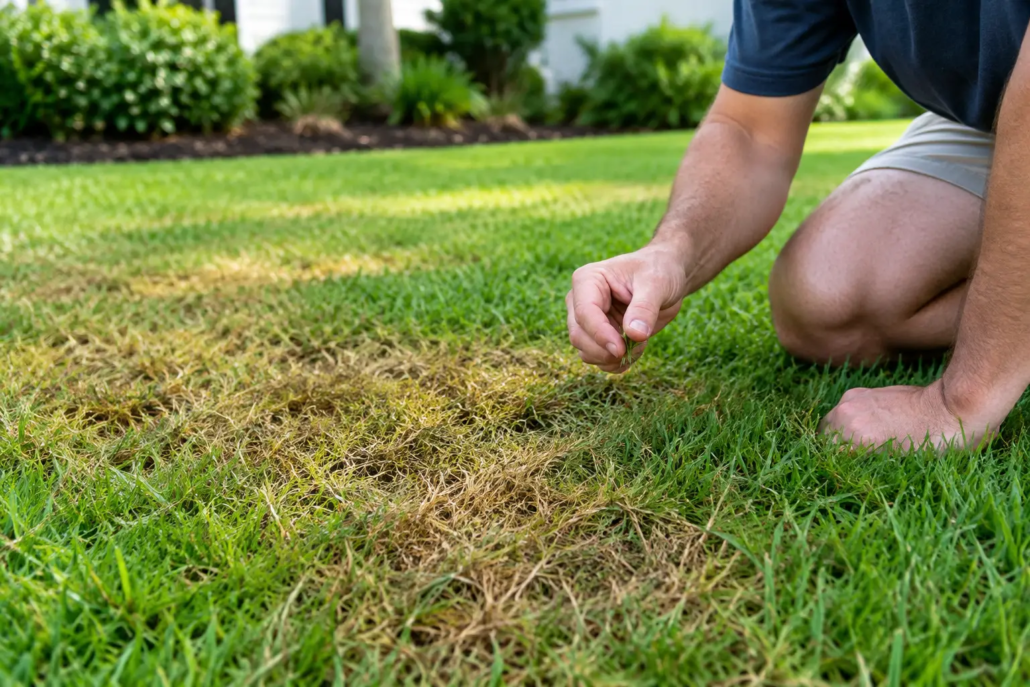
A St. Augustine lawn can look healthy on Friday and show brown rings, thinning patches, or orange dust by Monday. That is the frustrating reality of turf disease in Northeast Florida. If you are wondering what causes lawn fungus, the short answer is that fungal spores take advantage when grass stays wet, stressed, or crowded – conditions our long hot summers can provide in a hurry.
The good news is that lawn fungus is not usually a sign that you have done everything wrong. Spores naturally exist in the soil, thatch, and air. The problem starts when weather, watering, mowing habits, and turf stress line up in their favor. Finding the cause matters because treating a brown patch without fixing the condition behind it often leads to the same problem again.
What Causes Lawn Fungus to Take Hold?
Fungal diseases need a susceptible lawn, favorable weather, and enough moisture to spread. In Florida, those ingredients commonly arrive together. Warm-season grass such as St. Augustinegrass, Bermuda, zoysia, and Bahia can handle heat better than many northern grasses, but it is still vulnerable when it is under stress.
Humidity is a major contributor. When dew, rain, or irrigation keeps blades wet for long stretches, fungus has more time to infect the plant. A humid night followed by a warm morning can be especially troublesome, particularly in yards with limited airflow or dense tree cover.
Rain is not something a homeowner can control, but excess moisture from irrigation is. Sprinklers that run too often, run too long, or spray after sunset can keep the lawn damp overnight. That creates an ideal environment for common diseases such as large patch, dollar spot, gray leaf spot, and brown patch. Poor drainage has a similar effect, allowing water to sit around roots after a heavy Florida downpour.
Stress is the other half of the equation. Grass that is scalped, compacted, underfed, overfertilized, drought-stressed, or damaged by insects has a harder time resisting disease. Fungus is often an opportunist. It moves into turf that has already been weakened.
The Most Common Conditions Behind Fungal Lawn Problems
Too Much Water, at the Wrong Time
A deep watering schedule is generally better than light, frequent watering because it encourages stronger roots. The exact schedule depends on your grass type, soil, shade, rainfall, and irrigation coverage, but the timing is consistent: water in the early morning whenever possible.
Morning irrigation gives grass time to dry as the day warms up. Evening watering leaves moisture on blades through the night, which can increase disease pressure. It also pays to check your irrigation system after any change in the yard. A broken head, poor spray pattern, or leaking valve can create one constantly soaked area that keeps developing fungus.
Heat, Humidity, and Sudden Weather Changes
Florida’s climate puts lawns through frequent swings between intense heat, heavy rain, and humid nights. While warm-season turf expects summer heat, extended periods of moisture can still push it past its comfort zone. Disease outbreaks often follow a rainy stretch, especially when daytime temperatures remain high and the lawn does not dry fully between storms.
Cooler periods can bring their own concerns. Large patch often becomes more visible in St. Augustinegrass and zoysia during cooler, damp fall, winter, and spring weather. The timing of the symptoms can help point toward the cause, but an accurate diagnosis is still worth the effort. Several lawn problems can look alike at first.
Mowing Too Low or With Dull Blades
Cutting too much grass at once shocks the turf. Scalping exposes stems and soil, reduces the grass’s ability to make energy, and leaves it vulnerable during hot weather. Mowing with dull blades tears the leaf tips instead of making a clean cut, causing a ragged appearance and adding another source of stress.
Keep your mower set for the recommended height for your turf type, and avoid removing more than about one-third of the blade in a single mowing. During fast summer growth, that may mean mowing more regularly rather than dropping the deck lower. Clean, sharp mower blades also make a noticeable difference in lawn recovery and appearance.
Thatch, Compaction, and Limited Airflow
Thatch is the layer of stems, roots, and organic material that can build up between green grass and the soil. A thin layer is normal. Too much thatch holds moisture near the crown of the plant, blocks water and nutrients from reaching roots properly, and gives disease a protected place to persist.
Compacted soil creates a related problem. Water cannot move through compacted ground effectively, roots stay shallow, and the lawn becomes less resilient. Aeration can help where compaction is the issue, although it is not a cure-all for every diseased lawn. Your grass type, season, soil condition, and active disease level should guide the decision.
Shade and dense landscaping can also reduce air movement. Grass under large oaks or beside thick hedges may stay damp longer than open areas. Sometimes selective trimming, irrigation adjustments, or choosing a more shade-tolerant landscaping approach is more practical than repeatedly trying to force full-sun turf to thrive in deep shade.
Fertilizer Mistakes and Nutrient Stress
Fertilizer helps a lawn grow, but more is not always better. Heavy nitrogen applications can create soft, fast growth that may be more susceptible to certain diseases. Fertilizing at the wrong time can also add stress when grass is already struggling with heat, drought, or an active fungal issue.
On the other hand, grass that lacks needed nutrients may thin out and lose the strength to recover from normal wear. The right plan is not a generic bag-and-go approach. It should account for the grass variety, local soil, recent weather, irrigation, and what the lawn actually needs. In St. Augustine and Jacksonville-area yards, customized care is usually far more effective than guessing.
Why Lawn Fungus Is Often Misdiagnosed
Not every brown area is fungus. Chinch bugs, grubs, drought stress, irrigation failures, pet damage, weed competition, herbicide injury, and poor soil conditions can all produce patches that look similar from a distance. Even fungal diseases can have different symptoms depending on the turf variety and season.
For example, a dry spot caused by poor sprinkler coverage may look like a spreading disease patch. A chinch bug infestation in St. Augustinegrass can create yellowing and dead turf that homeowners understandably mistake for fungus. Applying a fungicide without addressing the actual problem wastes time and money, and the lawn continues to decline.
A closer inspection should consider the shape of the affected area, leaf color, blade lesions, root condition, insect activity, moisture level, and recent changes in lawn care. That is why a professional evaluation can be especially valuable when the damage is spreading quickly or returning in the same spot.
How to Reduce the Risk of Lawn Fungus
You cannot remove every fungal spore from a Florida yard, nor do you need to. The goal is to create conditions where your grass can outgrow and resist disease pressure. Start with dependable mowing, proper watering, and a fertilizer program that fits the season and turf type.
Keep irrigation focused on early morning, and avoid automatically watering after rainfall. Check that heads are not spraying driveways while missing the lawn, and repair leaks or drainage problems before they turn one section of the yard into a permanent wet zone. If you see standing water after storms, identify whether grading, compacted soil, or an irrigation issue is contributing.
Remove heavy leaf buildup and keep shrubs trimmed so air can move through the landscape. Use clean, sharp mowing equipment, especially after working in a visibly diseased area. Bagging clippings is not necessary for every lawn, but it can be helpful when fungal symptoms are severe and clippings are heavy.
If a disease is active, avoid piling on fertilizer or watering more in an attempt to green it up overnight. The right response depends on the diagnosis. In some cases, cultural changes are enough. In others, a properly selected fungicide may be needed as part of a larger lawn-care plan.
When to Call a Lawn Care Professional
Call for help when brown or yellow patches are expanding, rings are forming, grass is thinning despite regular watering, or the same symptoms return season after season. Fast action can limit damage, but the real value is identifying why the lawn is vulnerable in the first place.
American Blade Lawn Care can evaluate the condition of your turf, irrigation, mowing needs, and surrounding landscape to build a plan that fits your property. A healthier lawn is rarely the result of one quick product. It comes from consistent care that gives your grass the right conditions to recover, grow thick, and stand up to Florida weather.


Leave a Reply
Want to join the discussion?Feel free to contribute!