
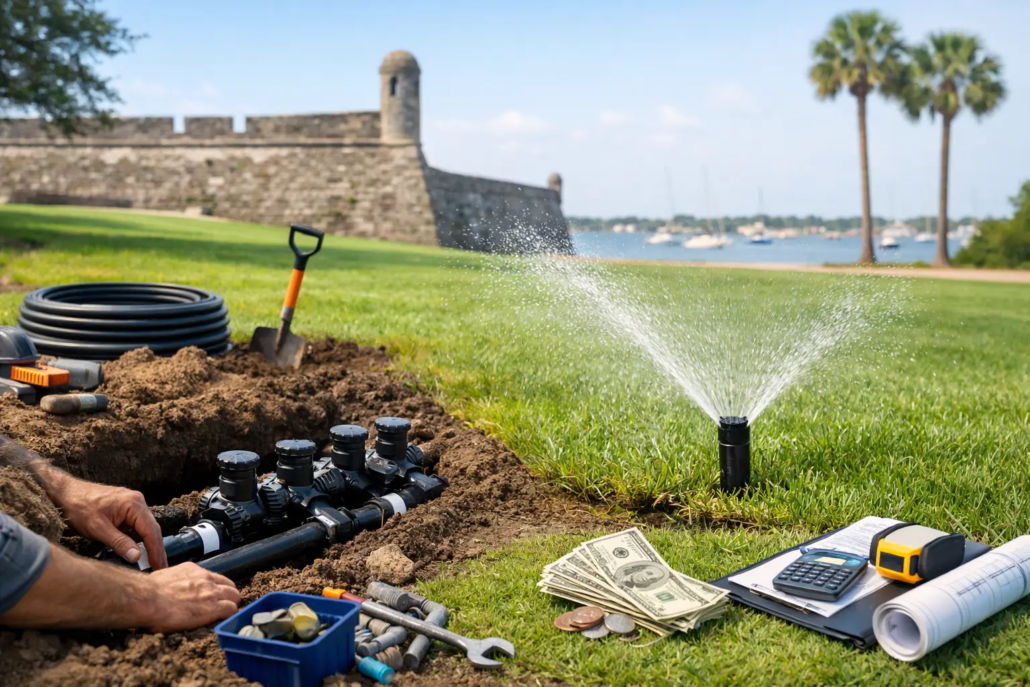
Sprinkler System Installation Cost in St. Augustine
A green Northeast Florida lawn can turn thin and stressed quickly when rain patterns change. That is why sprinkler system installation cost is about more than putting heads in the ground. A properly planned system gives your grass, landscape beds, and shrubs the right amount of water without wasting it, flooding low areas, or leaving dry spots along the driveway.
For many St. Augustine and Jacksonville-area homeowners, a professionally installed residential irrigation system generally falls in the range of $2,500 to $6,500 or more. Smaller, straightforward yards may come in below that range, while large properties, extensive planting beds, difficult access, drainage concerns, and premium controls can move the investment higher. The only dependable number is one based on your actual property, water source, and landscaping goals.
What Affects Sprinkler System Installation Cost?
Every yard has different water needs. A square, open lawn with accessible water service is very different from a corner lot with mature trees, curved landscape beds, a pool enclosure, and several grass types. The size of the property matters, but it is not the only thing that drives price.
Yard size and the number of zones
Irrigation zones divide the property into sections so each area receives watering suited to its needs. Sunny turf usually needs a different schedule than shaded grass, flower beds, hedges, or newly planted shrubs. More zones require additional valves, pipe, wiring, sprinkler heads, and programming time.
A small front and back yard may need four to six zones. A larger property with separate lawn areas and landscaped beds could need eight, 10, or more. Adding zones costs more upfront, but it often prevents the common problem of overwatering one section just to keep another section alive.
Water source, pressure, and backflow protection
Your installer must determine whether the available water supply can operate the planned system effectively. Low pressure or limited flow may require a different zone layout, a booster solution, or adjustments to the number and type of heads that run at one time.
Backflow prevention is another essential part of many irrigation installations. This equipment helps protect the household water supply from contamination. Requirements can vary by location and water connection, so it should be addressed clearly in the project scope rather than treated as an afterthought.
Lawn layout, beds, trees, and hardscape
Obstacles add planning and labor. Irrigation lines may need to route around established trees, patios, walkways, fences, pools, utility lines, and landscape lighting. A well-designed system should cover the lawn evenly while avoiding unnecessary spray onto the house, concrete, vehicles, and neighboring property.
St. Augustine yards also often include palms, mature oaks, decorative beds, and tight side yards. These features are worth protecting. Careful installation may take longer than a basic open-lot layout, but it helps preserve the look of the property while reducing the chance of future repairs.
Equipment choices and smart controls
A standard timer may be the right choice for a simple property. A Wi-Fi-enabled controller, rain sensor, soil-moisture sensor, drip irrigation for beds, or high-efficiency rotary nozzles can add to the initial cost. They can also make the system easier to manage and reduce unnecessary watering over time.
Smart equipment is not automatically the best choice for every homeowner. If you prefer straightforward controls and have a simple lawn, a dependable conventional controller may deliver all the performance you need. For seasonal residents, busy families, and properties with varied landscaping, remote control and weather-based scheduling can be especially useful.
Permits, inspections, and site conditions
Depending on the property and connection type, permits or inspections may be required. Existing underground lines, shallow roots, compacted soil, drainage issues, and limited access can also affect labor. A professional estimate should explain any known site conditions and identify where final pricing may depend on what is found during installation.
What Should a Professional Irrigation Estimate Include?
The lowest quote is not always the best value. A price that looks attractive can leave out critical items such as backflow protection, controller setup, head adjustments, cleanup, or restoration of turf areas disturbed during trenching.
A clear sprinkler system installation estimate should identify the planned number of zones, the areas each zone will serve, the sprinkler or drip components being used, controller type, and water connection approach. It should also state whether permits, inspections, and backflow components are included when applicable.
Ask how the installer handles final testing. Each head should be adjusted for coverage after installation, with attention paid to overspray, runoff, and dry areas. The system should be programmed around your lawn and landscape needs, not simply turned on and left at a default schedule.
Why Florida Lawns Need a Custom Watering Plan
Northeast Florida heat, sandy soils, humidity, summer storms, and occasional dry stretches can make lawn watering confusing. Heavy rain does not always mean every part of a lawn received enough moisture. At the same time, watering too frequently can encourage shallow roots, disease pressure, and waste.
St. Augustine grass is popular throughout our area because it handles heat well, but it still needs thoughtful irrigation. Newly installed sod, established turf, ornamental beds, and shrubs do not follow the same watering schedule. A system designed around these differences can support healthier roots and more consistent color without soaking the property every day.
Seasonal adjustments matter too. Summer watering needs often differ from cooler months, and local restrictions may affect the days or times irrigation is allowed. A knowledgeable installer can set up a practical starting schedule, then show you how to make simple adjustments when weather and lawn conditions change.
Installation Cost Versus Long-Term Lawn Value
An irrigation system is an investment in convenience, but the real return is better control. Hand watering takes time and is rarely consistent across a full property. Portable sprinklers can help in a pinch, yet they often miss edges, overwater one spot, and require constant moving.
A permanent system can help protect investments already made in sod, shrubs, mulch beds, and landscape design. It can also make recurring lawn care more effective because grass responds better when it receives appropriate water at the right time. That does not mean irrigation can fix every lawn issue. Pests, poor soil, shade, weeds, mowing height, and drainage still affect results.
The goal is not to run sprinklers as often as possible. The goal is to apply water efficiently enough to support healthy growth while avoiding waste. A properly maintained system can make that much easier.
Ways to Keep Your Irrigation Project on Budget
Start with the areas that matter most. If a large backyard is rarely used but the front lawn and entry beds drive curb appeal, discuss a phased installation or a design focused on priority areas. It is better to install a well-functioning system for the right areas than to cut corners on coverage, components, or workmanship.
You can also save future expense by selecting quality components that are readily serviceable and by keeping a simple zone map after the work is complete. Before installation begins, mark any known underground features, discuss planned landscaping changes, and make sure the design accounts for future beds, patios, or pool improvements.
American Blade Lawn Care provides customized irrigation recommendations built around local properties, not one-size-fits-all packages. A detailed site evaluation helps determine the right layout, equipment, and budget for your lawn.
A sprinkler system should leave you with less guesswork, not more. When you request an estimate, focus on a design that fits your yard today and gives your lawn the consistent care it needs through Florida’s changing weather.


Leave a Reply
Want to join the discussion?Feel free to contribute!