Weed Control for Lawns That Lasts
A lawn can look fine on Monday and start losing ground by the weekend. In Northeast Florida, warm weather, rain, sandy soil, and long growing seasons give weeds plenty of chances to move in fast. That is why weed control for lawns is never just about spraying what you see. It takes timing, the right products, and a plan built around your grass type and local conditions.
For homeowners in St. Augustine, Jacksonville, and nearby areas, the biggest mistake is treating every weed problem the same way. Crabgrass, dollarweed, clover, sedge, and broadleaf weeds do not all respond to the same approach. Some are signs of weak turf. Others point to drainage issues, overwatering, or thin areas caused by mowing habits. If you only knock the weeds back without fixing what allowed them to take hold, they usually come right back.
Why weed control for lawns starts with healthy grass
The best weed control program does not begin with a herbicide. It begins with dense, healthy turf that leaves weeds with less room, less sunlight, and fewer open spots to invade. A thick lawn is one of the most effective defenses any property can have.
That matters even more in Florida, where St. Augustine grass is common and can be sensitive to the wrong treatment. A product that works well on one lawn may stress another if the grass is already struggling from drought, disease, shade, or poor irrigation coverage. When grass is weak, weeds fill the gap. When grass is actively growing and getting what it needs, weeds have a harder time getting established.
This is why mowing height, watering habits, and fertilization all affect weed pressure. Cutting the lawn too short exposes the soil and invites seed germination. Watering too often can encourage shallow roots and moisture-loving weeds. Uneven irrigation creates stressed sections where weeds can outcompete turf. Good weed control is part of overall lawn care, not a separate fix.
The most common lawn weeds in Northeast Florida
Not every weed tells the same story. Some show up because of season changes, while others signal a problem with the lawn itself.
Crabgrass is a common headache in warmer months, especially in bare or thinning areas. It spreads quickly and takes advantage of heat and open soil. Dollarweed often points to excess moisture and poor drainage. Nutsedge usually thrives where the lawn stays too wet, and it grows faster than the surrounding grass, which makes it stand out almost immediately. Broadleaf weeds such as clover and spurge often appear in weak turf where competition is low.
The trade-off is that fast treatment is not always the same as smart treatment. Pulling a few isolated weeds may help in a small area, but widespread growth usually needs a broader strategy. On the other hand, aggressive chemical use without identifying the weed first can damage the lawn and still miss the real cause.
Pre-emergent vs. post-emergent weed control
If you want results that last, timing matters as much as product choice. That is where pre-emergent and post-emergent applications come in.
Pre-emergent weed control is designed to stop certain weeds before they break through the soil surface. This works best when applied before seasonal germination windows. In Florida, that timing can be tricky because temperatures shift earlier than many homeowners expect. Miss that window, and pre-emergent control becomes much less effective.
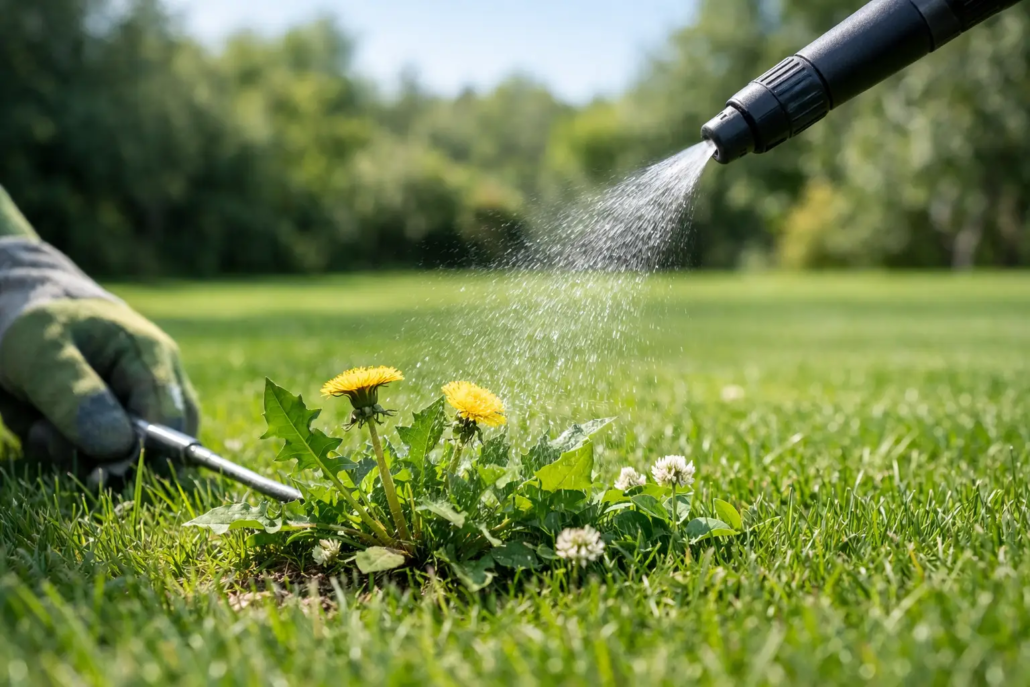
Post-emergent treatment is used after weeds are already visible. This can be very effective, but it depends on the weed type, the stage of growth, and the condition of the lawn. Some weeds are easy to suppress when young but harder to control once mature. Others require repeat applications. For many properties, the best results come from combining both methods as part of a year-round program.
Why DIY weed control often falls short
Store-bought weed killers can seem like a simple answer, especially when the lawn starts looking rough. Sometimes they help. Just as often, they create a new problem.
The biggest issue is misidentification. Many homeowners see any bright green patch and assume one product will handle it. But sedge is not broadleaf. Crabgrass is not clover. St. Augustine grass does not tolerate every herbicide on the shelf. Using the wrong product can burn the lawn, leave dead spots, or only partially suppress the weeds so they return stronger.
There is also the matter of coverage and timing. Spot treating one weekend and skipping follow-up the next can lead to uneven results. Heavy applications do not necessarily work better, either. They can stress the turf and waste money. In a climate like ours, successful treatment depends on knowing what is growing, why it is there, and what the lawn can safely handle.
Local conditions make a big difference
Florida lawns deal with pressures that many national lawn care guides barely address. Sandy soil drains quickly, which affects nutrient retention. High humidity can increase stress and disease pressure. Frequent rain can wash away treatments or create perfect conditions for certain weeds. Salt exposure near the coast can also affect turf performance.
That is why a one-size-fits-all program rarely delivers strong results here. A shaded backyard in St. Augustine may need a very different weed control plan than a sunny front lawn in Jacksonville. Soil conditions, irrigation layout, traffic patterns, and even nearby landscape beds can all influence how weeds spread.
A dependable service plan looks at the full property, not just the weeds that are visible today. Sometimes the real issue is compacted soil. Sometimes it is poor drainage. Sometimes the lawn is being mowed too low by a previous provider. Weed pressure is often a symptom, not the whole problem.
What a professional weed control program should include
A strong weed control service should do more than apply product and move on. It should start with evaluation. The lawn needs to be checked for grass type, weed variety, overall density, irrigation performance, and stress areas. Without that step, treatment is just guessing.
From there, the program should be adjusted to the season and the property. That may include pre-emergent applications at the right time of year, targeted post-emergent treatments for active growth, and recommendations for mowing, watering, and fertilization that support thicker turf.
Good service also means knowing when not to push a treatment. If the lawn is drought-stressed, recently cut too short, or dealing with another health issue, certain applications may need to wait or be modified. Results-focused lawn care is not about doing the maximum every visit. It is about doing the right thing at the right time.
For homeowners who want dependable results without trial and error, that local experience matters. American Blade Lawn Care works with Florida lawns every day, and that hands-on knowledge helps shape treatments that are practical, safe, and built for this region.
Weed control for lawns works best with consistent care
Even the best treatment plan can lose ground if the rest of the lawn is neglected. Weeds thrive in thin turf, neglected edges, dry spots, soggy sections, and underfed grass. That is why recurring service often produces better results than one-off applications.
Routine mowing keeps turf at a healthier height. Proper edging reduces weed spread from hardscapes and beds. Fertilization helps grass fill in weak areas. Irrigation checks make sure the lawn is not being overwatered in one zone and missed in another. When those services work together, weed pressure drops because the lawn itself becomes more competitive.
That does not mean every weed disappears overnight. Some lawns need a few treatment cycles before the difference is obvious, especially if the infestation is well established. But consistent care usually creates a visible shift. The grass begins to thicken, weeds lose space to spread, and the property starts looking cleaner and easier to maintain.
When to act on a weed problem
If weeds are starting to pop up in clusters, if the lawn has thin or bare patches, or if treatments you tried before did not hold, it is time to act before the problem spreads. Waiting too long usually means more weeds, more stress on the lawn, and a harder recovery.
A better-looking yard is not just about appearance, either. A healthier lawn is easier to mow, easier to maintain, and more enjoyable to use. It also gives your property the kind of curb appeal people notice right away.
The right weed control plan should make your life easier, not more complicated. When the lawn gets the attention it actually needs, weeds stop running the show and your yard has a real chance to stay strong through Florida’s toughest growing conditions.


Leave a Reply
Want to join the discussion?Feel free to contribute!