
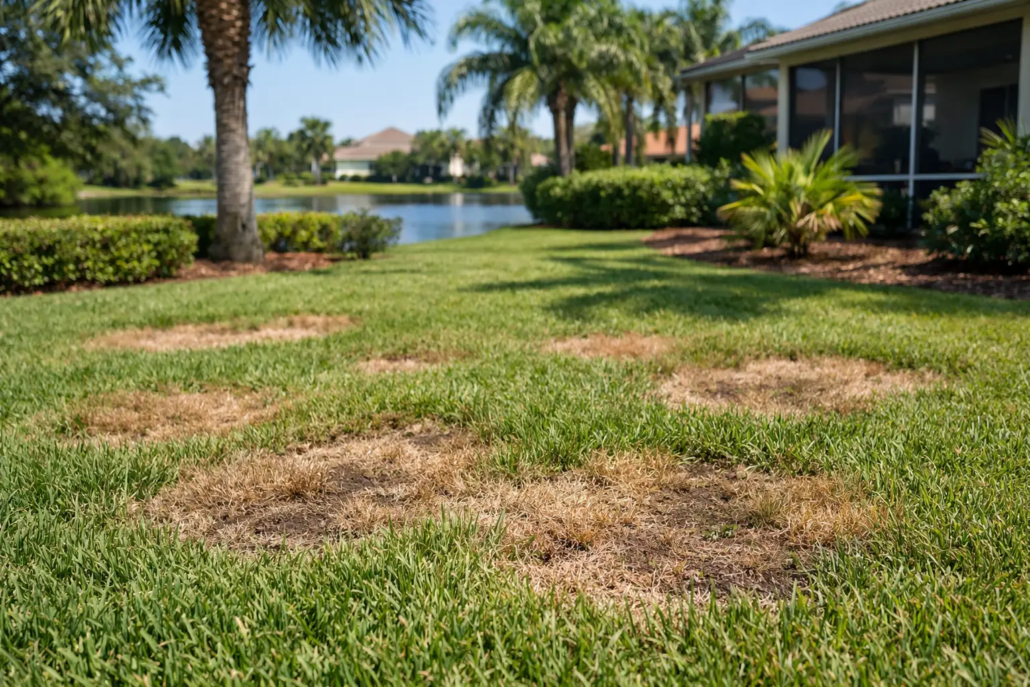
What Causes Brown Lawn Spots in Florida?
A brown patch in an otherwise green St. Augustine lawn is rarely just an appearance problem. In Northeast Florida, heat, humid nights, sandy soil, heavy rain, and irrigation demands can all stress turf quickly. If you are asking what causes brown lawn spots, the honest answer is that the pattern, timing, and location of the damage matter as much as the color itself.
The wrong fix can make the problem worse. Extra water may help drought stress but feed a fungus. More fertilizer may help a thin lawn but burn already stressed grass. A close look at the patch before treating it can save time, money, and a larger repair later.
What Causes Brown Lawn Spots in St. Augustine Lawns?
Brown areas generally come from one of five sources: watering problems, lawn disease, insects, physical damage, or weak growing conditions below the surface. Florida lawns often deal with more than one at the same time. For example, an irrigation head that misses one area can weaken the grass, then chinch bugs or disease move into that stressed section.
Start by looking at the shape of the patch. A dry, irregular area near pavement or a sprinkler head points toward watering or heat stress. A circular patch that expands after wet, humid weather may point to fungus. Brown grass that pulls up easily or has damaged roots deserves a closer inspection for insects, disease, or poor drainage.
Uneven Watering and Irrigation Problems
Irrigation issues are among the most common causes of brown spots in Florida yards. Sandy soil drains fast, and St. Augustine grass can show drought stress quickly in hot weather. You may notice folded or blue-gray blades before the lawn turns brown.
Still, running sprinklers longer is not always the answer. Broken heads, clogged nozzles, poor sprinkler coverage, leaks, and incorrect timer settings can leave one part of the yard thirsty while soaking another. Overwatered turf can develop shallow roots and become more vulnerable to fungal disease.
Check whether the brown area lines up with the reach of a sprinkler zone. Run that zone during daylight and watch for dry gaps, blocked spray patterns, heads watering the sidewalk instead of the grass, or low pressure. Early-morning watering is usually the better choice because grass blades have time to dry after sunrise. Evening watering can leave moisture on the lawn overnight, creating favorable conditions for disease.
Fungal Disease After Heat and Rain
Florida’s warm, humid weather gives lawn fungi plenty of opportunity. Large patch, sometimes called brown patch, is common in cooler, wet periods and may create expanding rings or irregular circular areas with a darker edge. During hotter months, gray leaf spot and other fungal issues can thin or discolor St. Augustine grass, especially when the lawn stays wet for long stretches.
Disease is not always obvious from a distance. Look closely at the leaf blades and surrounding turf. You may see spots, a tan or gray appearance, thinning growth, or a patch that seems to spread outward over several days. Wet weather, excessive nitrogen fertilizer, heavy thatch, poor airflow, and frequent nighttime irrigation all increase the risk.
Fungicide may be appropriate in some cases, but it is not a cure for the conditions that started the problem. The lawn also needs better moisture management, proper mowing, and a fertilizer plan that fits the season and grass type. Treating every brown patch as fungus without diagnosing it first can waste money and leave the real problem untouched.
Chinch Bugs, Caterpillars, and Other Lawn Pests
Chinch bugs are a major concern for St. Augustine lawns in Florida. They feed by sucking moisture from grass blades and injecting toxins that make turf look dry, even when it has been watered. Damage often begins in sunny, hot areas, along driveways, sidewalks, and curbs, then expands in irregular patches.
A chinch bug problem can look a lot like drought stress. The difference is that water does not bring the grass back, and insects may be present near the transition between green and brown turf. Sod webworms can also cause patchy brown areas by feeding on grass blades, while grubs may cause turf to loosen because they damage the roots.
Pest treatment should match the pest and its life cycle. Applying a general product without confirming the issue can harm beneficial insects and may not stop the damage. A lawn professional can inspect the active edge of the patch, identify likely pest pressure, and recommend the right treatment rather than guessing.
Mowing Damage, Dull Blades, and Scalping
A lawn can turn brown simply because it was cut too short. Scalping is especially common when grass has grown too tall between cuts, the lawn is uneven, or a mower is set too low. The mower removes too much green tissue at once and exposes stems and soil. In strong Florida sun, that stressed area can brown quickly.
Dull mower blades are another overlooked cause. Instead of making a clean cut, they tear the grass blade, leaving ragged brown tips across the lawn. This can make a healthy lawn look faded and can create entry points for disease.
For St. Augustine grass, mowing height should support healthy roots and shade the soil. The ideal height depends on the variety, time of year, and site conditions, but consistently cutting too low is never a long-term answer. Regular mowing with sharp equipment gives the lawn a cleaner look and helps it recover from seasonal stress.
Pet Urine, Fertilizer Spills, and Chemical Damage
Small, sharply defined brown circles are often caused by concentrated salts or nitrogen. Dog urine is a familiar culprit, especially in the same areas of the yard. Fertilizer spills, improperly mixed weed control products, gasoline, cleaning chemicals, and pool water can create similar burn marks.
A brown spot with a dark green ring around it is a common sign of concentrated nitrogen, although it is not proof on its own. Diluting fresh pet urine with water can reduce damage, but repeatedly watering a spot without understanding the cause can create its own issues. For fertilizer or chemical damage, the best response depends on what was applied, how much reached the turf, and how recently it happened.
Compacted Soil, Shade, and Root Stress
Not every brown spot starts above ground. Compacted soil limits air and water movement around the roots. Thatch buildup can keep moisture and nutrients from reaching the soil where they are needed. In shady areas, St. Augustine may simply struggle to receive enough sunlight to maintain dense growth.
Drainage matters, too. A low spot that stays wet after rain can lose healthy roots even though the lawn is receiving plenty of water. Brown turf in these areas may be a sign that the soil is staying saturated, not dry. Aeration, drainage improvements, soil-focused care, and adjusted plant choices can make a bigger difference than repeated surface treatments.
How to Diagnose Brown Lawn Spots Before They Spread
Before applying anything, take a few minutes to inspect the lawn. This short process can narrow down the likely cause:
- Check the irrigation zone that serves the brown area and look for missed coverage, leaks, or overspray.
- Compare the patch with nearby green grass. Notice whether the transition is gradual, circular, sharply defined, or moving outward.
- Inspect the leaf blades and roots. Spots on blades, chewed edges, loose turf, or blackened roots each tell a different story.
- Think back over the past two weeks. Heavy rain, a fertilizer application, a mowing change, pet activity, or landscaping work can provide the missing clue.
Take photos every few days if the damage is changing. A patch that grows despite proper watering needs attention sooner rather than later. Dead turf does not always return on its own, and early action can prevent a small trouble spot from becoming a larger sod repair.
When Professional Lawn Care Makes Sense
A homeowner can often correct a blocked sprinkler head or raise a mower deck. But recurring brown spots, spreading patches, irrigation concerns, or widespread thinning usually call for a more complete evaluation. The visible damage may be only one part of the issue.
American Blade Lawn Care can assess the grass type, watering coverage, mowing conditions, pest pressure, and soil-related concerns affecting your property. From irrigation repair and recurring maintenance to targeted lawn treatments, the goal is to give your yard the care it actually needs instead of applying a one-size-fits-all fix.
A healthy Florida lawn is built through consistent attention, not a quick spray or a single heavy watering. When brown spots show up, treat them as a signal from the yard – then get the right diagnosis and a practical plan to bring the green back.


Leave a Reply
Want to join the discussion?Feel free to contribute!