
Yard Drainage Solutions Guide for Florida Homes
A heavy Florida rain should leave your yard looking refreshed, not leave puddles around the patio, muddy tracks across the lawn, or water creeping toward the foundation. This yard drainage solutions guide helps Northeast Florida homeowners recognize what is causing the problem and choose a repair that works with the property, not against it.
In St. Augustine, Jacksonville, and nearby communities, drainage problems are rarely just about one low spot. Flat lots, intense summer storms, sandy soil, high groundwater, irrigation runoff, compacted turf, and roof runoff can all contribute. The right answer depends on where the water starts, where it collects, and where it can legally and safely go.
Start With the Source of the Water
Before installing a drain, watch the yard during or immediately after a hard rain. A professional drainage plan begins with that same simple question: where is the water coming from?
Water that spills over gutters or pours from downspouts can quickly wash mulch out of beds and create a trench beside the home. Water that appears in the middle of a lawn may point to a low grade, compacted soil, a broken irrigation line, or a high water table. If one area stays wet for days while the rest of the yard dries, it may be receiving runoff from a neighboring slope, driveway, patio, or roof.
Irrigation deserves attention, too. A zone that runs too long or sprays onto a hard surface can make an existing drainage issue look worse. In some cases, adjusting the irrigation schedule, repairing a leaking head, or redirecting overspray is part of the fix. Drainage and irrigation should be evaluated together, especially in a Florida yard where turf already receives significant rainfall.
Signs Your Yard Needs Drainage Work
Standing water is the obvious warning sign, but it is not the only one. Grass that thins in one area, recurring bare patches, algae on concrete, washed-out mulch, soil erosion, and mosquito activity can all signal poor drainage. You may also see water stains on the home’s exterior, wet soil near the foundation, or pavers that shift after repeated storms.
Do not assume every damp area needs a major system. Some turf areas remain soft for a day after a downpour and recover normally. The concern is water that repeatedly lingers, damages plants or hardscape, limits how you use the yard, or moves toward the house.
Foundation and hardscape issues need prompt attention
A soggy lawn is frustrating. Water that is settling against a slab, crawl space, garage, pool deck, or retaining wall deserves faster action. Over time, uncontrolled runoff can erode soil, undermine pavers, stain exterior surfaces, and create conditions that are harder and more expensive to correct.
Common Yard Drainage Solutions
A reliable drainage system is usually a combination of grading, collection, and discharge. The goal is not simply to move water away from one problem spot. It is to direct it to an appropriate outlet without creating a new issue elsewhere.
Regrading and swales
For many yards, reshaping the grade is the best starting point. Proper grading gives water a gradual path away from the house and away from areas that need to stay dry. A swale is a shallow, gently sloped channel built into the landscape that guides surface water across the property.
Swales work well when there is enough room and a clear downhill route. They can often be blended into the lawn so they do not look like an open ditch. On very flat lots, however, grading alone may not move water quickly enough. That is when a catch basin or drain line may be needed.
Catch basins and underground drain lines
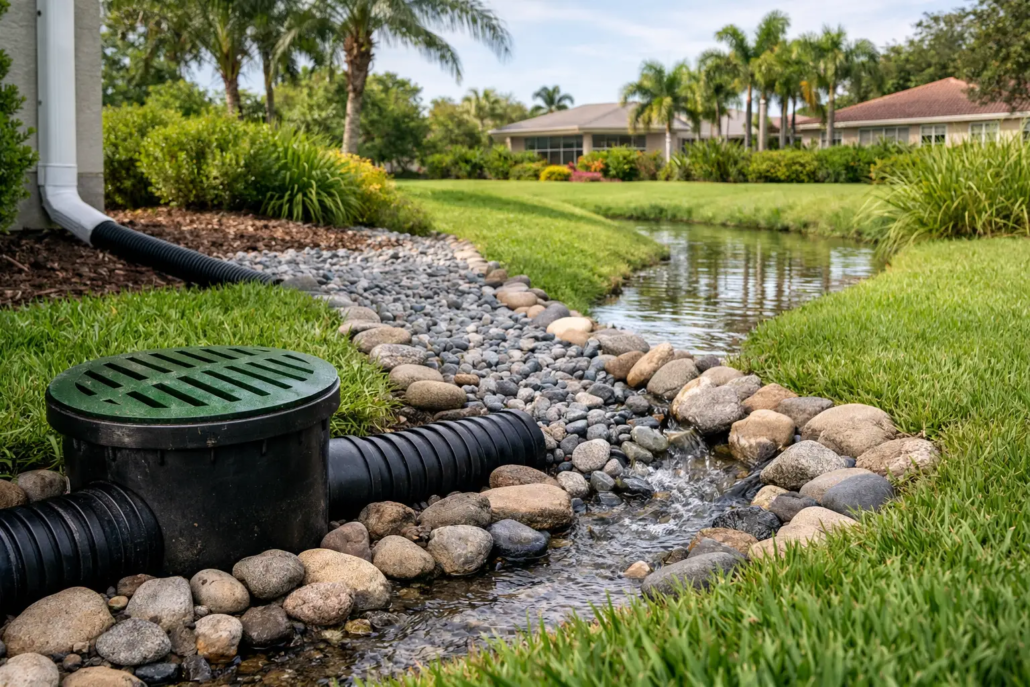
A catch basin collects water at a low point, such as the edge of a patio, driveway, or lawn depression. Underground pipe carries that water to an approved discharge location. This approach is often effective for concentrated surface runoff because it collects water before it spreads across the yard.
The pipe must have the correct slope, be sized for heavy rain, and terminate where the water will not wash back toward the home or onto a neighbor’s property. A drain line that is too flat, clogged with sediment, or routed to the wrong location will not solve the underlying problem.
French drains
A French drain uses perforated pipe surrounded by gravel and wrapped in filter fabric to collect water moving through the soil. It can be a strong choice for persistently wet planting beds, soggy lawn edges, or areas where groundwater and subsurface moisture are part of the issue.
French drains are not a cure-all. In Northeast Florida’s sandy conditions, they may work differently from the way they do in heavier soils. They also need a suitable outlet. Installing one in a low area with nowhere for the water to go can leave you with an expensive trench that still stays wet.
Downspout extensions and drainage connections
Roof runoff can dump a surprising amount of water beside a home during a summer storm. Extending downspouts away from the foundation is often one of the simplest improvements. For larger roofs or tight side yards, downspouts may be connected to solid underground drain pipe that carries water to a planned outlet.
This work should be planned carefully around utility lines, landscaping, irrigation components, and the home’s grade. A downspout should not empty onto a walkway, against a fence, or into a bed where it will erode soil and displace mulch.
Channel drains for patios and driveways
When water flows across a pool deck, patio, garage entrance, or driveway, a channel drain may be the right tool. These long, narrow drains sit flush with the hard surface and intercept runoff before it reaches the wrong area.
Channel drains are especially useful where hardscape changes the natural flow of water. They need regular cleaning because leaves, pine needles, mulch, and lawn clippings can block the grate. A well-built drain still needs basic maintenance to keep working through storm season.
What Not to Do With Excess Water
Avoid quick fixes that simply transfer the problem. Draining water directly onto a neighboring yard, into a street without approval, or into an easement without understanding local requirements can cause disputes and potential compliance issues. Some properties also have drainage restrictions, stormwater systems, protected areas, or homeowner association rules that affect what can be installed.
Dry wells are another solution that requires caution in this region. They can be useful in the right soil and site conditions, but high groundwater or frequent saturation may limit their performance. A local evaluation helps determine whether the water can actually infiltrate or whether it needs to be carried to another approved location.
Adding soil to a low spot without checking the overall grade can also create trouble. Soil placed too high against siding, weep screeds, or exterior features can introduce moisture concerns at the house. The goal is controlled drainage, not simply covering the evidence of a wet yard.
A Practical Plan for a Healthier Lawn
The best time to address drainage is before repeated storms turn a manageable concern into erosion, turf loss, or hardscape damage. Start by taking photos after rain and noting how long water remains in each area. Mark downspout locations, sprinkler heads, patios, driveways, and the direction water travels.
Then have the property evaluated as a complete outdoor system. Lawn health, irrigation performance, landscape beds, mulch, grading, and drainage all affect one another. A drainage repair that protects turf but ignores roof runoff or irrigation can leave part of the problem behind.
American Blade Lawn Care can help homeowners assess problem areas and build a practical plan for a cleaner, healthier, easier-to-maintain yard. The right drainage solution should fit your property’s layout, Florida conditions, and long-term goals – so the next hard rain has somewhere safe to go.


Leave a Reply
Want to join the discussion?Feel free to contribute!