
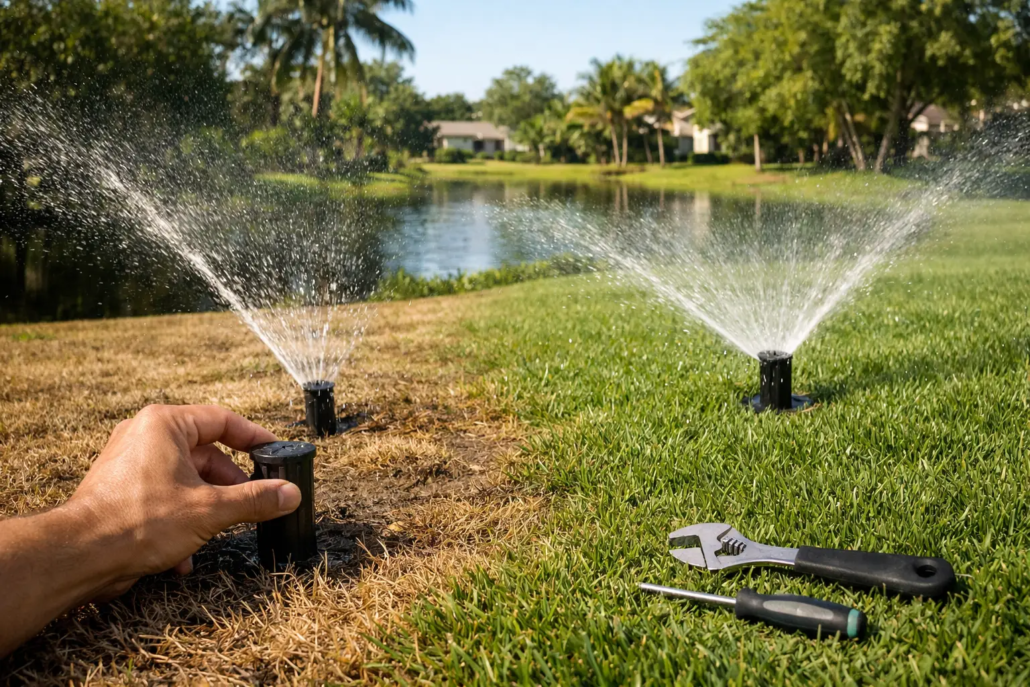
How to Fix Sprinkler Coverage in Florida Yards
A lawn can look green along the driveway and thin, dry, or muddy just a few feet away. In St. Augustine and across Northeast Florida, that uneven look is often an irrigation coverage problem, not simply a grass problem. Knowing how to fix sprinkler coverage starts with finding out where the water is landing, where it is missing, and why your system is not applying water evenly.
Poor coverage wastes water, encourages weeds in weak turf, and can leave your lawn struggling through a hot Florida afternoon. The good news is that many problems are visible once you know what to watch for. Others, including pressure issues and underground leaks, need a trained irrigation professional to diagnose correctly before they cause bigger damage.
Start With a Real Coverage Check
Do not judge your sprinkler system by standing beside one spray head for 30 seconds. Run each irrigation zone long enough to see the full pattern, usually during daylight when you can walk the yard safely. Watch the heads from several angles and look for water reaching the intended lawn, planting beds, and edges without spraying hardscapes, windows, or the street.
Pay close attention to the overlap between sprinkler heads. Most spray patterns are designed so one head throws water toward the next head. This head-to-head coverage helps compensate for wind, changing pressure, and the lighter water application at the outer edge of a spray pattern. When the heads are too far apart, the lawn between them will receive less water than the areas closest to the sprinklers.
A few signs point to uneven coverage:
- Brown or thinning patches surrounded by healthy grass
- Bright green, fast-growing areas that stay too wet
- Water running down the sidewalk, driveway, or curb
- Sprinkler heads that sputter, barely rise, or spray in the wrong direction
It is also smart to set out a few straight-sided containers, such as tuna cans, across the zone. After a normal cycle, compare the water level in each container. Large differences tell you the system is watering unevenly, even if the lawn has not yet shown obvious stress.
How to Fix Sprinkler Coverage One Problem at a Time
The right repair depends on the reason for the dry or overwatered area. A quick adjustment may solve one section of the yard, while another may need a new nozzle, a valve repair, or changes to the zone layout.
Adjust Misaligned Sprinkler Heads
Sprinkler heads can get knocked out of position by lawn equipment, foot traffic, children, pets, root growth, and normal settling. A head that should cover a lawn edge may turn toward the driveway instead. Another may be blocked by mulch or sit too low to clear the grass.
With the zone running, carefully identify heads that are tilted, buried, or spraying beyond their intended area. Clear dirt, grass, and mulch from around the top of the head. If the riser is leaning, it may need to be reset so the nozzle sits level with the soil surface. Raising a head slightly can help it clear turf, but raising it too high makes it easier to damage and can create a trip hazard.
Many sprinkler nozzles allow the arc to be adjusted. A quarter-circle nozzle should not be spraying a full circle into a walkway, and a full-circle nozzle should not be installed along a fence line. Small adjustments can make a noticeable difference, but avoid forcing parts that do not move easily. Broken adjustment screws and cracked heads turn a simple fix into a repair call.
Replace the Wrong or Worn Nozzle
Nozzles wear down, clog with sand or debris, and sometimes get replaced with the wrong type after a repair. A nozzle that throws too far may overspray a bed or patio. One that does not throw far enough leaves a dry strip between heads.
Each zone should use compatible nozzles with similar precipitation rates. In plain terms, the heads in that zone should apply water at a reasonably even rate. Mixing a high-output nozzle with low-output spray heads makes proper scheduling nearly impossible. The wet spot will get wetter before the dry spot receives enough water.
Florida irrigation systems often collect sand, organic debris, and mineral buildup. If one head has a weak, crooked stream, shut off the water and inspect the nozzle and small filter screen. Cleaning may restore the pattern. If the nozzle is cracked, damaged, or still spraying poorly after cleaning, replacement is usually the better choice.
Clear Obstacles and Plan for Growth
A sprinkler system that worked well three years ago may no longer fit the landscape. Hedges grow, palms fill out, landscape beds expand, and new fencing changes the way water reaches the grass. Even a low shrub can block a spray head enough to create a dry patch behind it.
Trim vegetation away from heads where appropriate, and check whether mulch has built up around risers. If a mature hedge or new landscape feature permanently blocks the spray, simply increasing run time is not the answer. The better solution may be relocating a head, adding a head, or changing the nozzle type so water reaches the turf without soaking the plant material.
Check Pressure, Leaks, and Zone Performance
When every head in one zone has a weak spray, low water pressure may be the issue. When one head is weak while nearby heads are normal, the problem may be a clogged nozzle, broken fitting, or damaged line feeding that head.
A leak does not always create a dramatic puddle. Look for unusually soft soil, water bubbling near a head, a zone that takes longer to shut off, or a patch of grass that grows much faster than the rest of the yard. A broken underground pipe can reduce pressure throughout the zone and waste a surprising amount of water before it is discovered.
Valve problems can also affect coverage. A valve that does not open fully may leave a zone underpowered. A valve that fails to close completely can keep water seeping into one area long after the schedule ends. These repairs are best handled promptly, especially during rainy periods when excess moisture can contribute to fungus, root stress, and runoff.
Do Not Use Run Time to Cover Up a Design Problem
Homeowners often respond to dry spots by adding more minutes to the irrigation controller. That can help if the entire lawn truly needs a modest seasonal adjustment. It will not fix a section that receives no water at all, and it can overwater the parts of the zone that already have good coverage.
This matters in St. Augustine, where sandy soils can drain quickly and summer rain can be intense but uneven. A lawn may look thirsty after a hot week, yet one portion of the property may have received heavy rainfall while another stayed dry. The goal is not to run the system more often by default. The goal is to apply water evenly, then set the schedule based on weather, grass type, soil conditions, shade, and local watering rules.
Zones should also match the landscape as closely as possible. Turf, flower beds, and shrubs often have different watering needs. If one zone waters a sunny lawn, a shaded lawn, and a bed of ornamental plants with the same heads and schedule, some part of that zone will usually be overwatered or underwatered. Improving the design may cost more upfront, but it can protect the health and appearance of the entire property over time.
When It Is Time for Professional Irrigation Repair
Simple cleaning and minor adjustments are reasonable for many homeowners. Call for professional help when you see recurring dry spots after adjustments, soggy areas, multiple broken heads, poor pressure across a zone, suspected underground leaks, electrical controller issues, or a system that no longer matches the landscape.
A proper irrigation inspection looks beyond the visible sprinkler head. It includes checking zone pressure, valves, wiring, nozzle selection, head spacing, drainage, and controller settings. That wider view is valuable because lawn problems rarely stay isolated. Uneven irrigation can lead to weeds, thin turf, erosion, stained hardscapes, and wasted water.
American Blade Lawn Care can evaluate sprinkler performance alongside the condition of your lawn and landscape, then recommend practical repairs that fit your property. A well-covered yard should not require constant guesswork – it should give your grass the consistent support it needs to stay healthy, attractive, and ready for Florida weather.


Leave a Reply
Want to join the discussion?Feel free to contribute!