
Lawn Aeration Service Near Me: What to Look For
A search for a lawn aeration service near me often starts after a homeowner notices the same frustrating pattern: grass that looks thin, water that runs off instead of soaking in, and bare spots that never seem to fill back in. In St. Augustine, Jacksonville, and surrounding Northeast Florida communities, compacted soil can quietly limit even the most consistent mowing, watering, and fertilizing routine.
Aeration is not a cosmetic shortcut. It is a practical lawn-health service that gives grass roots better access to the air, moisture, and nutrients already present in your soil. When it is performed at the right time and paired with care that fits your grass type and property conditions, the result can be a fuller, healthier lawn that is easier to maintain.
What Lawn Aeration Actually Does
Over time, soil becomes compressed by foot traffic, kids and pets playing in the yard, mowing equipment, heavy rain, and Florida’s dense or sandy soil conditions. Thatch – the layer of stems, roots, and organic material between the grass blades and soil – can also build up. A small amount of thatch is normal, but too much can prevent water and nutrients from reaching the root zone.
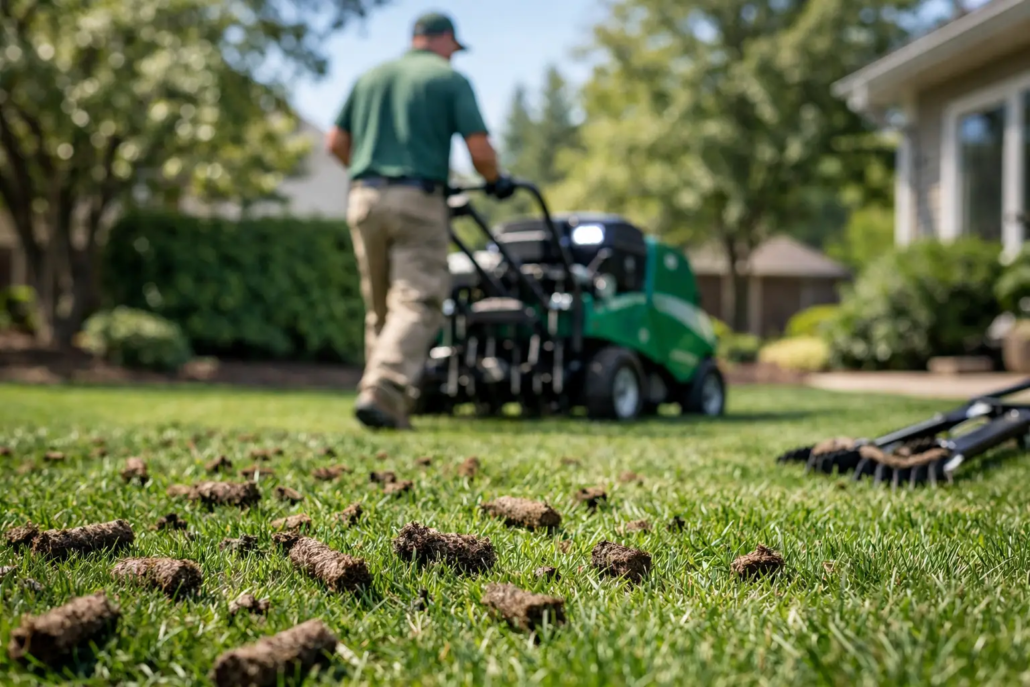
Core aeration addresses both concerns by removing small plugs of soil across the lawn. Those openings create direct channels for water, oxygen, and nutrients to move into the ground. They also give grass roots room to spread deeper, which helps the lawn handle heat, dry periods, and regular use more effectively.
The plugs left behind may look messy for a short time, but they are a good sign. They break down naturally, returning soil and organic matter to the lawn. Most homeowners see the lawn settle quickly, especially when it receives proper irrigation and routine maintenance afterward.
Signs You May Need a Lawn Aeration Service Near Me
A lawn does not have to be completely brown or bare to benefit from aeration. Often, the early signs are subtle. If your yard feels hard underfoot, puddles after irrigation, or sheds water downhill during a rainstorm, compacted soil may be part of the problem.
Patchy growth is another common clue. If certain areas stay thin despite watering and fertilizer, the issue may not be what you are putting on the lawn. It may be that the roots cannot access it. High-traffic areas near gates, sidewalks, patios, play areas, and driveways are especially likely to become compacted.
Watch for these conditions as well:
- Water pooling or running off instead of soaking into the soil
- Grass that looks stressed even when irrigation is running properly
- Bare or thinning areas in frequently used sections of the yard
- A spongy feel caused by excessive thatch, or a hard surface caused by compaction
- Weak response after fertilization or seasonal lawn treatments
Aeration is not the answer to every lawn issue. Disease, insect damage, poor irrigation coverage, weed pressure, shade, and improper mowing height can create similar symptoms. That is why a local evaluation matters. The right service provider should look at the full picture before treating aeration as a one-size-fits-all fix.
Why Florida Lawns Need a Local Approach
Northeast Florida lawns face a different set of demands than lawns in cooler parts of the country. Heat, humidity, heavy summer rain, sandy soil, and periods of drought can all affect how grass develops. St. Augustine grass, Bahia grass, Bermuda grass, and Zoysia grass each have different growth habits and seasonal needs.
For example, a lawn with sandy soil may drain quickly but still have compacted zones from traffic and equipment. A property with dense, amended soil may hold moisture longer and develop thatch more easily. Irrigation can also change the equation. Too little water stresses roots, while frequent shallow watering can encourage roots to stay near the surface.
Timing matters, too. Aeration is generally most helpful when warm-season grass is actively growing and can recover quickly. The exact timing depends on your grass type, recent weather, the condition of the lawn, and any other planned treatments. Aerating a stressed lawn at the wrong time can create unnecessary pressure, so professional recommendations should be based on what is happening in your specific yard.
What a Professional Aeration Visit Should Include
A quality aeration service begins before the machine reaches the grass. The lawn should be reviewed for irrigation heads, shallow utility lines, landscape lighting, tree roots, drainage concerns, and areas that may need a different approach. Marking and protecting those features helps prevent damage while allowing the technician to work thoroughly.
The lawn is typically mowed to an appropriate height, and the soil should have enough moisture for clean core removal. Soil that is bone-dry can be difficult to aerate effectively, while saturated ground can become muddy and damaged under equipment. A knowledgeable crew will assess conditions and schedule the work accordingly.
After aeration, the next steps depend on the lawn’s needs. This can be an excellent time to improve watering practices, apply a suitable treatment, address irrigation problems, or plan follow-up care for thin areas. Aeration creates an opportunity, but it works best when the rest of the lawn-care plan supports healthy root growth.
Aeration, Dethatching, and Overseeding Are Not the Same
These services are often grouped together, but they solve different problems. Aeration relieves compaction and improves movement through the soil. Dethatching removes an overly thick organic layer that is blocking water and nutrients from reaching roots. Overseeding adds new grass seed, which is more common for cool-season lawns than for many established Florida warm-season lawns.
Your property may need one of these services, a combination of them, or neither. For a warm-season lawn in St. Augustine or Jacksonville, spreading seed without considering the existing grass, season, shade, and irrigation can waste money. A better plan starts with identifying why the lawn is thin in the first place.
If the issue is poor drainage, a broken irrigation zone, heavy shade, or turf that is not suited to the location, aeration alone will not deliver lasting change. The right provider should be honest about that trade-off and recommend the services that will make the biggest difference.
How to Choose the Right Local Aeration Provider
When you are comparing companies, look beyond the lowest quote. Aeration equipment and labor matter, but so does the provider’s ability to recognize the lawn conditions that caused the problem. A quick pass with a machine may create holes in the turf, but it does not automatically create a healthier lawn.
Choose a company that understands local grass types, offers clear recommendations, and can explain what should happen before and after the service. Ask whether they inspect irrigation, whether they work around landscape features, and what aftercare they recommend. You should also receive straightforward pricing and a realistic explanation of what results to expect.
A full-service local team can be especially helpful when aeration reveals a larger issue. If your lawn also needs mowing adjustments, weed control, irrigation repair, mulch installation, drainage attention, or landscape cleanup, coordinating those services through one dependable provider can save time and keep the plan consistent.
American Blade Lawn Care provides customized lawn care for homeowners and property owners throughout St. Augustine, Jacksonville, and nearby areas. Our team looks at the condition of the grass, soil, irrigation, and high-use areas to recommend practical services that fit the property – not a generic package.
What to Do After Lawn Aeration
After aeration, keep foot traffic light for a few days when possible and allow the soil plugs to break down naturally. Continue watering based on the season, recent rainfall, and your irrigation system’s coverage. The goal is steady moisture that supports recovery, not constant overwatering.
Avoid making dramatic changes all at once. If you are adjusting fertilization, mowing height, weed control, or irrigation, those decisions should work together. Cutting grass too short, watering shallowly every day, or ignoring an irrigation repair can undermine the benefits of aeration.
A healthier lawn rarely comes from one isolated service. It comes from consistent care that supports roots, protects the turf during Florida weather, and addresses problems before they spread. If your lawn feels compacted, looks uneven, or simply is not responding to your usual routine, request a free evaluation and get a clear recommendation for what your yard needs next.


Leave a Reply
Want to join the discussion?Feel free to contribute!