
When to Aerate a Florida Lawn for Better Growth
A St. Augustine lawn can look green on the surface while struggling underneath. If water puddles after rain, grass thins along walkways, or the ground feels hard underfoot, compacted soil may be keeping roots from getting the air, water, and nutrients they need. Knowing when to aerate florida lawn areas is the difference between helping your turf recover and putting extra stress on it.
For most Northeast Florida homeowners, lawn aeration works best when warm-season grass is actively growing and can quickly fill in the openings left by the aerator. That usually means late spring through early summer, but the best timing still depends on your grass type, soil, irrigation, and the condition of the lawn.
When to Aerate a Florida Lawn
In St. Augustine and Jacksonville-area yards, the best window for core aeration is generally April through June. By then, daytime temperatures are consistently warm, the grass is growing steadily, and roots have the energy to recover. Aerating during this period gives St. Augustine grass, Bermuda grass, zoysia, and other warm-season varieties time to thicken up before the slower growth of fall and winter.
Late spring is often ideal because the lawn is coming out of its winter slowdown but has not yet faced the full pressure of Florida’s hottest, wettest weather. Early summer can also be a good choice, especially for lawns that receive reliable irrigation and are not already stressed by drought, insects, or disease.
A calendar can point you in the right direction, but it should not make the decision by itself. A lawn should be actively growing, reasonably healthy, and able to receive proper watering after service. If your grass has not started greening up fully, wait. If it is already showing serious stress from heat, dry conditions, or disease, address that problem first.
Why winter aeration usually misses the mark
Florida winters are milder than those in many parts of the country, but warm-season turf still slows down considerably. Aerating a dormant or semi-dormant lawn in late fall or winter leaves open holes that may not recover quickly. That can make the yard look rough longer and create an opportunity for weeds to move into thin areas.
Early spring can also be too soon for many lawns in St. Augustine. The grass may look like it is waking up, but it has not yet built enough active growth to heal efficiently. Waiting until the lawn is fully green and growing is usually the better investment.
Signs Your Lawn May Need Aeration
Not every lawn needs aeration every year. Many Northeast Florida properties have sandy soil that drains well naturally, while others have soil that becomes compacted from construction, heavy foot traffic, pets, vehicles, and repeated mowing. The condition of your yard matters more than following a rigid annual schedule.
Your lawn may benefit from core aeration if water runs off or puddles instead of soaking in, even after a normal rain. You may also notice thin grass in high-traffic areas, bare spots near gates or walkways, and turf that wilts faster than expected despite regular watering.
A simple test can help. Try pushing a screwdriver or similar narrow tool into moist soil. If it is difficult to push several inches down, compaction may be limiting root growth. Another clue is excessive thatch, which is the dense layer of dead stems and organic material between the green grass and the soil. A thin thatch layer is normal, but a thick, matted layer can block water and fertilizer from reaching the root zone.
Compaction is especially common in newer neighborhoods where construction equipment has pressed down the soil. It can also develop around patios, play areas, pools, driveways, and other parts of the property that receive regular use. These are often the first areas where turf starts looking tired, patchy, or difficult to maintain.
What Aeration Does for Florida Grass
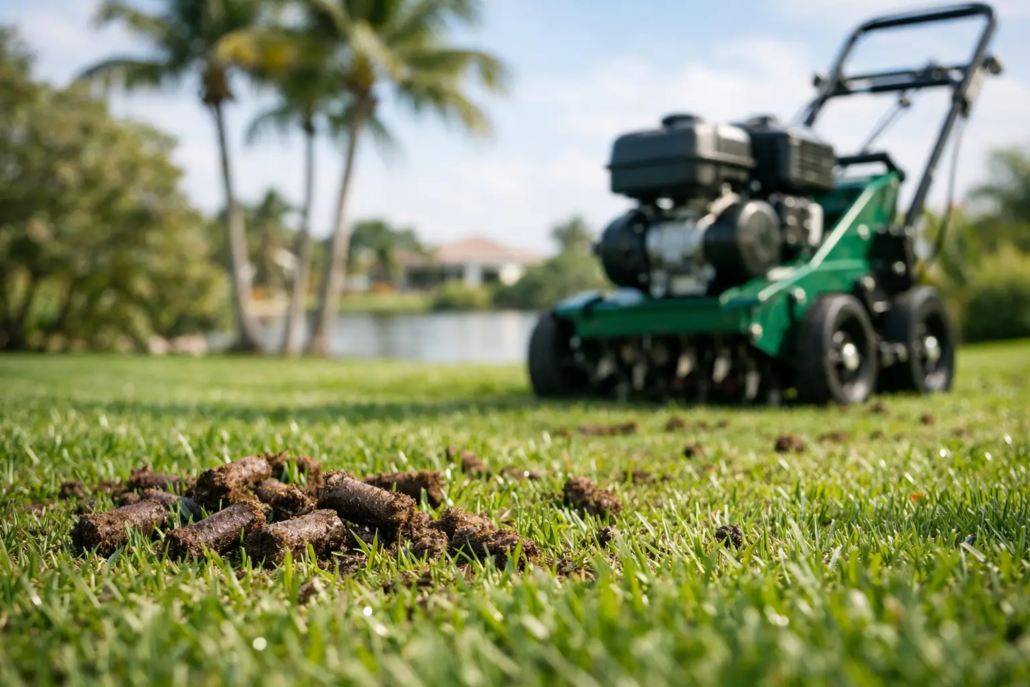
Core aeration removes small plugs of soil from the lawn rather than simply poking holes into the surface. Those openings create room for air exchange and improve the path for water and nutrients to move into the soil. They also help roots grow deeper, which can make the lawn more resilient during dry spells and summer heat.
For Florida homeowners, the benefit is not just greener grass. Better root development can improve how efficiently your lawn uses irrigation and fertilizer. That matters when heavy rain alternates with hot, dry stretches, as it often does in Northeast Florida.
Aeration can also improve the effectiveness of other lawn care services. If compacted soil is preventing water from moving down to the roots, changing your watering schedule alone may not solve the issue. Likewise, fertilizer applied to a lawn with severe compaction may not deliver the result you expect. Aeration helps create better conditions for the rest of your lawn care plan to work.
It is not a cure-all, though. Aeration will not fix a broken irrigation zone, eliminate a major weed problem, correct poor drainage caused by grading, or bring dead grass back to life. Those issues need their own solution. A professional evaluation can determine whether compaction is truly the problem or whether your lawn needs irrigation repair, weed control, soil improvement, or a combination of services.
Timing Aeration Around Rain and Irrigation
The soil should be moist when a lawn is aerated, not bone dry and not saturated. Slightly moist soil allows the aerator to pull clean plugs at the proper depth. Soil that is too dry can resist the machine, while a soaked lawn can become muddy, compacted further by equipment, and difficult to work safely.
A light watering the day before service may help if conditions have been dry. On the other hand, it is smart to avoid scheduling immediately after a major Florida downpour. The goal is workable soil, not a muddy yard.
After aeration, keep the lawn consistently watered according to the season and your local watering restrictions. The plugs left on top of the grass will break down naturally with mowing, rain, and irrigation. They may look messy for a short time, but they are part of the process and return valuable organic material to the lawn.
If your lawn is due for fertilizer, aeration can be a useful time to coordinate the two services. Because the soil has been opened up, nutrients have a clearer route toward the root zone. The right product and timing should still match your grass type and current lawn conditions. Over-fertilizing a stressed lawn can create more trouble than it solves.
Grass Type Matters in St. Augustine and Jacksonville
St. Augustine grass is common throughout the area and responds best to aeration when it is actively spreading in warm weather. Its above-ground runners can fill in small openings over time, but it needs warmth, moisture, and healthy growth to do that well.
Bermuda grass recovers aggressively during late spring and summer, making it a strong candidate for aeration during its active season. Zoysia can also benefit from aeration, particularly in compacted areas, but it grows more slowly than Bermuda. That makes proper timing and aftercare especially valuable.
Centipede grass requires a more careful approach. It generally prefers lower fertility and can be less forgiving when stressed. If you have centipede, avoid treating aeration as an automatic annual task. Evaluate compaction, thatch, irrigation, and overall turf health first.
What to Do Before and After Lawn Aeration
Mowing the lawn shortly before aeration can help the equipment reach the soil more effectively. The grass should be free of large branches, toys, hoses, and other obstacles, and irrigation heads should be clearly marked or known before work begins. This protects your system and helps the job go smoothly.
After aeration, continue normal mowing once the lawn is ready, but avoid heavy traffic for a few days if possible. Give the roots time to take advantage of the improved soil conditions. Watch for areas that remain wet, thin, or weak after treatment. Those spots may point to a separate drainage or irrigation issue that needs attention.
A healthy Florida lawn is built from the ground up. If your turf feels hard, drains poorly, or struggles to stay full in high-use areas, a customized evaluation from American Blade Lawn Care can help determine whether aeration is the right next step and when your yard will benefit most.


Leave a Reply
Want to join the discussion?Feel free to contribute!