
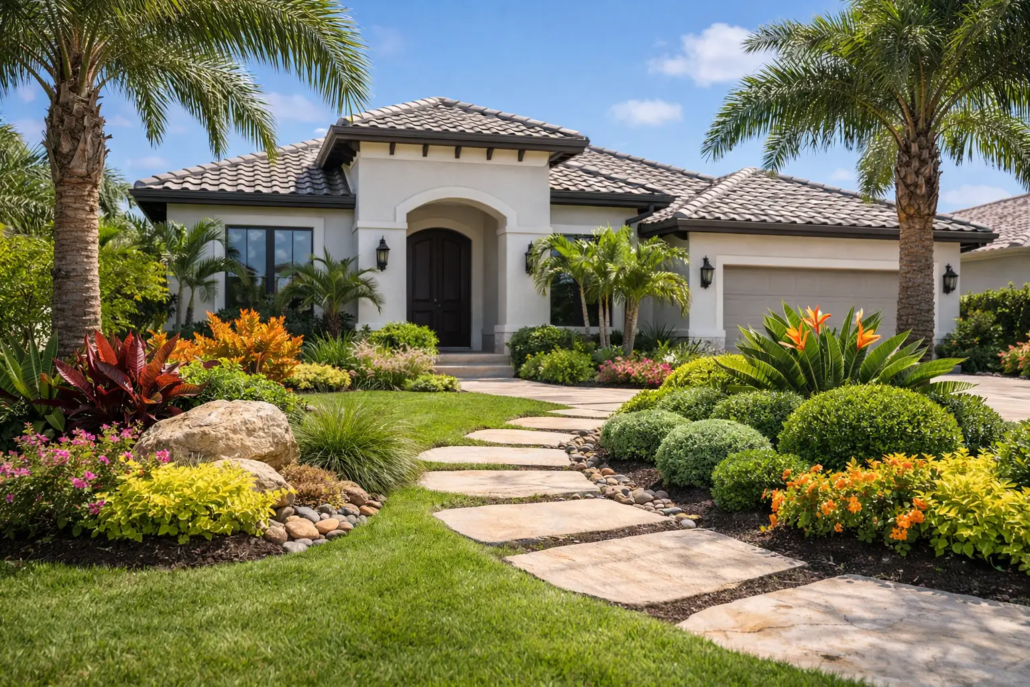
Front Yard Landscape Design for Florida Homes
A great front yard landscape design should still look good after an August downpour, a week of strong sun, and the regular comings and goings of family life. In St. Augustine, Jacksonville, and across Northeast Florida, that means designing for more than a pretty first impression. Your front yard needs plants that can handle the climate, irrigation that delivers water where it belongs, and defined spaces that stay clean and manageable.
The right plan can make a modest home look more polished, frame its best features, and reduce the constant battle with weeds, bare spots, and overgrown shrubs. The key is making practical choices before mulch, plants, or hardscape materials ever go in.
Start With How Your Yard Actually Performs
Every property has its own conditions. One front yard may get intense afternoon sun and hold water near the driveway. Another may sit under mature oaks, have sandy soil, and struggle to keep grass healthy near the entryway. Copying a landscape from a photo without accounting for those conditions often leads to expensive replacements and extra maintenance.
A useful design starts with the basics: sun exposure, drainage, soil, grass type, existing irrigation coverage, and how people move through the space. Notice where water pools after rain, where turf thins out, and whether shrubs block windows, walkways, or house numbers. These details tell you what the yard needs to work better, not just what it needs to look different.
For many Florida homeowners, drainage deserves attention early. A fresh planting bed will not solve water that repeatedly washes mulch into the sidewalk or leaves roots sitting wet for days. Depending on the property, the solution may involve reshaping a bed, improving downspout runoff, adjusting grading, or choosing plants that fit a wetter area. Good landscape work considers the whole property, not only the plants visible from the street.
Build a Front Yard Landscape Design Around Focal Points
Your home already gives the landscape a starting point. The front door, porch, walkway, driveway, and architectural details should guide the layout. A well-designed yard draws the eye toward the entrance and creates a clean transition from the street to the home.
Foundation beds are often the most visible part of the plan. They should soften the base of the house without becoming a row of oversized shrubs that hide windows and make the property feel crowded. Layering works well: lower plants near the front edge, medium-height material behind them, and taller accents placed where they will not cover important features.
The walkway is another opportunity to create order. Defined bed lines, healthy turf edges, and balanced plantings can make even a simple concrete path feel intentional. If a walkway is narrow, uneven, or difficult to navigate, a hardscape improvement may offer a better long-term result than trying to disguise the issue with plants.
Symmetry can look sharp around a formal entry, but it is not the only option. An asymmetrical arrangement may better suit a wide lot, a curved drive, or a home with an offset porch. What matters is visual balance. A large palm or specimen tree on one side may need a substantial planting bed, boulder feature, or grouping of shrubs on the other to keep the yard from feeling lopsided.
Choose Plants for Florida Conditions, Not Just First-Day Color
Color is valuable, but plant performance matters more. Northeast Florida landscapes deal with heat, humidity, sandy soils, heavy rain, occasional cold snaps, and active insect pressure. Plants selected for the wrong conditions can look great at installation, then decline when the weather turns demanding.
A dependable design usually combines evergreen structure with seasonal color and texture. Evergreen shrubs give the beds a finished appearance through the year. Flowering plants and annual color can add brightness near the entry or mailbox, but they typically require more frequent attention. Ornamental grasses, palms, and carefully placed small trees can add height and movement without filling every bed with high-maintenance material.
Native and Florida-friendly selections are often smart choices because they can be better suited to local conditions once established. That does not mean every yard needs to follow one plant palette. Some homeowners prefer a tropical look, while others want a clean, traditional design. The best choice depends on sunlight, irrigation, desired upkeep, and the overall style of the home.
There is always a trade-off. Fast-growing plants fill empty areas quickly, but they may require frequent trimming to stay out of windows and walkways. Bright flowering plants can make a strong statement, but they may need more water, feeding, or replacement than durable green shrubs. A good plan sets clear expectations so the landscape stays attractive without becoming a weekly chore.
Make Irrigation Part of the Design
Plants and turf cannot perform if irrigation is uneven, wasteful, or broken. A common issue in established front yards is a system designed around lawn coverage that does not properly serve new landscape beds. Sprinkler heads may spray sidewalks, miss dry areas, or water shrubs too aggressively.
Before installing new plantings, inspect the irrigation system and identify zones that need adjustment or repair. Turf, foundation beds, and containers often have different watering needs. A targeted system helps protect your investment while reducing unnecessary runoff.
Overwatering is just as damaging as underwatering in many Florida yards. Constantly wet soil can weaken roots, encourage disease, and create conditions where weeds thrive. Seasonal changes matter too. A schedule that works during dry spring weather may be excessive during the summer rainy season. Proper irrigation management keeps the landscape healthier and makes maintenance more efficient.
Use Mulch and Edging to Keep Beds Looking Finished
Fresh mulch can dramatically improve curb appeal, but it does more than provide color. It helps hold moisture in the soil, moderates root temperatures, and gives beds a clean, consistent appearance. In Florida, mulch also needs to stay where it belongs when heavy rain arrives.
Bed edges should be crisp enough to separate lawn from mulch and make mowing easier. A clean edge reduces the chance that grass creeps into planting beds and helps the entire yard look cared for between service visits. The right edging approach depends on the property. A simple cut edge may work well for a natural look, while a more defined border can help contain mulch and create stronger lines near hardscape areas.
Avoid piling mulch against plant stems or the base of trees. Mulch should be spread evenly, not built into thick mounds. Too much material around trunks and stems can trap moisture and cause plant health problems over time.
Plan for Maintenance From Day One
The most successful front yard landscapes are designed with future care in mind. Leave enough room for shrubs to mature, select plants that can be maintained at a reasonable height, and avoid squeezing too many varieties into a small bed. A crowded design can look full on installation day but quickly become difficult to trim, weed, and refresh.
Routine lawn mowing, edging, hedge trimming, weed control, and mulch refreshes all play a role in protecting the finished look. Landscape design and lawn care work best when they support each other. Healthy turf makes beds stand out, while clean beds make the lawn look greener and more defined.
For busy homeowners, a professional plan also creates accountability. Instead of calling separate providers for irrigation trouble, overgrown hedges, patchy grass, and worn-out beds, it is easier to work with a local team that understands how each part of the yard affects the next. American Blade Lawn Care helps homeowners build and maintain outdoor spaces that fit local conditions and daily life.
Know When a Refresh Is Enough and When a Redesign Makes Sense
Not every front yard needs to be completely rebuilt. If the bed layout is sound and the plants are healthy, a mulch installation, selective trimming, weed control, and a few new accents may be all it takes to restore curb appeal. This is often a smart option for homeowners preparing for a gathering, sale, or new season.
A fuller redesign makes more sense when drainage problems persist, irrigation is poorly matched to the landscape, plants have outgrown their space, or the yard no longer fits the home. It can also be worthwhile after exterior renovations, driveway changes, or the loss of a mature tree that has changed sun exposure.
A front yard should welcome you home just as well as it welcomes guests. Start with the conditions on your property, choose materials that can handle Florida weather, and build a design you will be glad to maintain year after year.


Leave a Reply
Want to join the discussion?Feel free to contribute!