
Hardscape Installation That Holds Up in Florida
A patio that shifts after one rainy season, a walkway that holds standing water, or a retaining wall that starts to lean is more than a curb appeal problem. It is usually a preparation problem. Quality hardscape installation starts below the surface, where base materials, grading, drainage, and soil conditions determine whether your new outdoor feature stays level and useful in Northeast Florida.
For homeowners in St. Augustine, Jacksonville, and nearby communities, hardscaping can turn an underused yard into a space that is easier to enjoy and easier to maintain. The right design can create a clean place for grilling, a safer path from the driveway to the front door, a defined border around landscape beds, or a durable area for gathering with family and friends. But Florida heat, heavy rain, sandy soil, and irrigation needs all affect how the work should be planned.
What Hardscape Installation Can Add to Your Yard
Hardscapes are the built elements of an outdoor space: paver patios, walkways, stepping-stone paths, retaining walls, edging, fire pit areas, gravel features, and other permanent surfaces. They give a landscape structure. Instead of fighting a muddy traffic path or mowing around awkward bare spots, you can create a finished area with a purpose.
A paver patio can extend your usable living space without the maintenance demands of a larger lawn. A walkway can keep guests from tracking sand and wet grass into the house. Stone or concrete edging can separate mulch beds from turf, helping the entire property look more organized after each mowing and trimming visit.
The best choice depends on how you use the yard. A family that entertains may benefit most from a patio with room for seating and a grill. A homeowner focused on curb appeal may get more value from a clean front walk, defined planting beds, and refreshed landscaping around the entry. Properties with slopes or erosion may need a retaining solution before adding decorative features.
Florida Conditions Change the Way Hardscapes Should Be Built
A hardscape should look good on installation day, but its real test comes after months of sun, afternoon storms, moisture, and normal foot traffic. Northeast Florida soils can be sandy and unstable when they are not properly compacted. Rainwater can move quickly across a property, washing out joints, settling a base, or collecting where it should drain away from the home.
That is why proper site preparation matters as much as the pavers or stone you select. The area must be evaluated for grade, drainage direction, existing irrigation lines, tree roots, utility locations, and the connection between hardscape surfaces and surrounding lawn or beds. A patio cannot simply be placed in a low spot and expected to perform well.
Drainage deserves special attention. A finished surface should direct water away from the house while avoiding runoff problems at neighboring properties. Depending on the site, the solution may involve careful grading, a compacted base, drainage channels, or adjustments to nearby landscape beds. There is no single answer for every yard, and a quick visual inspection is not always enough.
Heat is another consideration. Dark materials can become uncomfortably hot in full Florida sun, particularly around pools or bare feet. Lighter pavers may feel cooler, while shade trees, pergolas, or the placement of the patio can improve comfort. The right material is not always the most expensive one. It is the one that fits the location, expected use, maintenance needs, and budget.
A Solid Hardscape Installation Starts Below the Surface
The visible surface gets the attention, but the base does the heavy lifting. Skipping excavation or using inadequate base material may save time at first, yet it often leads to uneven pavers, loose edges, cracking, and drainage trouble later.
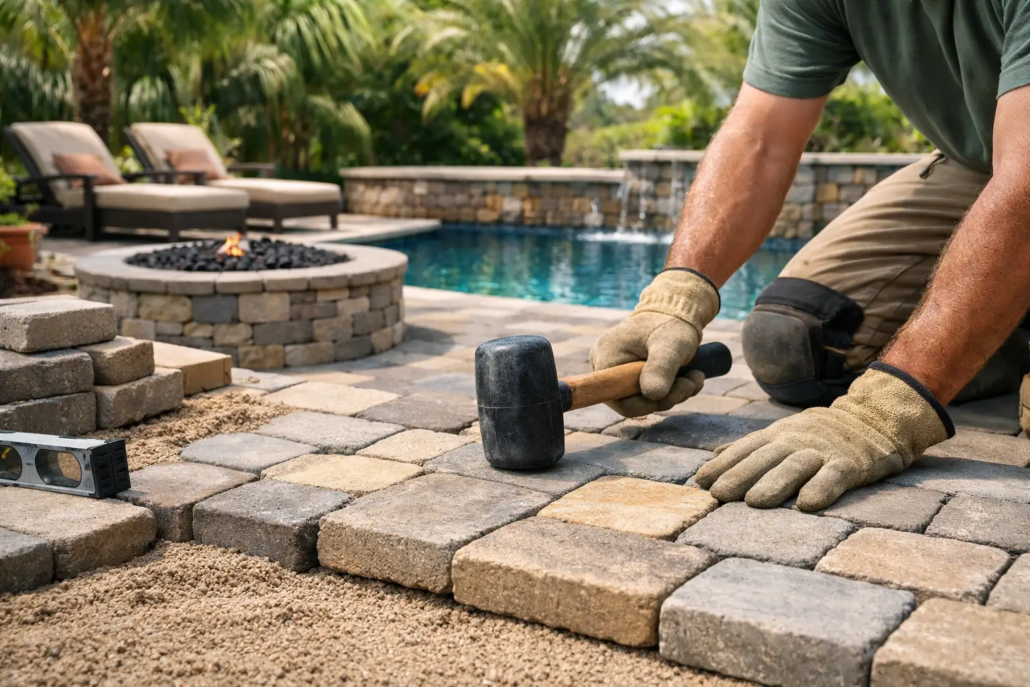
A professional installation begins by laying out the feature and confirming elevations. The crew removes the necessary soil, allowing room for a stable base and the selected finished material. Base aggregate is installed in controlled layers and compacted thoroughly. Bedding material is then leveled to support pavers or stone evenly, and edge restraints help prevent the surface from spreading over time.
For paver work, joints are filled with the appropriate sand or joint material to help lock the system together. Final compaction and cleanup matter, too. The goal is a surface that feels firm underfoot, drains as intended, and blends cleanly with nearby grass, mulch, and plantings.
Retaining walls require their own level of care. These structures manage soil pressure, not just appearance. A wall may need excavation, a compacted footing, drainage stone, and proper backfill so water does not build up behind it. Small decorative borders and true retaining walls are not the same project. When a wall is holding back a grade change, it needs to be designed and built for that job.
Plan Around Irrigation and Lawn Care
Hardscape work should make the rest of your property easier to care for, not create new headaches. Before construction begins, irrigation heads and lines need to be identified. Sprinklers may need to be moved so they do not spray patios, walls, or walkways, and the lawn around the new feature should still receive proper coverage.
The transition from hardscape to grass also matters. Clean edges reduce trimming time and make mowing more efficient. Mulch beds, shrubs, and decorative stone can soften the look of a patio or walkway while preventing small strips of turf from becoming difficult-to-maintain problem areas.
Choosing Materials for Appearance and Daily Use
Pavers are a popular option because they offer color, pattern, and repair flexibility. If an individual paver becomes damaged or a section needs to be accessed, it can often be addressed without replacing an entire slab. Concrete can be a practical choice for certain patios and walkways, especially when a clean, simple surface fits the property. Natural stone creates a distinct look but may have a higher material and labor cost depending on the design.
Gravel can work well for low-traffic paths, garden areas, and informal seating spaces. It is generally more affordable upfront, but it needs containment and occasional maintenance to keep it from migrating into beds or lawn. Loose gravel is not the best fit for every entry path, wheelchair-accessible route, or area where furniture needs a stable surface.
When selecting colors and textures, consider the house, roof, existing driveway, and landscape style. A hardscape does not need to match every surface exactly, but it should look intentional. Neutral tones often provide flexibility as plants, outdoor furniture, and exterior paint colors change over time.
Common Mistakes That Cost Homeowners Later
The biggest mistakes are usually not dramatic on day one. They show up slowly: water pooling near the foundation, pavers settling at the edge, weeds coming through joints, or a walkway that feels uneven after a few wet months.
Poor grading is one of the most expensive issues to correct after the fact. So is building over an unstable base or overlooking how roof runoff moves through the yard. Another common mistake is choosing a feature that is too small for its purpose. A patio may look fine on paper but feel crowded once a table, chairs, grill, and foot traffic are added.
Homeowners also sometimes focus only on the hard surface and forget the surrounding landscape. A patio without a thoughtful border, drainage plan, or transition into the lawn can look disconnected. Coordinating hardscape work with irrigation, mulch, shrubs, sod repair, and regular lawn care creates a more complete result.
Get a Plan That Fits Your Property
Before committing to a project, think about how the space will be used in two or three years, not just this weekend. Consider access from the house, sun exposure, drainage, privacy, and where outdoor equipment will be stored. A clear plan helps avoid costly changes once materials are in place.
American Blade Lawn Care helps local homeowners look at the full property, not just one surface. That means considering the patio, walkway, or retaining feature alongside lawn health, irrigation performance, planting beds, and the everyday maintenance that keeps a yard looking its best.
A well-built hardscape should make your outdoor space feel more useful the moment you step outside. Start with a professional evaluation, ask how drainage and base preparation will be handled, and choose a design that gives your Florida property a durable place to live, gather, and enjoy.


Leave a Reply
Want to join the discussion?Feel free to contribute!