
How to Remove Algae From Siding Without Damage
That green film spreading across your exterior is more than a curb appeal problem. In St. Augustine and Jacksonville, warm temperatures, heavy humidity, shade, and frequent rain give algae the moisture it needs to grow quickly. Knowing how to remove algae from siding the right way protects your home’s finish, avoids damage to nearby plants, and restores the clean appearance your property deserves.
Algae staining is common across Northeast Florida, especially on the north-facing side of a home, beneath overhanging trees, and around areas where sprinklers hit the walls. The good news is that most algae can be removed safely. The key is using the right cleaning method for the siding material and avoiding overly aggressive pressure.
Why Algae Keeps Growing on Florida Siding
Algae thrives where moisture lingers. A wall that stays damp after rain, receives little direct sunlight, or gets regular overspray from an irrigation system can develop green staining much faster than a dry, sunny surface. Pollen, dust, soil, and organic debris give that growth something to cling to.
Vinyl, painted wood, fiber cement, stucco, brick, and concrete block can all develop algae. The stain may start as a faint green haze and gradually become darker, streakier, and more noticeable. In some cases, black mildew or mold-like growth appears alongside it.
The cause matters because cleaning alone may not stop it from coming back. If a sprinkler head is consistently soaking the side of your home, a gutter is overflowing, or branches are keeping a wall in permanent shade, the surface will keep providing ideal growing conditions.
Start With the Safest Cleaning Method
For most siding, a low-pressure wash combined with an exterior-safe cleaning solution is the best approach. High pressure can force water behind siding, chip paint, scar softer materials, and damage window seals. That is why professional exterior cleaning is not simply about using the strongest setting on a pressure washer.
Before cleaning, remove patio furniture, cover delicate landscape plants if needed, and wet nearby shrubs and grass with clean water. This helps limit the effect of any cleaning solution that reaches the landscape. Close windows and doors, and make sure outdoor electrical outlets or fixtures are protected from direct spray.
A gentle cleaning solution designed for exterior algae removal can be applied from the bottom of the wall upward. Working upward helps prevent streaks from running down dry siding. Let the solution sit only as long as directed, keeping it from drying onto the surface. Then rinse thoroughly from the top down with low pressure.
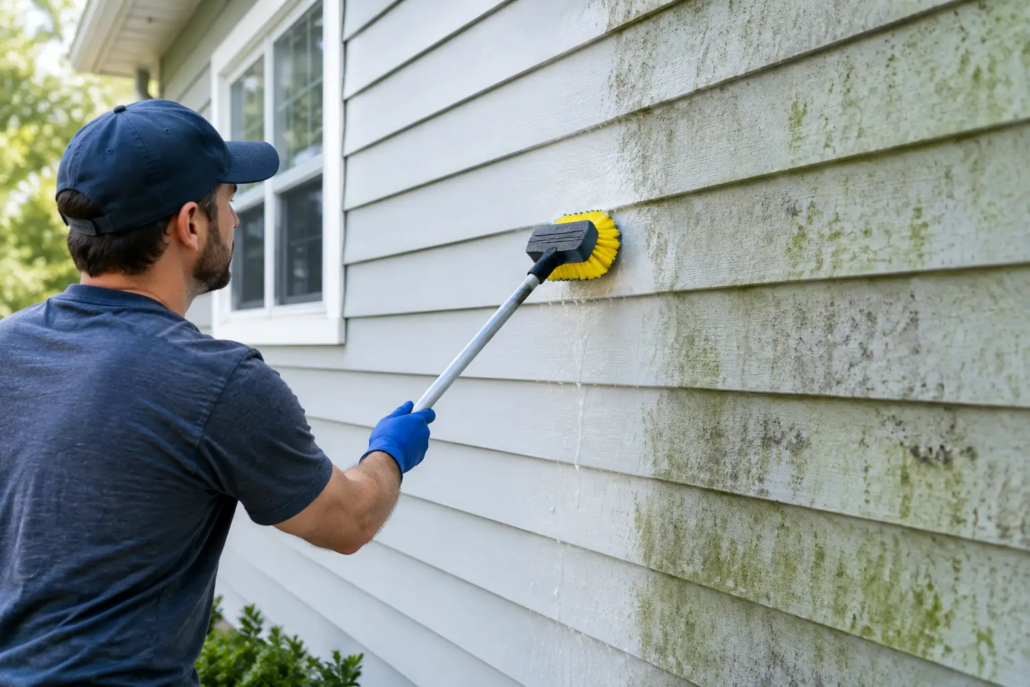
For light algae, a soft-bristle brush on an extension pole may be enough after the solution has had time to work. Do not use wire brushes, abrasive pads, or harsh scraping tools. They can leave permanent marks and take paint or protective coatings with them.
Match the Method to Your Siding Material
The best way to clean a home depends on the exterior surface. What works well on concrete block may be too harsh for older painted wood or delicate stucco.
Vinyl Siding
Vinyl siding generally responds well to soft washing. Use a mild exterior cleaner, low pressure, and a broad spray pattern. Keep the spray pointed straight at the wall or downward, never upward beneath the panels. Spraying up from below can drive water behind the siding and create moisture problems where you cannot see them.
Avoid using excessive pressure to chase a stubborn spot. If algae remains, reapply the appropriate cleaner and allow more dwell time rather than increasing the force of the wash.
Painted Wood and Fiber Cement
Painted surfaces require extra care. Strong pressure can strip paint, open seams, and expose bare areas that need immediate repair. A soft wash approach is usually the safer choice, followed by a careful rinse.
If the finish is already peeling, cracked, or chalky, cleaning may reveal that the siding needs paint or repair. That is not a cleaning failure. It is a sign that the coating has reached the end of its useful life.
Stucco, Brick, and Concrete Block
Masonry surfaces can handle more cleaning than many siding materials, but they are not indestructible. Stucco can chip or develop uneven marks under concentrated pressure. Brick mortar can weaken if it is already deteriorating. A professional can adjust water pressure, cleaning solution, and nozzle selection to clean the growth without damaging the surface.
Why Bleach Is Not Always the Easy Answer
Many homeowners reach for household bleach because it can kill algae quickly. Used incorrectly, however, it can discolor siding, harm paint, damage landscaping, irritate skin and lungs, and create runoff concerns. Bleach should never be mixed with other cleaners, especially products containing ammonia or acids.
A properly diluted exterior cleaning solution may be appropriate for some surfaces, but the right concentration depends on the material, severity of the staining, and surrounding plants. This is one reason professional soft washing can be the better choice for larger homes or heavily stained areas. The goal is a clean result without trading algae stains for dead shrubs, faded paint, or water intrusion.
If you decide to use any chemical cleaner yourself, wear gloves and eye protection, follow the label precisely, and rinse plants before and after the work. Test a small, inconspicuous spot first. If the surface changes color or the stain does not respond as expected, stop and reassess before treating the entire wall.
Common Mistakes That Can Damage Your Home
The most common mistake is using too much pressure. A pressure washer can make quick work of a driveway, but siding needs a more controlled approach. At close range, even a moderate machine can gouge wood, scar vinyl, remove paint, and break seals around windows.
Another mistake is letting cleaning solution dry in the Florida sun. Dried residue can leave streaks or discoloration, particularly on darker finishes. Work in manageable sections, preferably when the wall is shaded or the weather is milder.
Homeowners also sometimes overlook the source of the moisture. Cleaning a wall while leaving a misdirected sprinkler in place means the algae will often return within months. Irrigation adjustments, gutter maintenance, and trimming back dense vegetation can make a noticeable difference in how long the siding stays clean.
Keep Algae From Returning as Quickly
You cannot eliminate humidity from a Florida summer, but you can reduce the conditions algae prefers. Check that irrigation heads spray your lawn and planting beds rather than your house. Repair leaking spigots, downspouts, and gutter sections promptly. Keep mulch, leaves, and dense shrubs from trapping moisture directly against the exterior.
Tree trimming can also help when branches keep a wall shaded and prevent air movement. There is a balance, of course. Mature trees provide valuable shade and character, so the answer is not always major removal. Selective trimming that improves airflow and allows some sunlight onto damp areas is often enough.
Routine exterior cleaning is another practical part of property maintenance. Some homes need attention once a year, while heavily shaded properties or homes near dense vegetation may need it more often. A regular schedule prevents algae from becoming deeply established, which makes the cleaning process easier and gentler on the surface.
When It Is Time to Call a Professional
Professional help is worth considering when algae covers multiple sides of the home, the siding is high or difficult to reach, or you are unsure what material you are cleaning. It is also the safer choice when stains are mixed with peeling paint, damaged caulk, loose siding, or signs of water intrusion.
A qualified exterior cleaning team should inspect the surfaces, choose a method suited to the material, protect surrounding landscaping, and use the lowest effective pressure. The difference shows in the result: clean siding, intact finishes, and no unnecessary damage to your property.
For homeowners who want the exterior of their property to look as well maintained as the lawn and landscape, American Blade Lawn Care can help address algae staining with professional power washing and a careful, property-first approach. A clean home exterior makes every other outdoor improvement stand out – from fresh mulch beds to neatly edged turf.
Algae may be a normal part of living in Northeast Florida, but it does not have to become the first thing people notice about your home. Address it early, correct the moisture issues feeding it, and choose a cleaning method that leaves your siding looking better without putting your exterior or landscaping at risk.


Leave a Reply
Want to join the discussion?Feel free to contribute!