
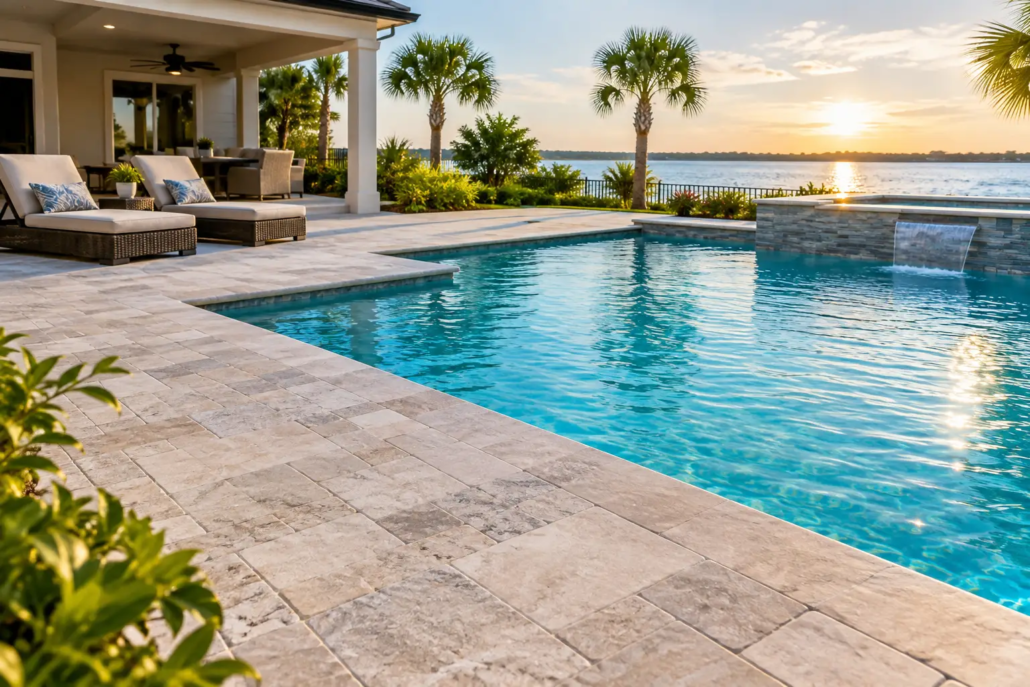
Best Pavers for Pool Decks in Northeast Florida
A pool deck in St. Augustine has to handle much more than weekend foot traffic. It faces punishing sun, summer downpours, humidity, salt air near the coast, wet feet, sunscreen spills, and the occasional patio furniture scrape. That is why choosing the best pavers for pool decks is not simply a color decision. The right material keeps the area cooler, safer, easier to maintain, and ready for Florida living year after year.
For most Northeast Florida homes, pavers are a smart choice because they create a finished, upscale look without the cracking concerns that often come with one large poured concrete slab. They can also be repaired section by section if settling, tree roots, or underground work affects the deck later. Still, not every paver performs the same around a pool.
What a Florida Pool Deck Needs Most
A beautiful pool deck should never come at the expense of comfort or safety. Around a pool, the surface needs reliable traction when wet, good drainage, and a finish that does not become painfully hot by midday. It should also stand up to chlorine, saltwater systems, rain, and frequent cleaning.
Drainage deserves special attention in our area. Heavy rain can arrive quickly, and water that sits near the pool or against the home can create slippery conditions, stain surfaces, and contribute to drainage problems in the landscape. Proper base preparation, grading, joint material, and edge restraints matter just as much as the paver selected.
Color makes a practical difference, too. Lighter shades usually stay more comfortable under bare feet than charcoal, dark brown, or black pavers. A light paver may show leaves and dirt a little sooner, while a dark paver can absorb more heat. The best choice balances the look you want with how your family will use the space at 2:00 on a July afternoon.
Best Pavers for Pool Decks: Top Material Choices
Travertine Pavers
Travertine is often the first choice for homeowners who want a high-end pool area with a natural Florida feel. This natural stone has small pores that help it stay cooler than many dense surfaces, and its textured finish offers good traction around wet areas. Cream, ivory, sand, and light silver tones work especially well with coastal and Mediterranean-style homes throughout St. Augustine and Jacksonville.
Travertine does require thoughtful installation and routine care. Because it is a natural material, color and texture variation are part of its appeal, but each piece will not look identical. It should be installed over a properly prepared base, and sealing can help reduce staining from spills, leaves, and pool chemicals. For a homeowner prioritizing comfort underfoot and a premium appearance, travertine is hard to beat.
Concrete Pavers
Concrete pavers offer the broadest range of shapes, colors, patterns, and price points. They can create anything from a clean modern pool deck with large-format slabs to a traditional running-bond patio that ties into an existing walkway or driveway. Quality concrete pavers are durable, easy to replace individually, and often more budget-friendly than natural stone.
For pool use, choose a textured or tumbled surface rather than a smooth, polished finish. Also, lean toward lighter colors to limit heat buildup. Concrete pavers can fade gradually under strong Florida sun, especially in darker shades, but proper cleaning and occasional sealing can help preserve their appearance. They are an excellent all-around option when you want design flexibility without stretching the budget too far.
Porcelain Pavers
Porcelain pavers are a strong option for homeowners who prefer a crisp, contemporary look and lower-maintenance surface. They resist stains, moisture absorption, mold, and fading very well. Many styles realistically resemble stone, wood, or concrete, making it easier to match a modern exterior without the upkeep associated with some natural materials.
The trade-off is installation. Porcelain is dense and requires the right cutting tools, base system, and installation experience. Around a pool, only use outdoor-rated porcelain pavers with an appropriate slip-resistant finish. A smooth indoor-style porcelain tile is not the right product for a wet deck, no matter how good it looks in a showroom.
Shellstone and Other Natural Limestone
Shellstone and certain limestone pavers give a pool deck a relaxed coastal character that fits Northeast Florida beautifully. Their natural texture, pale colors, and fossil-like details can make a new pool area feel established from day one. Like travertine, many light natural stone options are more comfortable in direct sun than dark concrete or brick.
Natural limestone varies by product, so performance depends on the specific stone and finish. Some varieties are more porous than others and may need sealing to protect against staining and weather exposure. This is a material where professional guidance is valuable. The right stone can look exceptional, but it must be selected for exterior pool use rather than general patio use.
Which Pavers Should You Avoid Around a Pool?
Brick pavers are attractive and durable, but they are not always the best fit for a pool deck in Florida. Their darker colors can get hot, and their smaller size creates more joints to maintain. They may work well as a border or accent, but they are usually not the first recommendation for a large barefoot pool area.
Highly polished stone and smooth tiles should also be approached carefully. Wet surfaces can become slick, particularly where swimmers enter and exit the pool. If a material is marketed for indoor floors, ask whether it is specifically rated for outdoor, wet-area installation before making a decision.
Loose gravel is another poor choice immediately around a pool. It tracks into the water, shifts underfoot, and does little to create the stable, finished surface most homeowners want. It can have a place in nearby landscape beds, but not as the main walking surface around the water.
Design Details That Make a Pool Deck Work Better
The best material can still underperform if the layout ignores how people move through the space. Allow enough deck width for lounge chairs, walking paths, and safe circulation around the pool. A cramped strip of pavers may meet a basic need, but it will not feel comfortable when family and guests are using the area together.
Consider a contrasting border at the pool edge or around steps. It can add visual definition and help people see changes in elevation. A border should complement the main paver rather than compete with it. For example, soft ivory travertine paired with a subtle silver border creates distinction without making the deck feel busy.
Large-format pavers can make a smaller backyard appear more open because there are fewer visible joints. Smaller pavers and patterned layouts bring more texture and traditional charm. Neither is automatically better. The home’s architecture, pool shape, and existing hardscape should guide the decision.
Installation Matters as Much as the Paver
A pool deck is only as dependable as what sits beneath it. The installation process should begin with a careful review of the existing grade, drainage paths, soil condition, and nearby irrigation lines. In our sandy Florida soils, the base must be properly excavated, compacted, and graded so water moves away from the pool and home.
A professional installer will also use reliable edge restraints to prevent pavers from spreading over time. Polymer sand or another appropriate jointing product helps stabilize the surface and reduces weed growth between pavers. These details may not be the first things homeowners notice, but they are often what separates a deck that stays level from one that develops uneven areas after a few rainy seasons.
If your property already has drainage issues, address those before or during the pool deck project. Adding pavers over an existing water problem only hides it temporarily. A complete landscape and hardscape plan can account for swales, drains, irrigation adjustments, planting beds, and surrounding turf so the entire yard works together.
Keeping Pool Deck Pavers Looking Their Best
Routine care is straightforward when the deck is installed correctly. Sweep away leaves, mulch, and debris before they break down and stain the surface. Rinse the deck as needed, especially after heavy pollen, storms, or pool parties. Use a cleaner suited to the specific paver material, and avoid harsh chemicals that can damage stone, joint sand, or nearby landscaping.
For natural stone and some concrete pavers, resealing on a schedule recommended for the product can improve stain resistance and refresh the color. Avoid treating sealing as a cure for poor drainage or structural movement. It is a protective finish, not a repair method.
American Blade Lawn Care helps homeowners create outdoor spaces that look cared for from the pool deck to the property line. A well-planned paver installation, paired with healthy landscaping and proper drainage, gives your backyard a polished finish that is ready for everyday use and the people you invite over.


Leave a Reply
Want to join the discussion?Feel free to contribute!