Sprinkler Repair Versus Replacement Decisions
A brown strip beside a green lawn, a soggy spot near the sidewalk, or a water bill that suddenly jumps can all point to the same issue: an irrigation system that is no longer doing its job. For Northeast Florida homeowners, deciding on sprinkler repair versus replacement is not always simple. A small valve or sprinkler-head repair can restore your coverage quickly. But when failures keep returning, putting money into an aging system may only delay a larger problem.
The right choice depends on what is failing, how old the system is, how much water it wastes, and whether it can still support a healthy lawn through St. Augustine’s heat, sandy soils, and seasonal rain. A professional inspection helps separate a repairable issue from a system that needs a more complete update.
When Sprinkler Repair Is the Smart Choice
Many irrigation problems are isolated. If the rest of the system is functioning properly, a targeted repair is usually the most practical and cost-effective solution.
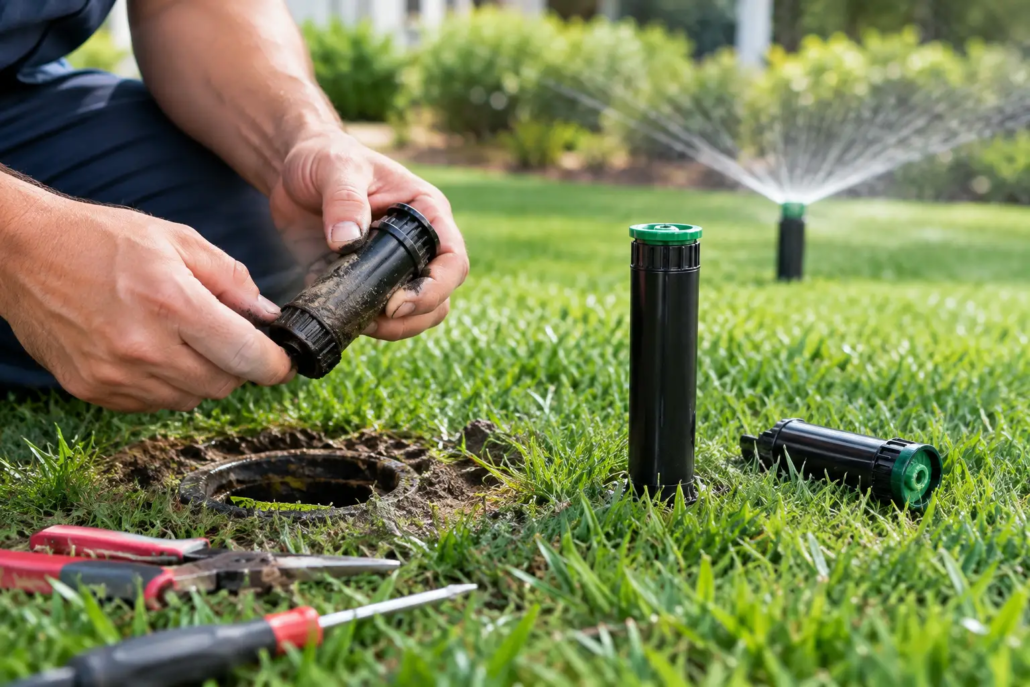
A broken or clogged sprinkler head is a common example. Heads can be damaged by mowers, foot traffic, vehicles, shifting soil, or normal wear. They may spray onto pavement, fail to rise, leak around the base, or leave one section of grass dry. Replacing the damaged head and adjusting the spray pattern can often solve the problem without major work.
The same is true for a faulty valve, worn solenoid, cracked fitting, or damaged section of irrigation line. These components can fail individually while the rest of the system remains in good condition. A technician can locate the source of the problem, make the repair, test each zone, and confirm that water is reaching the lawn evenly.
Repair also makes sense when your system is relatively new and has had few issues. If you know the original layout works for your lawn and landscaping, there is usually no reason to replace good components just because one part has failed.
Signs your system likely needs a repair
Look for a specific problem with a clear cause. One zone may not turn on, one head may be broken, or water may be pooling in a defined area. You may also notice a controller issue, such as a zone running at the wrong time or failing to run at all.
A repair is often the right call when the issue is limited, the piping is in good condition, and your lawn receives consistent coverage after the fix. The goal is not simply to stop a leak. It is to restore efficient watering so grass, shrubs, and landscape beds get what they need without wasting water.
When Replacement Starts Making More Sense
A sprinkler system does not need to be completely destroyed before replacement becomes the better value. Systems that need frequent repairs, have outdated components, or no longer match the property may cost more to maintain than to improve.
Age alone does not make replacement mandatory, but it matters. Older systems may have brittle piping, unreliable valves, outdated controllers, poor drainage, or sprinkler heads that do not deliver water efficiently. If one repair leads to another every few months, the issue may be broader than a single broken part.
Repeated leaks are a major warning sign. Underground leaks can waste significant water, soften soil, damage turf, and make certain areas of the yard difficult to maintain. If leaks appear in multiple areas, patching each one may provide short-term relief without addressing aging pipe or a poor original installation.
Poor coverage is another reason to consider replacement or a major system upgrade. Maybe your lawn was expanded, a patio was added, new trees have matured, or landscaping beds have changed. An older layout may now spray sidewalks, soak plant material that needs less water, or leave dry spots that invite weeds and thinning grass.
Replacement can solve design problems repairs cannot
A new or substantially updated system can be designed around the yard you have now, not the yard that existed years ago. That may include separate zones for turf and landscape beds, heads with more appropriate spray patterns, drip irrigation for plantings, and a controller that adjusts watering more accurately.
This matters in Florida. St. Augustine grass, ornamental plants, shrubs, and newly installed landscaping do not always need the same amount of water. A system that waters everything identically can create waste in one area while leaving another stressed. Proper zoning supports healthier growth and gives you more control over your property’s water use.
Sprinkler Repair Versus Replacement: Questions to Ask
Before approving work, think beyond the immediate symptom. A dependable irrigation professional should inspect the complete system and explain what is causing the issue, not just replace the most visible broken part.
Start with the repair history. One service call after several years is very different from multiple calls in one season. Add up what you have spent recently, including emergency repairs, high water bills, and any lawn damage caused by dry or flooded areas. If the system repeatedly fails, a larger upgrade may protect your budget over time.
Consider the condition of the controller and valves as well. A modern controller can make scheduling easier and help prevent watering at unnecessary times. If the controller is unreliable, the wiring is damaged, and several valves are failing, replacing individual pieces may not provide the dependable operation you want.
It also helps to consider your plans for the property. If you are adding landscaping, installing hardscape features, renovating beds, or preparing a home for sale, updating irrigation can improve curb appeal and protect the investment you are making outdoors. On the other hand, if the system is sound and you only need one repair, targeted service may be all that is needed.
Do Not Judge the System by Green Grass Alone
A lawn can look green while the irrigation system is wasting water. Rainfall may temporarily cover up poor coverage, and healthy-looking areas may be receiving far more water than they need. The real test is whether every zone applies water where it belongs, at a rate the soil can absorb, and on a schedule that makes sense for the season.
Overwatering is especially common when systems are set and forgotten. It can encourage shallow roots, disease pressure, runoff, and weed growth. Underwatering creates its own problems, including stressed turf, bare spots, and plants that struggle during hot weather. Repairing or replacing irrigation is about balancing those needs, not simply running the sprinklers longer.
A full evaluation should include checking spray direction, pressure, runoff, valve operation, zone timing, leaks, controller settings, and the condition of heads and piping. It should also account for grass type, shade, soil conditions, slopes, and landscaping changes. That local, property-specific approach is what turns irrigation service into better lawn care.
The Value of a Professional Assessment
Irrigation problems can look simple from the surface, but the cause is often underground or connected to the system’s overall design. A wet spot may be a leak, a drainage issue, or an improperly adjusted head. A dry zone may result from a broken pipe, low pressure, a valve problem, or an irrigation layout that was never right for the space.
American Blade Lawn Care helps homeowners evaluate these concerns with the bigger picture in mind. Rather than pushing a one-size-fits-all answer, the right recommendation should be based on the condition of the system, the needs of the lawn, and the work required to deliver dependable coverage.
If a repair will provide years of reliable service, it should be repaired. If the system is creating repeat expenses, wasting water, or failing to support your landscape, replacement may be the more responsible investment. A clear inspection and honest estimate can help you make the decision with confidence, then get your yard back to looking healthy, clean, and well cared for.


Leave a Reply
Want to join the discussion?Feel free to contribute!