
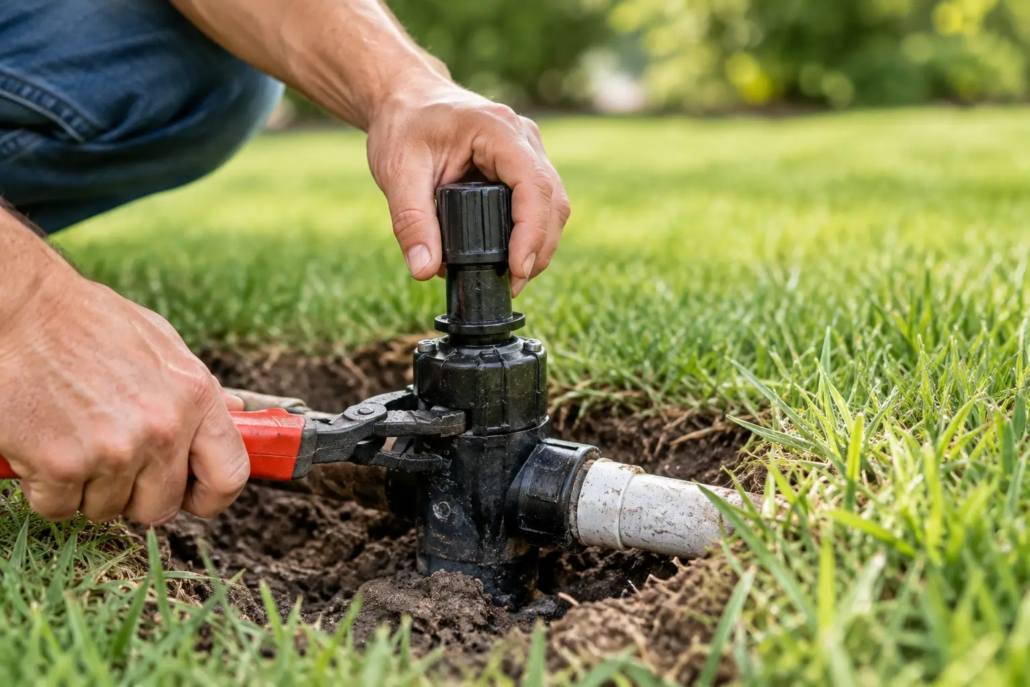
Repair a Broken Sprinkler Valve Before Lawn Damage
A sprinkler zone that will not shut off can turn a healthy lawn into a soggy, stressed mess overnight. If you need to repair a broken sprinkler valve, acting quickly protects more than your water bill. It can prevent washed-out mulch, muddy landscape beds, root damage, and brown grass caused by a zone that never receives the water it needs.
For homeowners in St. Augustine, Jacksonville, and surrounding Northeast Florida communities, irrigation problems are rarely convenient. Systems work hard through heat, sandy soil, heavy summer rain, and changing seasonal watering needs. A valve issue may look small at first, but the right repair depends on identifying whether the valve, wiring, controller, water pressure, or sprinkler zone is actually at fault.
Signs You May Need to Repair a Broken Sprinkler Valve
A sprinkler valve controls the flow of water to a specific zone. When it works properly, it opens when the irrigation controller calls for water and closes completely when that cycle ends. A broken valve can fail in either direction: it may stay closed and leave part of the lawn dry, or it may stay open and continue watering long after the timer has stopped.
One of the clearest signs is a zone that keeps running. You may hear water moving through pipes after the scheduled cycle, see sprinklers continuing to spray, or notice water pooling around heads and low areas of the yard. Do not assume this is simply leftover water draining from the lines. A brief drip is normal on some systems, but continuous flow is not.
A valve that will not open creates a different set of problems. One portion of the lawn may become dry and thin while the rest of the property looks fine. Sprinkler heads in that zone may barely rise, spray weakly, or not activate at all. In Florida, turf can show drought stress quickly during hot weather, especially along driveways, sidewalks, and sunny edges of the property.
Other warning signs include a buzzing sound at the valve box, a controller that shows a zone running when no water comes out, soggy ground near the valve manifold, or unusually high water usage. These symptoms do not always point to the same repair, which is why a careful inspection saves time and unnecessary replacement costs.
What Causes a Sprinkler Valve to Fail?
Valve problems usually come down to a few common causes. The valve diaphragm can wear out or become blocked by grit and debris. This flexible internal piece opens and closes with water pressure, and even a small amount of sand can keep it from sealing correctly. That is a frequent concern in Northeast Florida, where sandy soil and sediment can make their way into irrigation components.
Electrical trouble is another possibility. Each automatic valve has a solenoid that receives a signal from the controller. If the solenoid fails, the wire connection loosens, or a wire is cut during landscaping work, the valve may not receive the signal it needs to open. In some cases, the controller itself has a programming issue, a damaged terminal, or a failing transformer.
The valve may also be functioning properly while another issue is limiting performance. A shutoff may be partially closed, a backflow component may have trouble, a pipe may be leaking, or the zone may have too many sprinkler heads for the available water pressure. Replacing a valve without checking the full system can leave the original problem unresolved.
Why a Stuck-Open Valve Needs Fast Attention
A valve that stays open wastes water every minute it runs. More importantly, too much water can damage your landscape. Saturated turf roots struggle to get oxygen, and standing water can encourage fungal issues, weeds, and mosquito activity. Water moving across hardscape areas may also leave stains or carry mulch and soil into drains.
If a zone will not stop, turn off the irrigation system at the controller first. If water continues flowing, locate the irrigation shutoff valve and turn off the water supply to the system. Avoid digging around a flooded valve box while the system is pressurized. The box may contain exposed wiring, hidden fittings, and softened soil that can make a small issue worse.
The Professional Process to Repair a Broken Sprinkler Valve
A dependable repair starts with diagnosis, not guesswork. An irrigation technician first checks the controller schedule and manually tests the affected zone. This helps determine whether the controller is sending a signal and whether the valve is responding.
Next, the technician inspects the valve box, solenoid, wiring connections, and surrounding ground. A valve that is buried in soil or filled with water often needs to be cleared before its condition can be properly evaluated. The system may then be tested for electrical continuity and water pressure to separate an electrical failure from a mechanical one.
If the valve needs service, the repair may involve cleaning debris from the diaphragm, replacing a worn solenoid, rebuilding the valve with compatible internal parts, or replacing the full valve assembly. The best option depends on the valve’s age, its condition, the availability of parts, and whether the existing fittings are sound. A simple diaphragm repair may be cost-effective on a newer, well-maintained system. On an older valve with cracked plastic or recurring issues, replacement is often the more reliable choice.
After the repair, each affected zone should be run long enough to confirm that the valve opens, closes, and provides proper coverage. This is also the right time to look for leaking heads, clogged nozzles, overspray onto pavement, and dry spots that may have been hidden by the valve problem.
Why DIY Valve Repairs Can Get Complicated
Replacing a sprinkler valve can look straightforward, but the work is more involved than swapping a single part. Valve manifolds often have limited room, pipes may be brittle from age or sun exposure, and incorrect fittings can create leaks underground. Cutting the wrong section of pipe can turn a valve repair into a larger irrigation rebuild.
Electrical diagnosis adds another layer. A valve that will not run may have a bad solenoid, but it could also have a damaged wire somewhere between the controller and valve box. Replacing the valve will not fix a wire break. Likewise, a zone that stays on may have a valve issue, yet a controller problem can sometimes send an unintended signal.
For homeowners who prefer a clear answer and a repair that lasts, professional service is usually the better use of time. A trained irrigation crew can identify the source of the failure, use the right components, test the system after repair, and make practical recommendations for water use and coverage.
Protect Your Lawn After the Valve Repair
Once the valve is working again, do not immediately return to the same watering schedule. Check the affected area for soft ground, exposed roots, displaced mulch, and runoff. A zone that has been overwatering may need a short adjustment period so the soil can dry down without stressing the grass.
If the zone was not watering, inspect the turf for dry patches and adjust gradually. Running a sprinkler longer is not always the answer. Poor coverage, clogged nozzles, low pressure, or misaligned heads can keep water from reaching the grass evenly. In St. Augustine’s warm climate, uneven irrigation often shows up first as thinning turf near curbs, foundation plantings, or wide landscape beds.
A seasonal irrigation check helps catch small issues before they affect curb appeal or create expensive water waste. During an inspection, a professional can test every zone, adjust spray patterns, check valve boxes, look for leaks, and confirm that the schedule matches current rainfall and lawn conditions.
American Blade Lawn Care provides practical irrigation repair for local property owners who want their systems working efficiently and their outdoor spaces looking their best. Whether a valve is stuck open, a zone will not run, or your lawn has begun showing uneven watering patterns, a prompt inspection can protect your property and bring your irrigation system back under control.
A sprinkler valve problem does not need to become a flooded yard or a struggling lawn. When something looks off, shut down the water if necessary, avoid temporary fixes that hide the cause, and arrange for a proper inspection before the next watering cycle creates more damage.


Leave a Reply
Want to join the discussion?Feel free to contribute!