
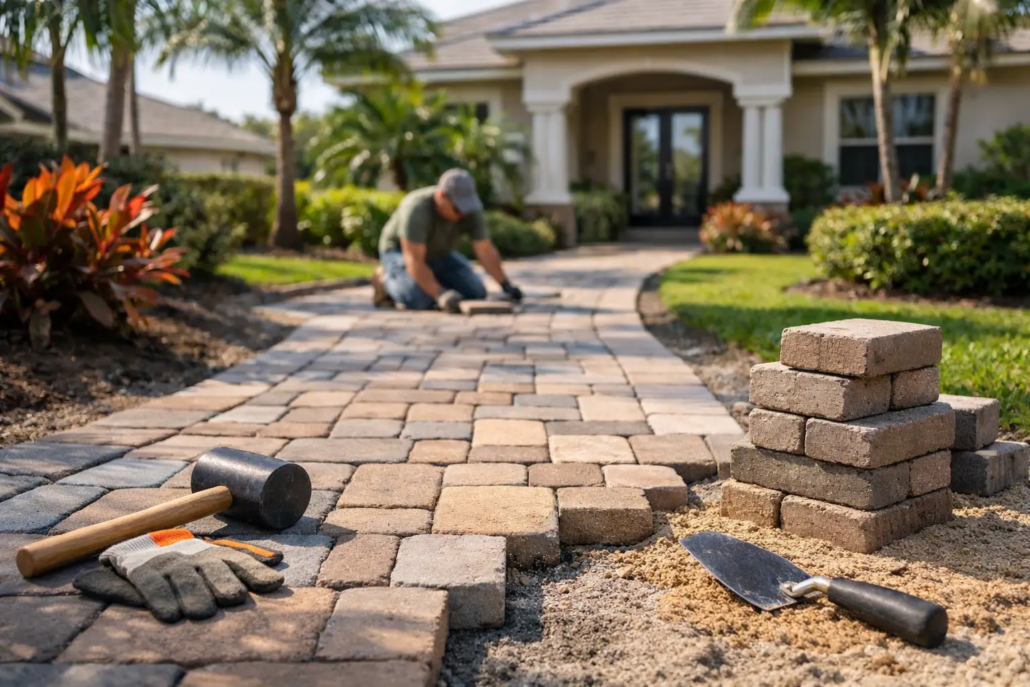
Paver Walkway Installation for Florida Homes
A muddy shortcut through the grass, uneven stepping stones, or a cracked concrete path can make an otherwise well-kept yard feel unfinished. Professional paver walkway installation gives your home a clean, dependable route from the driveway to the front door, around the pool, or through the backyard. More than a curb appeal upgrade, the right walkway helps protect turf, directs foot traffic, and makes the property easier to enjoy after Northeast Florida rain.
For homeowners in St. Augustine, Jacksonville, and nearby communities, the details beneath the pavers matter as much as the color on top. Our sandy soils, heavy downpours, humidity, and fast-growing landscapes can expose shortcuts quickly. A walkway should look like it belongs with your home while staying level, draining properly, and holding up to everyday use.
What a Well-Built Paver Walkway Changes
A paver walkway creates a clear path where people already walk. That may be from the driveway to the entry, from a gate to the backyard, or between a patio and a fire pit or garden area. Instead of worn grass and tracked-in sand, you get a defined surface that keeps shoes cleaner and landscaping more organized.
Pavers also give homeowners more design flexibility than a plain concrete strip. They are available in a range of shapes, tones, and laying patterns, so the path can match an existing patio, pool deck, driveway, or home exterior. A straight walkway often fits a formal front yard, while a gently curved route can soften a landscape bed and create a more natural flow.
The practical benefits are just as valuable. Individual pavers can be repaired if one becomes damaged or settles, rather than replacing an entire slab. Properly installed joints also allow the surface to move slightly with changing ground conditions without the large cracks common in aging concrete.
Paver Walkway Installation Starts Below the Surface
The visible paver is only one part of the project. Long-lasting results depend on excavation, grading, base preparation, edge restraint, and joint stabilization. Skipping any of those steps may save time initially, but it can lead to shifting pavers, low spots, standing water, and loose edges.
First, the walkway area is measured and laid out with the home’s entry points, landscape beds, irrigation lines, and drainage patterns in mind. The route needs enough width for comfortable use. A narrow side-yard path may work well at around three feet wide, while a front entry walkway often feels more welcoming at four feet or wider. The best size depends on how the area is used and how much room the property provides.
Next comes excavation. The depth must account for the paver thickness, bedding sand, compacted base material, and the finished elevation needed to keep water moving away from the home. In Florida, drainage cannot be treated as an afterthought. A walkway that sits too high can direct runoff toward a structure. One that sits too low can collect water, wash out joint sand, and become a maintenance issue.
A compacted aggregate base is then installed in layers. This creates the stable foundation that carries foot traffic and helps the surface resist settling. After the base is graded and compacted, a thin, even layer of bedding sand provides the setting surface for the pavers. Each paver is placed according to the selected pattern, checked for alignment, and secured with durable edge restraints.
Once the pavers are installed, joint sand is swept between them and compacted into place. Polymeric joint sand is often a smart choice for walkways because it helps reduce erosion and weed growth when properly installed. It is not a substitute for a sound base, but it is an important finishing step that helps keep the surface locked together.
Choosing Pavers That Fit Your Yard
The best paver style is not always the most elaborate one. A walkway should complement the scale of your home and the rest of the outdoor space. For example, oversized pavers can look sharp beside a modern home with broad, simple lines, while smaller traditional pavers may better suit an established St. Augustine property with detailed architecture and mature planting beds.
Color deserves practical consideration, too. Light shades can make a shaded pathway feel brighter but may show leaf stains and dirt more easily. Very dark pavers can absorb heat in full sun. Blended earth tones are popular because they work with Florida landscaping, hide everyday dust, and pair well with mulch, stone, palms, ornamental grasses, and flowering plants.
Texture matters for safety. A heavily polished or slick surface is rarely the right choice for an exterior path that sees rain, sprinkler overspray, or pool traffic. Textured concrete pavers generally provide dependable traction while still offering a finished appearance.
A border can add definition without making the design feel busy. It may use a contrasting color, a different paver orientation, or a simple soldier course around the edges. Whether a border makes sense depends on the size of the walkway and the surrounding hardscape. On a compact path, too many colors and patterns can feel crowded. On a larger entry walk, a clean border can create a more intentional, high-end finish.
Drainage and Irrigation Need a Plan
Walkways are often installed near rooflines, landscape beds, downspouts, and irrigation zones. Those conditions should be evaluated before excavation begins. Water should flow away from the house and avoid pooling along the edges of the path. In some yards, adjusting a slope, extending a downspout outlet, or improving drainage nearby may be necessary to protect the new installation.
Irrigation is another common concern. Sprinkler heads that spray directly onto a walkway waste water and can leave mineral deposits or encourage slick algae growth in shaded spots. A landscaping professional can evaluate nearby irrigation and adjust heads so they water the lawn and plants rather than the hardscape.
This is one reason an all-in-one property service provider can make the project easier. The walkway should work with the turf, mulch beds, irrigation, edging, and drainage system already on the property. It should not create a new problem for the rest of the yard.
When to Schedule a New Walkway
Paver installation can be completed through much of the year in Northeast Florida, but scheduling depends on weather, access, and the scope of the project. A period of frequent heavy rain may affect excavation and compaction timing. If you are planning a broader landscape refresh, it is often efficient to complete the walkway before new sod, mulch, or plantings are installed.
A walkway project is also a good opportunity to address surrounding issues that have been bothering you. Maybe the front bed needs fresh edging, the side yard has bare turf from foot traffic, or the route to the pool needs better drainage. Coordinating the work can produce a cleaner finished result than tackling each issue separately over several months.
Maintaining Your Paver Walkway
Pavers are low maintenance, not no maintenance. Regular sweeping removes leaves, sand, and organic debris that can stain the surface or support algae growth. Occasional rinsing helps keep the walkway fresh, especially beneath trees or near irrigated beds.
For stubborn dirt and mildew, professional power washing can restore the surface without relying on overly aggressive pressure that may disturb joint sand. If the joints begin to thin over time, replenishing polymeric sand helps maintain stability and limits weeds. Sealing may be appropriate for some paver types and locations, particularly where staining is a concern, but it should be selected carefully. The wrong product or application can create an unnatural shine or reduce traction.
Pay attention to changes early. A small low spot, loose edge, or recurring puddle is easier to correct before it affects a larger section of the walkway. With a properly prepared base and simple periodic care, a paver path can remain an attractive part of the landscape for years.
Get a Walkway That Looks Right and Works Hard
A new walkway should do more than fill space between two points. It should make arriving home, taking out the trash, greeting guests, and moving through the yard easier in every season. American Blade Lawn Care can help homeowners create a paver path that fits the property, supports proper drainage, and complements the lawn and landscaping around it.
If your current route is worn, uneven, or simply does not match the rest of your outdoor space, start with a clear plan for where people walk and where water goes. That simple assessment is often the first step toward a cleaner, safer, better-looking yard.


Leave a Reply
Want to join the discussion?Feel free to contribute!