
Florida Lawn Aeration Benefits for Your Yard
A St. Augustine lawn can look green on the surface while struggling underneath. Heavy summer rain, regular foot traffic, mowing, and naturally compacted soil can leave grass roots short on air, water, and nutrients. That is where lawn aeration benefits Florida homeowners notice most begin: better conditions below the surface that support a fuller, healthier lawn above it.
Core aeration is not a cosmetic shortcut or a replacement for mowing, irrigation, and weed control. It is a practical service that addresses soil compaction, helping your turf make better use of the care it already receives. For yards across St. Augustine, Jacksonville, and surrounding Northeast Florida communities, that can mean less runoff, stronger roots, and fewer thin areas competing with weeds.
What Lawn Aeration Actually Does
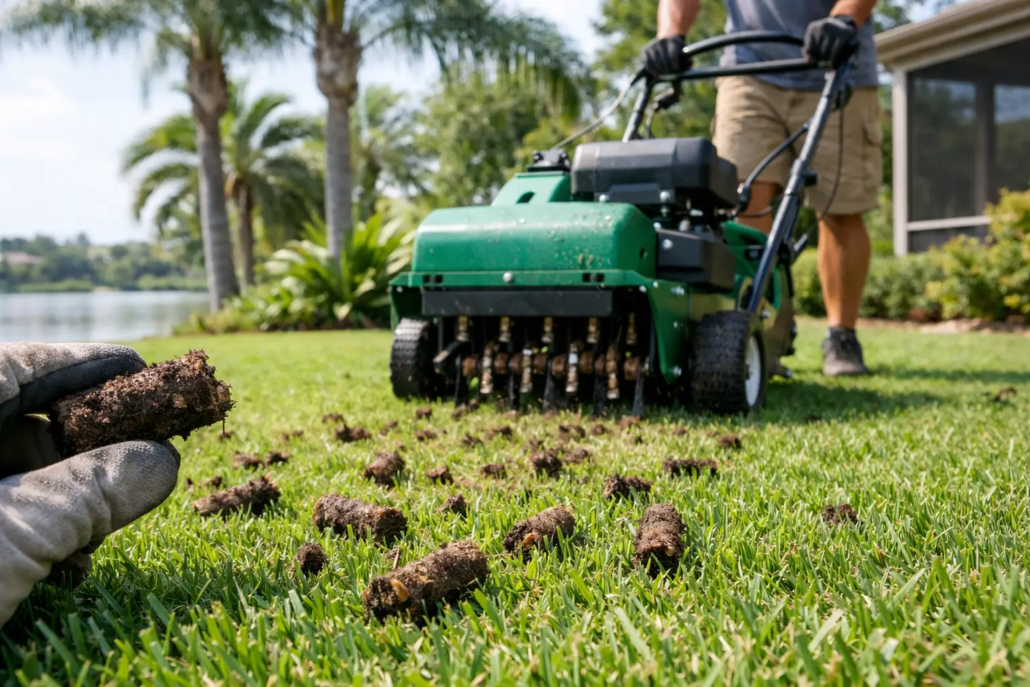
Core aeration removes small plugs of soil and thatch from the lawn. Those openings create room for air, moisture, and nutrients to move into the root zone instead of sitting near the surface or washing away during a storm.
Florida lawns face a particular challenge. Some properties have sandy soil that drains quickly but does not always hold moisture and nutrients well. Others have dense, compacted soil from construction activity, established landscaping, frequent lawn use, or years of routine maintenance without soil relief. Aeration helps relieve that pressure so turf roots can spread deeper and build more resilience.
The small soil plugs left on the lawn are normal. They break down naturally with watering, rainfall, and mowing, returning organic material to the surface. A properly aerated lawn may look temporarily dotted with plugs, but the long-term goal is a stronger root system, not an instant visual change on the day of service.
Lawn Aeration Benefits Florida Homeowners Can See
The biggest advantage of aeration is improved root health. When soil is compacted, roots tend to stay shallow because they cannot easily push through dense ground. Shallow roots dry out faster in Florida heat and have a harder time recovering from heavy rain, disease pressure, pests, and routine wear. Opening the soil gives roots a better path to grow downward.
Aeration also improves water movement. Northeast Florida can receive intense rain in a short period, followed by hot, dry stretches. A compacted lawn may puddle during storms yet still develop dry, stressed patches later because water is not reaching the root zone evenly. Aeration helps rain and irrigation soak in where the grass can use it.
That improved water movement can make irrigation more efficient, but it does not mean every lawn needs less watering immediately. If sprinkler coverage is uneven, heads are damaged, or the schedule is wrong for the season, those issues still need to be corrected. Aeration works best as part of a complete lawn-care plan that includes proper irrigation and mowing practices.
Nutrients benefit, too. Fertilizer and soil amendments are more effective when they can reach the roots instead of remaining near the surface. For a lawn that has been fed but still looks weak or thin, compaction may be part of the problem. Aeration creates access to the root zone, helping the grass use available nutrients more effectively.
Homeowners often appreciate the visible improvements as turf recovers. A healthier root system supports denser grass, richer color, and better recovery from foot traffic. Dense grass also leaves fewer open spaces for weeds to move in. Aeration will not eliminate weeds by itself, but it can support the thick turf that makes weed pressure easier to manage.
When Should You Aerate a Florida Lawn?
Timing matters because Florida lawns are usually warm-season grasses, including St. Augustine, Bermuda, zoysia, and Bahia. These grasses respond best to aeration when they are actively growing and have time to recover quickly. In much of Northeast Florida, late spring through summer is often the most productive window, depending on the grass type, weather, and the condition of the lawn.
Avoid aerating a lawn that is dormant, severely stressed from drought, or saturated after prolonged rainfall. Aerating overly wet soil can create unnecessary mess and may not produce clean plugs. Likewise, aerating during a period of weak growth can leave turf slow to recover.
There is no one calendar date that fits every property. A sunny St. Augustine yard with established irrigation may be ready at a different time than a shaded lawn, a newly installed lawn, or a yard with drainage concerns. That is why a local evaluation matters. The right timing depends on the grass, the soil, the recent weather, and what else your lawn needs.
Signs Your Yard May Need Aeration
You do not need to guess based on appearance alone. A lawn may benefit from aeration when water pools or runs off instead of soaking in, grass thins in high-traffic areas, or the ground feels hard underfoot. Bare spots where kids, pets, or outdoor furniture regularly affect the lawn can also point to compaction.
Another common sign is a lawn that seems to receive proper watering and fertilizer but still lacks strong growth. If irrigation is working, mowing height is appropriate, and the grass continues to struggle, restricted root growth may be limiting results. Thatch buildup can create similar symptoms by forming a layer that blocks water and nutrients from reaching the soil.
Newer homes deserve special attention. Construction equipment, fill soil, and repeated traffic during installation can compact a yard before the homeowner ever moves in. Aeration can be especially useful for helping an established lawn recover from those conditions, though a new lawn should be evaluated before any aggressive service is performed.
Aeration Is Stronger With the Right Lawn Care Plan
Aeration delivers the best results when it is paired with consistent follow-up care. After the service, the lawn needs proper watering to encourage recovery and help the soil plugs break down. Normal mowing can continue once the turf is dry enough, but blades should be sharp and the mowing height should suit the grass type.
This is also a good time to look at irrigation performance. Sprinklers that miss sections of the yard, overspray hardscapes, or run too long can undermine the progress aeration creates. Weed control, seasonal fertilization, and mowing on a dependable schedule all help protect the investment by keeping the grass thick as roots develop.
For many properties, annual aeration is useful. Heavily used lawns, compacted clay areas, and yards with ongoing drainage concerns may need more attention. On the other hand, a low-traffic lawn with loose sandy soil and strong turf may not need aggressive aeration every year. More is not always better. The goal is to give the lawn the soil relief it needs without treating every yard the same way.
Professional Aeration Helps Avoid Costly Guesswork
Rental equipment can be difficult to handle, especially around irrigation heads, landscape borders, buried utilities, and tight access areas. A professional service starts with the condition of the yard, identifies trouble spots, and uses the right approach for the grass and soil. That saves homeowners from turning a weekend project into damaged turf or broken irrigation.
American Blade Lawn Care provides customized aeration recommendations for local properties because a lawn near the coast, a shaded backyard, and a high-traffic family yard should not be treated as identical. The focus is simple: improve the conditions that help your lawn grow thicker, healthier, and easier to maintain.
If your grass has looked tired despite regular care, do not assume it needs more water or more fertilizer. Sometimes the best next step is giving the roots room to breathe, grow, and do the work a healthy Florida lawn is supposed to do.


Leave a Reply
Want to join the discussion?Feel free to contribute!