
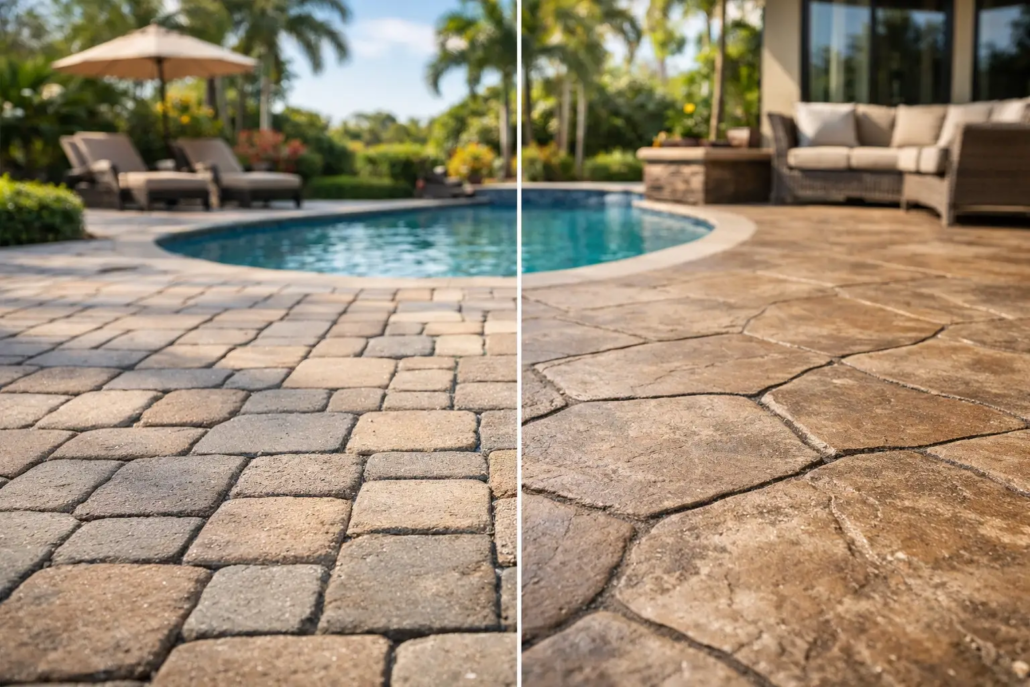
Pavers Versus Stamped Concrete for Florida Yards
A patio can look great on installation day and still become a costly headache a few summers later. In Northeast Florida, sun, heavy rain, humidity, shifting soil, and pool water all put hardscapes to work. When homeowners compare pavers versus stamped concrete, the better choice is usually the one that fits the yard’s drainage, use, budget, and long-term maintenance expectations – not just the first price on the estimate.
For St. Augustine and Jacksonville-area properties, both materials can create a clean, finished outdoor space. The difference is how they handle the realities beneath and around them.
Pavers Versus Stamped Concrete: The Main Difference
Pavers are individual manufactured stones installed over a compacted base and bedding sand, with joint sand between each piece. They can resemble natural stone, brick, travertine, or a clean contemporary surface depending on the style and color selected.
Stamped concrete is a continuous concrete slab poured in place, then textured and colored to resemble materials such as stone, slate, brick, or wood. It offers a custom look without installing separate units across the entire patio, walkway, or pool deck.
That construction difference matters. A paver surface has joints and individual pieces that can be adjusted or replaced. A stamped concrete surface is one connected slab. It can be beautiful and durable, but when the slab shifts or cracks, the repair is more visible and often more involved.
Florida Weather Changes the Decision
Our local climate is hard on exterior surfaces. Summer heat can make bare hardscapes uncomfortable, afternoon rain can expose drainage problems quickly, and sandy or settling soil can create uneven areas over time. Salt air is also a factor for many coastal St. Augustine properties.
Pavers generally respond well to minor movement because the surface is made of separate pieces. If a small section settles, a professional can lift the affected pavers, correct the base, and reinstall them. This makes pavers a practical option for yards with drainage concerns, tree roots nearby, or areas where soil movement is likely.
Stamped concrete requires carefully planned control joints to help manage cracking as the slab expands and contracts. Those joints are normal, but they do not guarantee a crack-free surface. Small hairline cracks may be acceptable to some homeowners, while others see them as a major drawback on a decorative patio.
Neither material fixes poor drainage on its own. Water should move away from the home, avoid collecting along pool decking, and have a planned path through the landscape. Before choosing a surface, look at where roof runoff lands, whether downspouts discharge onto the patio area, and how water behaves after a hard Florida rain.
Appearance and Design Flexibility
Stamped concrete creates a more continuous, custom-looking field. It works well for homeowners who want a broad, unified patio with the visual character of stone at a lower installation cost than many natural materials. Color hardeners, stains, borders, and stamp patterns allow for plenty of design options.
The trade-off is realism. High-quality stamped concrete can look attractive, but it may not have the depth, individual variation, or high-end texture of real stone or well-chosen pavers. Repeating patterns can also become noticeable across a large area.
Pavers offer more visual dimension from the start. They can be laid in running bond, herringbone, basketweave, or other patterns, and borders can define seating areas, walkways, fire pit spaces, or transitions to a driveway. They are especially effective when a project needs to tie together landscaping, mulch beds, outdoor lighting, and a pool area.
Color selection deserves more attention than many homeowners give it. Very dark surfaces can hold heat in direct sun. Light colors are usually more comfortable underfoot, particularly around pools, but they may show dirt, leaves, and irrigation stains more easily. The right choice balances the home’s exterior, the amount of shade, and the daily use of the space.
Upfront Cost Is Only Part of the Price
Stamped concrete often has a lower upfront cost than a paver installation, particularly for a simple patio with easy access and limited site preparation. It can be a good fit when budget is the primary concern and the area has stable conditions, solid drainage, and a straightforward design.
Pavers usually cost more initially because installation requires excavation, base preparation, compaction, edge restraints, sand, and detailed placement. However, that preparation is also a major part of why a paver installation can perform well over time. A properly built base is not the place to cut corners.
Long-term costs can shift the comparison. Stamped concrete typically needs periodic cleaning and resealing to preserve color and protect the finish. If it cracks, repairs may reduce the problem but rarely make it disappear completely. Matching older colors and stamped textures is difficult.
Pavers also need care. Joint sand can wash out, weeds can appear where organic debris settles, and some areas may need re-leveling after years of use. Still, replacing a stained, chipped, or damaged paver is usually far more contained than repairing a damaged concrete slab. For many homeowners, that repair flexibility is worth the higher initial investment.
Maintenance Requirements for Each Surface
Both options benefit from routine cleaning. Florida humidity encourages mildew, algae, and surface staining, especially on shaded patios and north-facing walkways. Regular sweeping removes leaves and debris that can trap moisture, while appropriate power washing can restore a cleaner appearance without causing unnecessary damage.
Stamped concrete should be resealed on a schedule that matches its exposure and traffic. A pool deck, sunny patio, or frequently used entertaining area may need more regular attention than a covered walkway. The sealer helps protect the color and surface, but overly slick finishes should be avoided around pools and entryways.
Pavers can be sealed, but sealing is not always required. It can enhance color, help resist stains, and stabilize joint sand when the correct products and methods are used. The joints may need replenishing over time, particularly after heavy rain or pressure washing. Professional cleaning and sand replacement keep the surface looking finished and help discourage weed growth.
Be cautious with aggressive pressure washing on either material. Too much pressure can strip a concrete finish, damage sealer, or remove paver joint sand. The goal is a clean surface, not a surface that has been blasted apart.
Pool Decks, Patios, and Walkways Have Different Needs
For a pool deck, foot comfort and slip resistance should be high on the list. Lighter pavers often perform well because joints can provide some texture, and individual units make future repairs less disruptive. Stamped concrete can also work around a pool when properly finished and sealed with a slip-resistant product, but surface temperature and cracking are concerns worth discussing before installation.
For a front walkway, stamped concrete can provide a neat, budget-conscious upgrade with a cohesive appearance. Pavers are often the stronger choice when the walkway needs curves, decorative borders, or a connection to a driveway or front landscape bed.
For a backyard entertaining patio, the decision often comes down to how long the homeowner plans to stay and how polished they want the space to feel. A stamped concrete patio can deliver a dramatic improvement quickly. A paver patio can provide a more detailed, adaptable surface that supports future changes, such as adding a fire pit, outdoor kitchen, seating wall, or landscape lighting.
When Pavers Are Usually the Better Choice
Pavers are often the stronger investment for homeowners who expect soil movement, want easier spot repairs, or plan a more detailed outdoor living space. They are also a smart option where drainage needs to be addressed carefully, provided the base and grade are designed correctly.
Choose pavers when long-term flexibility matters more than the lowest upfront price. Their modular design is particularly valuable when irrigation lines, lighting wires, or future landscape work may require access beneath or beside the hardscape.
When Stamped Concrete Makes Sense
Stamped concrete can be the right call for a homeowner who wants a large, attractive surface at a more controlled initial cost. It works best when the site has stable preparation, proper grading, and a realistic understanding that decorative concrete may develop cracks over time.
It is also a practical choice for simple patio shapes where a continuous appearance suits the home. The key is working with an installer who prepares the base correctly, places joints thoughtfully, and uses finishes appropriate for Florida moisture and foot traffic.
A hardscape should make the rest of the property easier to enjoy, not create another maintenance problem. Before committing to a pattern or color, have the yard evaluated as a whole – including irrigation, drainage, nearby trees, landscape beds, and how your family actually uses the space. American Blade Lawn Care can help homeowners plan outdoor improvements that look right on day one and continue to work with the property for years to come.


Leave a Reply
Want to join the discussion?Feel free to contribute!