
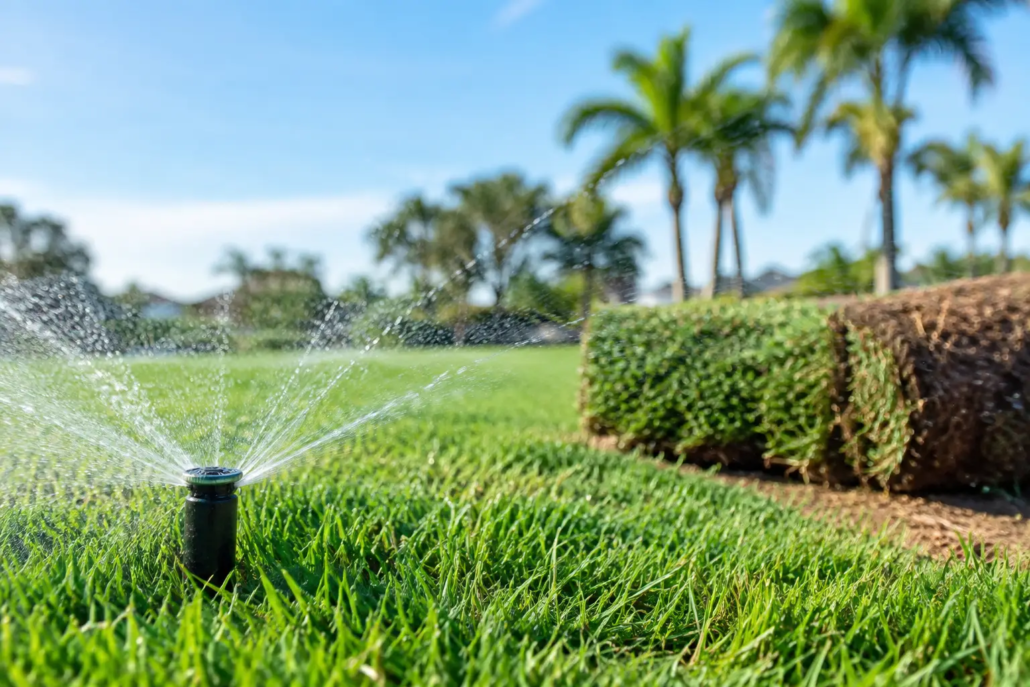
How Often to Water Sod in St. Augustine, Florida
Fresh sod can look perfect on installation day and still struggle a week later if the roots dry out. In St. Augustine and Jacksonville, intense sun, sandy soil, coastal wind, and sudden rainstorms make it hard to judge how often to water sod by looking at the calendar alone. The goal is simple: keep the sod and the soil beneath it consistently moist until roots take hold, then gradually train the lawn to grow deeper roots.
How Often to Water Sod After Installation
For most newly installed sod in Northeast Florida, water it every day for the first one to two weeks. During very hot, dry, or windy weather, it may need water twice a day for short periods. The sod should stay moist, but it should not sit in puddles or feel spongy underfoot.
Watering frequency matters most during the first several days. Sod arrives with a shallow root system and depends on moisture in the soil below it to knit into your yard. If the underside of a sod piece dries out, the roots can stop establishing, leaving seams, brown edges, and weak patches that are difficult to correct later.
A practical new-sod schedule usually looks like this:
Days 1 through 7: Keep the root zone moist
Water early in the morning, then check the lawn again in the afternoon. In typical warm Florida weather, newly laid sod often needs about 20 to 30 minutes per zone in the morning and a shorter second cycle in the afternoon. The exact run time depends on your sprinkler heads, soil, slope, and the type of sod installed.
Do not assume all irrigation systems apply water evenly. One zone may soak the lawn while another misses the edges, driveway border, or corners near landscaping. Lift a piece of sod in a few areas after watering. The sod and the top inch or two of soil beneath it should be damp. If the ground under the sod is dry, increase the watering time or improve coverage.
Days 8 through 14: Water once a day, more deeply
When the sod is still green and beginning to resist a gentle tug, reduce watering to once each morning. Run the irrigation long enough to wet the soil a few inches deep. This encourages roots to move down into the native soil instead of staying right at the surface.
In a heat wave, exposed yard, or sandy area, a light afternoon watering may still be needed. Keep it brief. Late-day watering that leaves grass wet overnight can encourage fungus and disease, especially when humidity is high.
Weeks 3 and 4: Transition to an established-lawn schedule
By the third week, most properly installed sod should be rooting into the ground. Move toward watering two or three times per week, applying enough water each time to reach roughly 4 to 6 inches into the soil. In many yards, that means around three-quarters to 1 inch of water per week, including rainfall.
This transition is where many lawns get stuck. Homeowners often continue watering lightly every day because the lawn looks good. Daily shallow watering creates shallow roots, and shallow-rooted turf becomes stressed quickly when Florida temperatures climb or an irrigation system has a problem. Fewer, deeper watering cycles build a lawn that holds up better through dry periods.
What Changes the Sod Watering Schedule?
No two St. Augustine yards hold water the same way. A new sod watering plan should change with the weather and the property.
Sandy soil is common across Northeast Florida, and it drains quickly. Sod on sandy ground may need more frequent watering during establishment than sod installed in heavier soil. On the other hand, low spots or compacted soil can hold water too long. Those areas need careful monitoring so roots do not stay saturated.
Sun exposure matters too. Sod in full afternoon sun dries much faster than sod under mature oaks or along the shaded side of a home. Windy coastal properties can lose moisture quickly even on days that do not feel especially hot. If one section of lawn is consistently drying before the rest, adjust that irrigation zone rather than overwatering the whole property.
Rain should count, but only if it actually reaches the root zone. A five-minute shower may wet the blades without doing much for new sod. After a meaningful rain, check beneath a corner of the sod before skipping a scheduled watering. If the soil is wet several inches down, let nature do the work. If only the surface is damp, the sod may still need irrigation.
Water in the Morning, Not at Night
The best time to water sod is early morning, ideally before the strongest sun and heat arrive. Morning irrigation gives water time to soak in and allows grass blades to dry during the day. It also helps the sod handle afternoon stress without sitting wet all night.
Avoid regular evening watering whenever possible. Warm nights, high humidity, and wet leaves create favorable conditions for turf disease. Watering at midday is not ideal either, since more water can evaporate before it reaches the soil. A midday cycle can make sense temporarily during extreme heat, but it should be a short rescue watering, not the main routine.
How to Tell Whether New Sod Needs Water
A healthy new lawn should look evenly green and feel cool and moist near the soil line. The most reliable test is still hands-on: lift a corner or gently pull at a seam. Sod that has not rooted yet should be moist beneath the piece. Once it begins rooting, it should resist lifting.
Watch for these warning signs:
- Gray-blue color, folded blades, or footprints that remain visible can mean the lawn is drying out.
- Brown edges along seams often signal that water is not reaching the sides or undersides of the sod.
- Soft, soggy ground, a sour smell, or yellowing grass can point to overwatering or poor drainage.
- Gaps between pieces may develop when sod dries, shrinks, and fails to root properly.
Brown grass does not always mean the lawn needs more water. Overwatering can also weaken roots and create disease issues. Check the soil before changing your irrigation schedule. This simple step prevents a lot of guesswork.
Avoid Heavy Traffic and Early Fertilizer Mistakes
New sod needs time to establish before it is treated like a finished lawn. Keep foot traffic, pets, lawn equipment, and heavy furniture off it for at least two to three weeks, or until the sod is firmly rooted. Walking repeatedly across wet new sod can create uneven ground and disturb the developing roots.
Wait to mow until the grass has rooted and reached the recommended mowing height for its variety. Use a sharp mower blade and avoid removing more than one-third of the grass blade at a time. If the lawn is still loose when you tug it, give it more time before mowing.
Fertilizer should also be handled with care. Some installations include starter fertilizer, while others do not. Applying the wrong product or too much nitrogen too soon can stress tender roots and create uneven growth. A lawn professional can recommend timing based on the sod type, soil conditions, and season.
Make Sure Your Irrigation Is Doing Its Job
New sod exposes irrigation problems quickly. Misaligned sprinkler heads, clogged nozzles, broken pipes, weak water pressure, and poorly programmed controllers can leave dry strips in an otherwise healthy lawn. Run each zone and watch it operate. Every piece of sod should receive coverage, including narrow side yards, curved bed lines, and areas along fences.
Place a few straight-sided containers around the lawn during a watering cycle to see how evenly water is being applied. If one container is nearly full and another is barely wet, the system needs adjustment. More run time will not fix an irrigation zone that is missing part of the yard.
For homeowners who want dependable results without constant trial and error, American Blade Lawn Care can evaluate the lawn, inspect irrigation coverage, and build a care plan around the conditions on your property. Proper watering during the first month gives new sod its best chance to root deeply, stay green, and become the healthy Florida lawn you wanted in the first place.


Leave a Reply
Want to join the discussion?Feel free to contribute!