
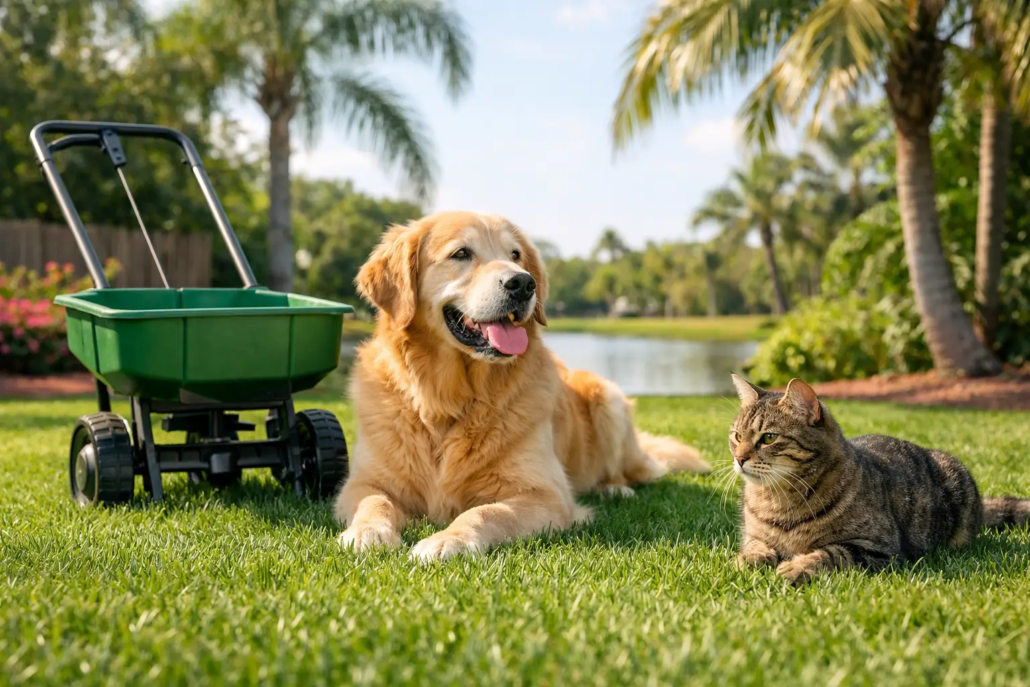
Pet Safe Lawn Treatments for Florida Yards
A green Florida lawn can be a favorite place for a dog to run, a cat to explore, and a family to relax. It can also be a challenging place to control weeds, insects, and disease without worrying about what pets may walk through, lick off their paws, or chew on. Pet safe lawn treatments are not about skipping lawn care altogether. They are about choosing the right treatment, applying it correctly, and giving every product enough time to do its job before pets return to the yard.
For homeowners in St. Augustine, Jacksonville, and surrounding Northeast Florida communities, that balance matters year-round. Heat, humidity, sandy soil, heavy rain, and active pests create lawn problems that cannot always be solved with one generic product or one quick spray. A treatment plan should protect your turf while respecting how your family actually uses the property.
What “Pet Safe” Really Means
The phrase “pet safe” can be misleading if it sounds like a product is safe under every condition. Most lawn treatment products carry directions that explain when pets should stay off treated areas, how much product to apply, and what to do if a pet contacts a concentrated material. Those directions are not fine print to ignore. They are the foundation of safe application.
In practical terms, a pet-conscious lawn program uses only the treatment needed for the problem at hand. It avoids blanket applications when spot treatment will work, follows label rates precisely, and keeps pets away during application and until the product has dried or been watered in as directed. The goal is not to treat more. It is to treat smarter.
A yard also needs to be evaluated as a whole. A dog that digs along a fence line, drinks from low spots, or eats grass may need different precautions than a pet that only walks across the lawn for a few minutes. Families with puppies, senior pets, small dogs, or pets with sensitive skin should be especially careful about following re-entry instructions.
Common Lawn Problems in Northeast Florida
Florida lawns face a different set of pressures than lawns farther north. St. Augustine grass, zoysia, bermudagrass, and bahia each respond differently to fertilizer, mowing height, water, and weed control. Applying the wrong product at the wrong time can weaken turf, even before pet safety is considered.
Broadleaf weeds, sedges, crabgrass, chinch bugs, sod webworms, grubs, fungal disease, and nutrient deficiencies are common concerns. Some are easy to mistake for one another. For example, dry-looking patches may come from irrigation coverage, compacted soil, insect activity, fungus, or dog traffic. Spraying for insects when the real issue is a broken irrigation head wastes money and adds an unnecessary treatment to the yard.
That is why diagnosis comes first. A dependable lawn care provider should inspect the grass type, affected areas, soil conditions, drainage, irrigation performance, and recent weather before recommending a treatment. Customized care is safer for pets and more effective for the lawn.
Pet Safe Lawn Treatments Start With Prevention
The best way to reduce chemical use is to make the lawn strong enough to compete with many problems on its own. Healthy turf shades the soil, crowds out weeds, and recovers faster from foot traffic, heat, and pest damage.
Proper mowing is a major part of that work. Cutting grass too short stresses the root system and leaves soil exposed to sunlight, inviting weeds to move in. Keeping blades sharp also creates a cleaner cut, which helps grass recover and look better between visits. Regular edging and trimming keep beds, sidewalks, and fence lines neat without allowing overgrowth to become a larger weed-control issue.
Irrigation is just as important. A lawn that is watered too often may develop shallow roots and conditions that favor fungus. A lawn that receives uneven coverage can develop dry spots that attract pests and leave turf thin. In Florida’s rainy season, it may be necessary to adjust irrigation schedules rather than assume more water is the answer. A working system with properly aimed heads helps deliver water where the grass needs it, not onto driveways, patios, or pet areas.
Aeration can also help compacted lawns by improving air, water, and nutrient movement into the soil. It is not necessary for every yard every year, but it can be valuable where soil has become hard from traffic or where grass struggles despite regular watering and mowing.
Choosing Treatments With Pets in Mind
When a lawn does need treatment, the right approach depends on the specific issue. Weed control may involve a targeted application to problem areas instead of treating every square foot. Insect control should be based on signs of active damage or confirmed pest activity, not just a calendar date. Fertilizer should match the grass type and season so it supports steady growth rather than creating a flush of weak, high-maintenance grass.
Granular products and liquid products each have a place. Granular treatments often need watering in, while liquid treatments commonly require the lawn to dry before people and pets return. Neither format is automatically safer than the other. Safe use comes down to the product, the rate, the placement, and the label instructions.
Natural or organic options may be a good fit for certain homeowners, but “natural” does not automatically mean harmless to pets or effective for every lawn problem. Some natural ingredients can still irritate skin or upset a pet’s stomach if ingested. They may also require more frequent applications or work best as part of a broader prevention plan. A professional recommendation should be honest about those trade-offs instead of promising one product will solve everything.
A Simple Routine After Lawn Service
A few practical habits help keep pets safe after any lawn treatment. Keep dogs and cats indoors or in an untreated area while work is being completed. Ask the service provider what was applied, where it was applied, and when pets can safely return. If the treatment must dry, wait until the lawn is fully dry. If it must be watered in, follow the watering directions before allowing pets back out.
It also helps to pick up pet toys, water bowls, and chew items before treatment day. Store them away from the lawn rather than rinsing them on the grass. If your dog tends to eat grass, supervise outdoor time after service and discourage grazing until the recommended waiting period has passed.
After walks in treated public areas or neighboring yards, wiping your dog’s paws can reduce the chance of tracking residue indoors. This is a sensible habit during wet weather, too, when mud, fertilizer runoff, and lawn debris are more likely to cling to paws.
Questions to Ask Your Lawn Care Provider
A good lawn care company should welcome direct questions about pet safety. You should know whether treatment is truly needed, what issue it addresses, and what precautions apply afterward. Clear communication is part of professional service, especially when pets and children use the same outdoor space.
Ask whether the company can target only affected areas, adjust service around your pet’s routine, and review re-entry guidance with you before leaving. Let the crew know if a pet has allergies, skin sensitivities, a habit of digging, or access to specific parts of the yard. These details can shape the treatment plan.
American Blade Lawn Care takes a property-specific approach because Florida lawns are not all the same. A customized plan can combine mowing, irrigation attention, weed control, aeration, and landscape care in a way that addresses the cause of a problem instead of treating every yard like a template.
When to Call a Veterinarian
If a pet gets into a concentrated lawn product, eats fertilizer or bait, or shows signs such as vomiting, excessive drooling, unusual lethargy, tremors, breathing trouble, or skin irritation, contact your veterinarian or an emergency animal clinic right away. Have the product name and label available if possible. Do not wait to see whether symptoms pass when there is a chance of significant exposure.
For everyday lawn care, the better path is simple: use treatments only when they are needed, follow the directions exactly, and build a healthier lawn through consistent maintenance. Your yard should be a place where green grass, clean edges, and happy paws can coexist with confidence.


Leave a Reply
Want to join the discussion?Feel free to contribute!