
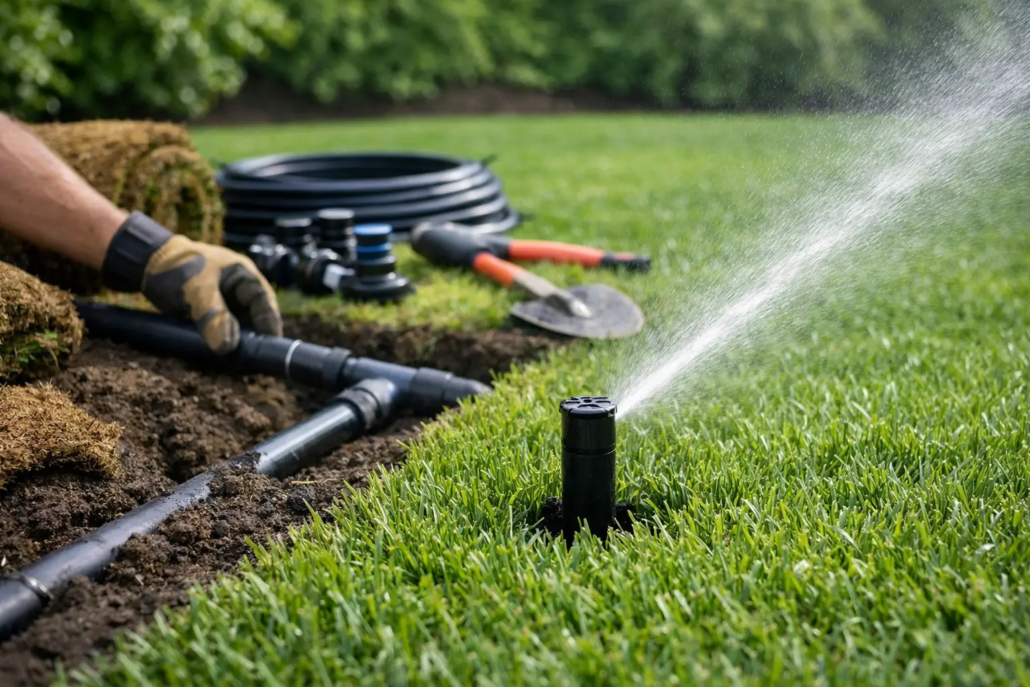
Irrigation Installation for St. Augustine Lawns
A St. Augustine lawn can look healthy one week and stressed the next when rainfall drops, temperatures rise, and irrigation coverage falls short. Professional irrigation installation gives your grass, shrubs, trees, and flower beds a dependable water source designed for the way your property actually grows. It is not about running sprinklers longer. It is about delivering water evenly, at the right time, without wasting it on pavement, driveways, or areas that do not need it.
For homeowners across St. Augustine, Jacksonville, and Northeast Florida, the right irrigation system can mean less guesswork, fewer dry patches, and a landscape that holds its color through demanding weather. A properly designed system also makes routine lawn care more effective, because mowing, fertilization, mulch beds, and new plantings all perform better when moisture is consistent.
Why Northeast Florida Lawns Need a Custom Watering Plan
Florida weather does not follow a simple schedule. Summer heat can dry exposed turf quickly, while afternoon storms may soak one part of the yard and miss another entirely. Sandy soils common in our area drain fast, which means water can move below the root zone before grass has time to use it. On the other hand, low spots, shaded areas, and heavy landscape beds may hold moisture longer than open turf.
That is why one sprinkler setting for the whole yard rarely works well. A system should account for the type of grass you have, sun exposure, soil conditions, slope, drainage, plant material, and the layout of your property. St. Augustine grass, for example, needs consistent moisture to establish strong roots, but watering too often can encourage disease, weeds, and shallow root growth.
A customized plan separates the property into zones. Turf areas can receive one schedule, while beds with shrubs, palms, or seasonal flowers receive another. This approach helps protect the landscape you have invested in while avoiding the waste that comes from treating every area the same.
What Professional Irrigation Installation Includes
A quality system begins before any trench is dug. The first step is evaluating the yard and identifying where water is needed, where it is being lost, and what could create problems later. This includes looking at existing landscaping, utility locations, water pressure, drainage patterns, hardscape features, and areas that are difficult to reach with a hose.
The system layout is then designed around coverage and control. Sprinkler heads are positioned so they overlap correctly and avoid dry circles between them. Drip irrigation may be the better choice for landscape beds, foundation plantings, and trees because it places water close to the roots instead of spraying foliage or mulch. In many yards, the best result comes from using both spray zones for grass and drip zones for planted areas.
Installation typically includes the irrigation lines, valves, zone controls, sprinkler heads or drip components, and a controller that manages the schedule. The controller can be programmed for seasonal needs and adjusted as weather conditions change. A rain sensor is also a smart addition for many properties because it helps prevent the system from running during or immediately after rainfall.
The goal is a clean, functional installation that supports your landscape without taking away from its appearance. Lines should be installed carefully, heads should sit at the proper height, and the system should be tested zone by zone before the job is complete.
Sprinkler Heads Are Not One-Size-Fits-All
Different areas call for different heads and nozzles. Pop-up spray heads can work well in smaller turf sections, while rotary nozzles or rotors may be more suitable for larger open spaces. The selection depends on the distance water must travel, the available water pressure, and the shape of the area.
Using the wrong head can lead to overspray, weak coverage, or misting that blows away in the wind. It can also create runoff along sidewalks and driveways. A professional design matches the equipment to the space rather than forcing one product across the entire property.
Drip Irrigation Protects Beds and Plantings
Landscape beds are often where homeowners waste the most water with standard sprinklers. Water can land on leaves, hard surfaces, or mulch instead of reaching the roots. Drip irrigation applies water slowly and directly near plant roots, which can reduce evaporation and help mulch stay in place.
Drip is especially useful around shrubs, ornamental plants, young trees, and areas near the home. It is not the ideal solution for every part of a lawn, but it can be an efficient part of a well-planned system.
The Biggest Benefits of a Well-Designed System
The most noticeable benefit is a more uniform lawn. When water reaches the entire turf area consistently, grass has a better chance to grow evenly instead of thinning along edges or turning brown in isolated spots. Healthy turf also creates a cleaner, more finished look from the street.
A well-designed irrigation system can also save time. Instead of moving hoses, guessing how long to water, or asking a neighbor to help while you travel, you have a scheduled system in place. That convenience matters for busy families, working professionals, seasonal residents, and property owners managing multiple responsibilities.
Water efficiency is another important benefit. A system cannot eliminate water use, but correct zoning, appropriate heads, and smart scheduling can prevent common waste. Watering early in the morning, for example, gives moisture time to soak into the soil before the hottest part of the day. It also reduces the chance of water sitting on grass overnight.
Finally, reliable irrigation supports the rest of your outdoor maintenance. Fresh mulch, new landscape design work, sod repairs, and lawn treatments all need appropriate moisture to deliver the results you expect. Irrigation is not separate from lawn care. It is one of the systems that helps the entire property work better.
When an Existing System Needs More Than a Quick Repair
A broken sprinkler head or damaged line can often be repaired quickly. But repeated dry spots, pooling water, weak spray patterns, or zones that fail to turn on may point to a larger design or coverage problem. Repairing the same symptoms year after year can cost more than correcting the underlying issue.
It may be time to consider an upgrade or partial replacement if your system has poor coverage, outdated controls, mismatched heads, frequent leaks, or landscape areas that have changed since the original installation. A new patio, pool area, expanded bed, mature tree canopy, or added fence can all affect how water moves through the yard.
Older systems are not automatically bad systems. Sometimes a few targeted improvements, such as replacing nozzles, adding drip to beds, adjusting zones, or updating the controller, can make a meaningful difference. The right choice depends on the condition of the system and the needs of the property.
Smart Scheduling Matters as Much as the Equipment
Even the best irrigation installation will underperform if it is programmed poorly. Running every zone for the same amount of time can leave one section flooded and another section thirsty. Grass type, soil, sun, and slope all affect how quickly water should be applied.
As a general rule, it is better to water deeply enough to encourage root growth than to water lightly every day. However, the ideal schedule changes with the season, recent rainfall, local watering requirements, and whether the lawn is newly installed or established. New sod and fresh plantings often need a different schedule while they are developing roots.
Your system should be checked periodically, especially after landscaping work, storm activity, or lawn equipment has been on the property. A head can be bumped out of alignment, a nozzle can clog, and plant growth can block spray without being obvious from the patio.
Choose a Local Team That Looks at the Whole Yard
Irrigation affects the health and appearance of your entire outdoor space, so it should not be treated as a quick add-on. American Blade Lawn Care takes a property-focused approach, considering how irrigation will support the lawn, landscape beds, drainage, and ongoing maintenance needs.
A professional evaluation gives you a clearer path forward, whether you need a complete new system, an expansion for a landscaped area, or repairs that restore dependable coverage. You should know what is being installed, why it fits your property, and how to keep it working properly after the job is done.
A greener lawn starts with more than water. It starts with putting the right amount of water exactly where your St. Augustine landscape can use it, then maintaining that system with the same care you expect from the rest of your property.


Leave a Reply
Want to join the discussion?Feel free to contribute!