
Residential Irrigation System Guide for Florida
A sprinkler system can be running on schedule and still leave a St. Augustine lawn thirsty, patchy, or overwatered. That is why a residential irrigation system guide should start with what your yard actually needs, not just what the timer says. Northeast Florida heat, sandy soil, frequent rain, and mixed landscape beds all affect how water should be applied.
A well-planned irrigation system protects your lawn investment, helps landscaping look cared for, and can prevent water from being wasted on pavement, fences, or already-saturated soil. Whether you are considering a new installation or trying to get more dependable results from an existing system, the right approach is customized to your property.
Start With Your Yard, Not the Controller
Every irrigation plan begins with the landscape itself. A sunny St. Augustine grass lawn may need a different watering pattern than a shaded area beneath mature oaks. Mulch beds, palms, shrubs, and flowering plants also have different root depths and moisture needs than turf.
Soil is a major factor in our area. Much of Northeast Florida has sandy soil that drains quickly. Water can move below the root zone before grass has a chance to use it, especially when a system runs too long at one time. On the other hand, low spots with compacted soil or poor drainage can hold water after a heavy storm. Applying the same schedule to both areas often leads to thin grass in one place and disease pressure in another.
A professional evaluation considers sun exposure, slope, plant material, soil conditions, drainage, and the layout of existing hardscapes. The goal is not simply to make every sprinkler head spray. The goal is to deliver water evenly where it belongs.
Residential Irrigation System Guide: Know the Main Parts
A residential irrigation system works as a group of connected components. When one part is not working properly, the issue can affect an entire zone or leave a section of the lawn behind.
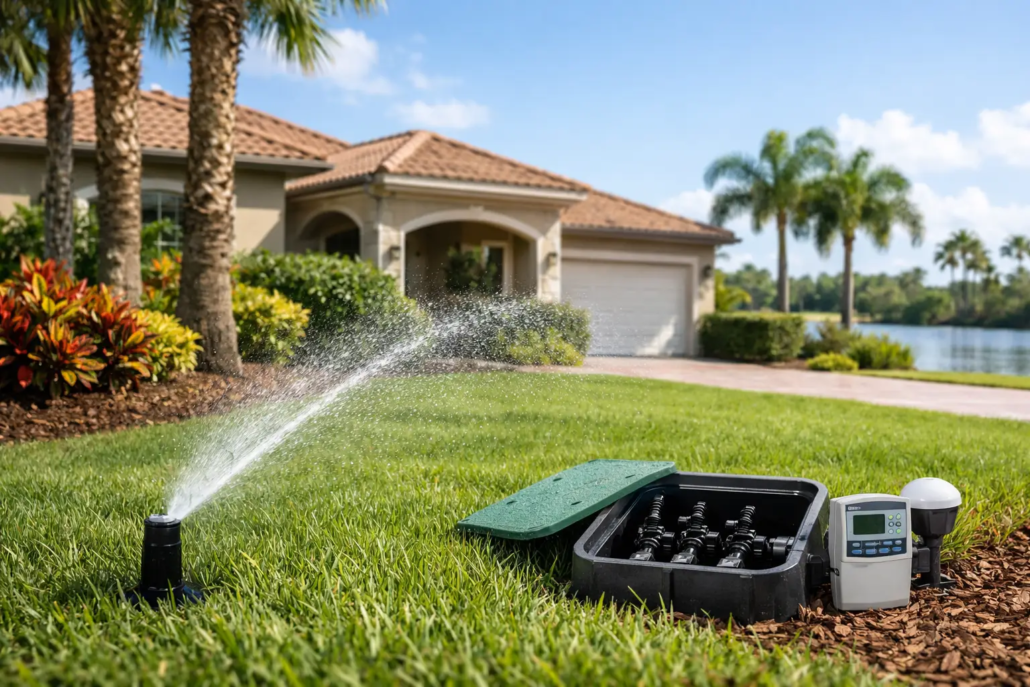
The controller is the timer that tells each zone when to run. Modern controllers may offer seasonal adjustments, rain sensor compatibility, and flexible scheduling. A controller is only as useful as its programming, though. A schedule that made sense in July may be excessive during a rainy fall week.
Valves open and close to direct water to individual zones. If a zone never comes on, never shuts off, or has weak pressure, a valve issue may be involved. Sprinkler heads, rotors, nozzles, and drip emitters distribute the water. These parts are exposed to mowers, foot traffic, shifting soil, roots, and normal wear, so they need periodic attention.
A rain sensor is one of the simplest ways to prevent unnecessary watering. It pauses scheduled irrigation after sufficient rainfall. In Florida, where afternoon storms can quickly soak a property, this small component can make a meaningful difference in water use and lawn health.
Choose the Right Watering Method for Each Area
Spray heads are commonly used for smaller lawn areas and tight spaces. They provide a fixed spray pattern and can work well when they are spaced and adjusted correctly. Rotors are generally better for larger turf areas because they rotate and cover greater distances.
Drip irrigation is often the better choice for landscape beds, foundation plantings, and container areas. Instead of spraying water through the air, drip tubing applies it close to the soil and root zone. That reduces runoff and keeps foliage drier, which can be helpful around certain ornamental plants.
It is tempting to place lawn and landscape beds on the same zone, especially in a small yard. That setup can create problems because grass and shrubs rarely need the same amount of water. Separating them into appropriate zones gives you better control and makes seasonal adjustments easier.
Watch for These Common Irrigation Problems
Many sprinkler problems begin as small signs homeowners can see from the driveway. A brown strip along the sidewalk, a sprinkler spraying the house, or a soggy spot that never dries should not be ignored. These issues can waste water and gradually damage the lawn or landscaping.
Pay attention to these common warning signs:
- Uneven grass color, especially dry circles or brown edges in an otherwise green lawn
- Water spraying onto sidewalks, driveways, fences, windows, or the street
- Heads that stay low, lean sideways, fail to pop up, or are damaged by mowing equipment
- A zone with noticeably weak pressure, pooling water, or runoff before its cycle ends
- A sudden increase in your water bill without a clear reason
A damaged head may be the obvious issue, but low pressure can also point to a leak, a valve problem, a broken pipe, or too many heads on one zone. It depends on the system layout and the water supply available to the property. A proper inspection saves time compared with replacing parts at random.
Program for the Season and the Weather
The biggest irrigation mistake is treating the timer as a set-it-and-forget-it device. Florida lawns need less supplemental water during rainy periods and cooler stretches than they do during hot, dry weather. A fixed schedule that runs year-round can encourage shallow roots, fungus, and unnecessary water use.
In many cases, deeper and less frequent watering is more beneficial than short daily cycles because it encourages roots to grow farther into the soil. However, sandy soil may require shorter run times or cycle-and-soak scheduling to avoid sending water too deep too quickly. With cycle-and-soak, a zone runs for part of its needed time, rests so water can absorb, then runs again.
Watering early in the morning is usually preferable. There is less wind, less evaporation, and more time for grass blades to dry after watering. Evening irrigation can leave turf wet overnight, which may contribute to lawn disease in warm, humid conditions.
Rainfall always changes the equation. Check the forecast and the condition of your lawn before allowing the system to run. If the soil is already damp several inches down, your yard may not need another cycle simply because the controller is scheduled for one.
Installation Decisions That Affect Long-Term Performance
A quality irrigation installation is more than trenching lines and placing heads around the lawn. Zone design, water pressure, pipe sizing, head spacing, and drainage all influence performance. Poor spacing leaves dry areas. Mismatched nozzles can cause one section to receive far more water than another.
Head placement matters around driveways, walkways, patios, pools, and landscape beds. The system should provide coverage without routinely soaking concrete or structures. Heads should also be installed at a height and location that allows them to clear grass and mulch while remaining protected from mower damage.
Before adding irrigation to a new landscape, think about what the property may look like in a few years. A young shrub bed can become dense, blocking spray patterns that worked when plants were small. If you expect to add a patio, expand a bed, install a pool, or plant screening shrubs, planning ahead can reduce future modifications.
Maintenance Keeps Small Problems From Becoming Big Repairs
Your system deserves a quick check at the start of each major watering season and after landscaping work. Run each zone and walk the property while it operates. Look for clogged nozzles, broken heads, sunken heads, leaks, and areas receiving too much or too little coverage.
Keep grass, mulch, and soil from burying sprinkler heads. Trim plants that block the spray pattern, and adjust heads after mowing, edging, or bed renovations if necessary. If your controller has a backup battery, check it as well. A power outage should not erase your schedule or leave the system operating on outdated settings.
Professional irrigation service is especially useful when a problem involves electrical troubleshooting, buried leaks, valve repairs, controller replacement, or a full zone redesign. American Blade Lawn Care can assess irrigation concerns alongside your lawn and landscape conditions, so the solution supports the full appearance and health of your property rather than addressing one broken part in isolation.
Give Your Lawn Water With a Purpose
The best irrigation system is not the one that runs the longest. It is the one that applies the right amount of water, in the right places, at the right time for your specific yard. If your grass is struggling, your beds look stressed, or your sprinklers are watering everything except the lawn, a timely inspection can put your property back on track before the next dry spell does more damage.


Leave a Reply
Want to join the discussion?Feel free to contribute!