Drip Irrigation vs Sprinklers: Which Fits?
A lush St. Augustine lawn, colorful planting beds, and healthy shrubs do not all need water in the same way. That is why the drip irrigation vs sprinklers decision matters for Northeast Florida homeowners. The right system can help your landscape stay healthier through hot weather while reducing waste, avoiding avoidable repairs, and making routine lawn care easier.
For many properties, the best answer is not choosing one system for the entire yard. It is matching the irrigation method to what is growing, how much sun the area receives, and how your property drains after one of our heavy Florida rainstorms.
Drip Irrigation vs Sprinklers for Florida Yards
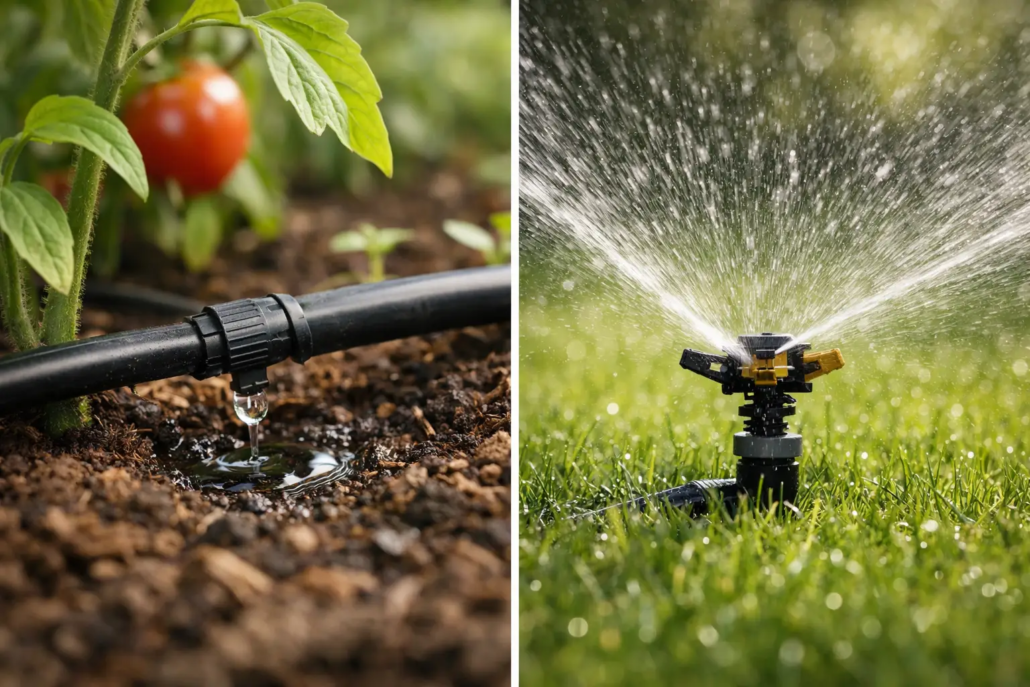
Sprinklers distribute water over a broad area, much like rainfall. They are the familiar choice for turfgrass lawns because they can cover large sections efficiently when the system is designed and adjusted correctly. Pop-up spray heads and rotary heads are common options, each suited to different coverage areas.
Drip irrigation delivers water slowly and directly at the soil surface through tubing and emitters. Instead of watering an entire bed from above, it places moisture near the roots of shrubs, flowers, palms, vegetables, and other landscape plants.
Both systems can work well in St. Augustine and Jacksonville-area landscapes. The trouble starts when a system is used where it does not fit. A sprinkler head that constantly sprays a hedge may leave the lawn too dry and the hedge too wet. Drip tubing installed without enough emitters may water one side of a planting bed while leaving the other side stressed.
Where sprinklers do their best work
Sprinklers are usually the practical choice for lawn areas. St. Augustine grass, Bahia grass, Zoysia, and Bermuda need reasonably even moisture across their root zones. A properly spaced sprinkler system can provide that coverage without running hoses across the yard or relying on hand watering.
They are also useful for wide, open turf areas where drip tubing would require extensive installation and maintenance. If your main goal is keeping a front or back lawn green and growing evenly, sprinklers are generally the stronger option.
However, sprinkler performance depends on design and upkeep. Heads must be spaced for head-to-head coverage, set at the proper height, and aimed away from driveways, siding, fences, and patios. A broken nozzle, sunken head, or mismatched spray pattern can create dry spots, muddy areas, and rising water bills.
Wind is another local consideration. On breezy coastal days, fine sprinkler spray can drift away from its intended target. Watering early in the morning gives the system time to work before heat and wind increase, while also allowing grass blades to dry rather than staying wet overnight.
Where drip irrigation is the better choice
Drip irrigation shines in landscape beds. Mulched beds with shrubs, ornamental grasses, flowering plants, palms, and small trees benefit from slower, targeted watering. The system can supply moisture where plants use it most without soaking the surrounding mulch, hardscape, or lawn.
This direct approach helps reduce evaporation, runoff, and overspray. It can also limit leaf wetness, which is helpful for plants that are more prone to fungal issues when their foliage stays damp. For homeowners who are tired of seeing water spray onto windows, sidewalks, or the side of the house, drip is a cleaner solution.
Drip systems are especially valuable in narrow beds along foundations, fences, and walkways. Those areas are hard to water accurately with conventional sprinklers. A well-planned drip layout can keep plants hydrated without wasting water on the concrete beside them.
Drip is not maintenance-free, though. Emitters can clog, tubing can be cut during planting or edging, and mulch can hide leaks until plants begin to show stress. A filter and pressure regulator are important parts of a dependable drip system, not optional extras. Periodic inspections also make sure every zone is still delivering water evenly.
Water Use Is About Control, Not Just the System
It is easy to assume drip always uses less water and sprinklers always waste it. In many cases, drip is more efficient for planting beds, but the real savings come from proper design, programming, and repair.
A sprinkler zone that runs too long can waste a significant amount of water, especially in compacted soil or on a sloped lawn where water begins flowing toward the street. A drip zone with a cracked line can also run unnoticed for days. Either system needs a controller schedule that reflects the season, rainfall, plant maturity, and soil conditions.
Florida weather changes quickly. A schedule that made sense during a dry spring week may be excessive after several summer storms. Smart controllers and rain sensors can help prevent irrigation during or immediately after rainfall, but they still need correct setup. Technology does not replace an on-site look at how the yard is responding.
Watch for signs that a zone needs adjustment: mushrooms or standing water, yellowing turf, stressed plants despite frequent watering, erosion around beds, or water running down the driveway. These are not simply cosmetic problems. They can point to poor coverage, drainage issues, leaks, or a timer that no longer matches your landscape.
Installation and Repair Considerations
A sprinkler system typically requires underground piping, valves, zones, and properly positioned heads. Installation can be more involved when a property has established hardscape, mature landscaping, or limited access. Still, it is a long-term investment in lawn health and curb appeal when installed with the property layout in mind.
Drip irrigation is often easier to add to an existing landscape bed, particularly during a landscape refresh or mulch installation. Tubing can be routed beneath mulch and adjusted as plants grow. That flexibility is useful, but it also means the layout should be planned for mature plant size rather than only how the bed looks on installation day.
If you are repairing an existing system, avoid treating every issue as a quick head replacement. Low water pressure may signal a leak, a damaged valve, or too many heads on one zone. A dry patch may be caused by blocked nozzles, poor spacing, tree roots, or a landscaping change that now blocks the spray. Finding the source of the problem prevents repeat repairs.
For homes with both turf and landscape beds, separate zones are essential. Lawn sprinklers and drip irrigation require different pressure, run times, and watering patterns. Combining them on the same zone is one of the fastest ways to overwater one area while underwatering another.
The Best Choice Is Often a Combined System
Most well-maintained Florida properties benefit from a combination of sprinklers and drip irrigation. Sprinklers handle the lawn. Drip lines serve the beds, hedges, foundation plantings, and ornamental areas. Each zone can then be programmed based on the needs of the plants it supports.
That approach is particularly effective for homeowners who want an attractive yard without spending their weekends moving hoses, checking dry spots, and guessing whether the irrigation timer is doing its job. It also supports better lawn maintenance because properly watered grass responds more predictably to mowing, fertilization, weed control, and aeration.
A professional irrigation evaluation should consider your grass type, soil, sun exposure, shade from mature trees, slope, drainage, plant material, and current system condition. American Blade Lawn Care can help homeowners identify whether a repair, a zone adjustment, drip conversion, or a full irrigation upgrade makes the most sense for their property.
Before the next dry stretch puts stress on your lawn and landscape beds, take a close look at where your water is actually going. A system that puts the right amount of water in the right place can protect the outdoor space you have worked hard to create.


Leave a Reply
Want to join the discussion?Feel free to contribute!