
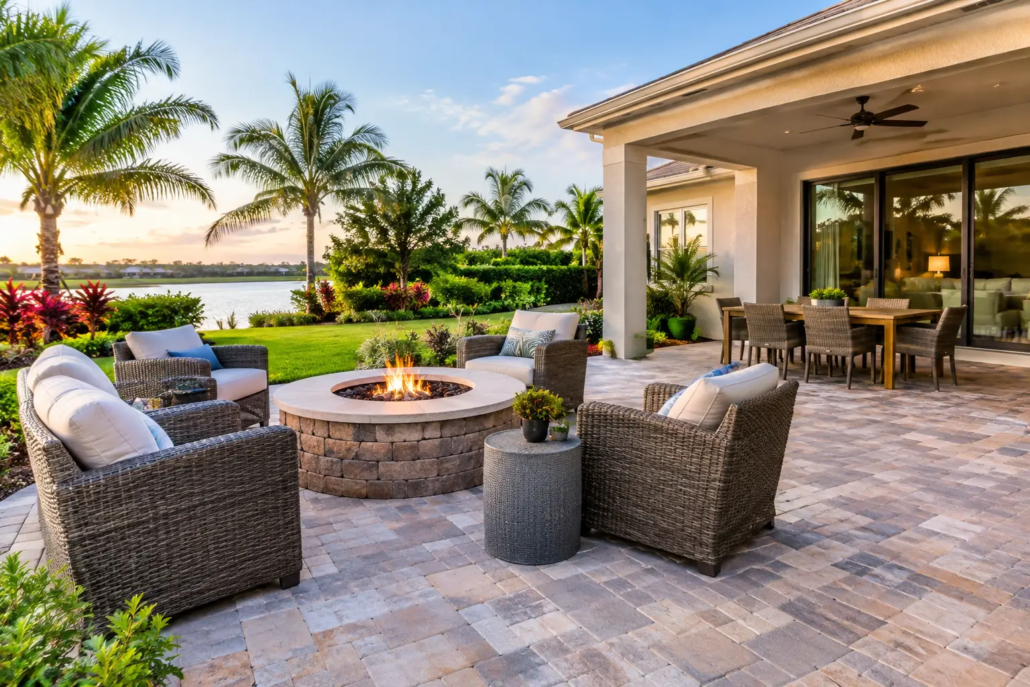
Backyard Paver Patio Ideas for Florida Homes
A good patio changes how a backyard gets used. It creates a clean, dependable place for morning coffee, family cookouts, poolside seating, and quiet evenings outside without tracking sand, mud, or wet grass indoors. The best backyard paver patio ideas do more than look attractive on installation day. For Northeast Florida homes, they account for summer downpours, high humidity, intense sun, irrigation, and the way your lawn and landscape beds grow around the space over time.
A paver patio can be simple and practical or become the center of the entire backyard. The right choice depends on how you plan to use it, the size and shape of the yard, drainage conditions, and how much maintenance you want down the road.
Start With How You Want to Use the Patio
Before choosing paver colors or patterns, decide what the patio needs to do. A small seating area outside a back door needs a different layout than a space designed for a dining table, grill station, fire feature, and several guests.
For many St. Augustine and Jacksonville homeowners, the most useful design starts with a clear traffic path. You should be able to walk from the house to the patio, grill, pool, gate, or lawn without cutting across planting beds or squeezing around furniture. A patio that looks generous when empty can feel cramped once chairs, a dining table, and a grill are in place.
Allow enough room around furniture for people to move comfortably. A dining area needs space for chairs to slide back. A grilling area should have room to safely work and a durable surface beneath it. If you enjoy hosting, it is often smarter to build slightly larger at the start than to crowd every feature into a tight square.
Backyard Paver Patio Ideas That Fit Real Florida Yards
Create a clean outdoor dining area
A rectangular or softly squared patio is a strong choice for homeowners who want a straightforward outdoor eating space. It pairs naturally with a table, chairs, and a grill, and it can extend directly from a sliding door or rear entry. This is often the most cost-effective design because it uses simple lines, produces less cutting waste, and makes furniture placement easy.
To keep it from feeling plain, use a contrasting border around the perimeter or frame the patio with low-maintenance landscape beds. A border can define the space without adding the cost and complexity of multiple curves or levels.
Build a separate lounge zone
If your backyard has room, consider separating the dining area from the place where people relax. One section can hold a table near the home, while another includes Adirondack chairs, a sectional, or a small fire pit farther into the yard. This gives the outdoor space purpose without requiring one oversized slab of pavers.
The trade-off is that separate zones need thoughtful connections. A short paver walkway can make the design feel intentional, while two isolated pads may look unfinished. Lighting also matters more when people will move between areas after sunset.
Add a poolside paver deck extension
A pool deck does not have to stop at the water’s edge. Extending pavers into a dry lounging or dining area gives families more usable space and reduces wear on nearby turf. It also creates a cleaner transition between the pool, the house, and the rest of the yard.
Choose a paver finish and color that will be comfortable in Florida sun. Very dark materials can become hot under bare feet, while highly textured surfaces may be harder to keep clean. The best balance is usually a lighter or medium-toned paver with enough texture for traction, but not so much texture that it collects debris.
Use a curved edge to soften a wide lawn
Curved patios work well when a backyard is open, irregularly shaped, or surrounded by existing palms, oaks, and planting beds. A rounded edge can make the transition from pavers to lawn feel more natural than a hard rectangle dropped into the middle of the yard.
Curves do require more planning and labor. They involve additional cutting and can increase the project cost, especially when paired with circular seating walls or fire features. They are worth considering when the shape improves the way the patio fits the property, not simply because curves look more decorative.
Make a compact courtyard-style retreat
Smaller yards can still support a patio that feels private and finished. A compact paver courtyard beside the house, near a garden wall, or in a screened backyard corner can become an excellent spot for two chairs, a bistro table, and container plants.
In tight spaces, restraint usually looks better than trying to include every feature. A clean paver pattern, well-placed lighting, and a few healthy plantings can make a small patio feel welcoming without making it feel crowded.
Choose Pavers for Heat, Rain, and Long-Term Appearance
Pavers come in many shapes, colors, and textures, but local conditions should guide the decision. Northeast Florida patios take on regular moisture, leaf litter, pollen, irrigation overspray, and periods of strong direct sunlight. A material that looks great in a showroom may not be the best match for your yard.
Concrete pavers are a popular choice because they offer flexibility in color, pattern, and price. They can also be repaired more easily than poured concrete if a section settles or becomes stained. Natural stone can create a more upscale look, but it typically costs more and may require more specific care depending on the stone selected.
Color deserves practical consideration. Light tan, sand, gray, and blended earth tones tend to work well with Florida homes and can hide everyday dust better than solid dark shades. Extremely pale pavers may show rust stains, mildew, or spilled food more quickly. The best color often depends on your home’s exterior, roof tone, pool coping, and how much shade the patio receives.
Pattern affects both appearance and performance. Running bond patterns suit clean, modern patios. Herringbone patterns add visual movement and offer strong interlock for high-traffic areas. Larger-format pavers can look contemporary, but they need a properly prepared base so the surface stays level.
Drainage Is Not an Optional Detail
Florida rain can expose every shortcut in patio construction. Water should move away from the house and not collect along patio edges, next to the foundation, or in nearby landscape beds. Proper grading is one of the biggest differences between a patio that performs well for years and one that develops settling, puddles, or washed-out joints.
The patio should have a controlled slope that directs water toward an appropriate drainage area. That may mean adjusting surrounding soil, adding a drain where needed, or shaping adjacent beds so runoff does not return to the paver surface. Existing gutters, downspouts, irrigation heads, and pool drainage also need to be considered before installation begins.
A strong base matters just as much. Pavers are only as stable as the layers beneath them. Proper excavation, compacted base material, edge restraints, and joint sand help limit shifting and maintain a smooth surface. This is especially important where soil stays damp, tree roots are nearby, or heavy outdoor furniture will sit in one place.
Connect the Patio to the Rest of the Landscape
A patio should look like part of the yard, not an afterthought. The surrounding lawn, mulch beds, hedges, irrigation, and walkways all influence the finished result. A crisp paver edge beside a thin, struggling lawn can make the entire backyard feel incomplete, while healthy turf and defined planting beds make the patio stand out for the right reasons.
Consider leaving room for landscape beds around selected edges rather than running pavers wall to wall. Beds can soften the hardscape with palms, ornamental grasses, flowering plants, or evergreen shrubs suited to the area. They also create a practical buffer that keeps mowing equipment away from paver edges.
Irrigation should be checked before construction begins. Sprinkler heads may need adjustment so they water the lawn and beds without soaking the patio every day. Overspray contributes to mineral buildup, algae growth, and unnecessary cleanup, especially in shaded areas.
Plan for Easy Maintenance From the Beginning
Paver patios are durable, but they are not maintenance-free. Leaves, pollen, food spills, and Florida moisture can leave surfaces looking dull if they are ignored for long periods. Regular sweeping and occasional washing keep the space cleaner and help prevent organic debris from feeding mildew.
Pressure washing can refresh the surface, but it should be done carefully. Excessive pressure or incorrect technique can disturb joint sand and create more work later. Depending on the patio’s condition, joints may need to be replenished after cleaning. Sealing can help protect certain pavers and enhance color, but it is not necessary for every installation and should be selected based on the material, finish, and level of exposure.
American Blade Lawn Care can help homeowners plan hardscape improvements alongside the lawn care, irrigation, landscape design, mulch, and cleanup work that make a backyard feel complete. A patio is most useful when the whole property supports it.
The right patio does not need to be the largest one on the block. It needs to fit your home, handle Florida weather, and give you a reason to spend more time outside.


Leave a Reply
Want to join the discussion?Feel free to contribute!