
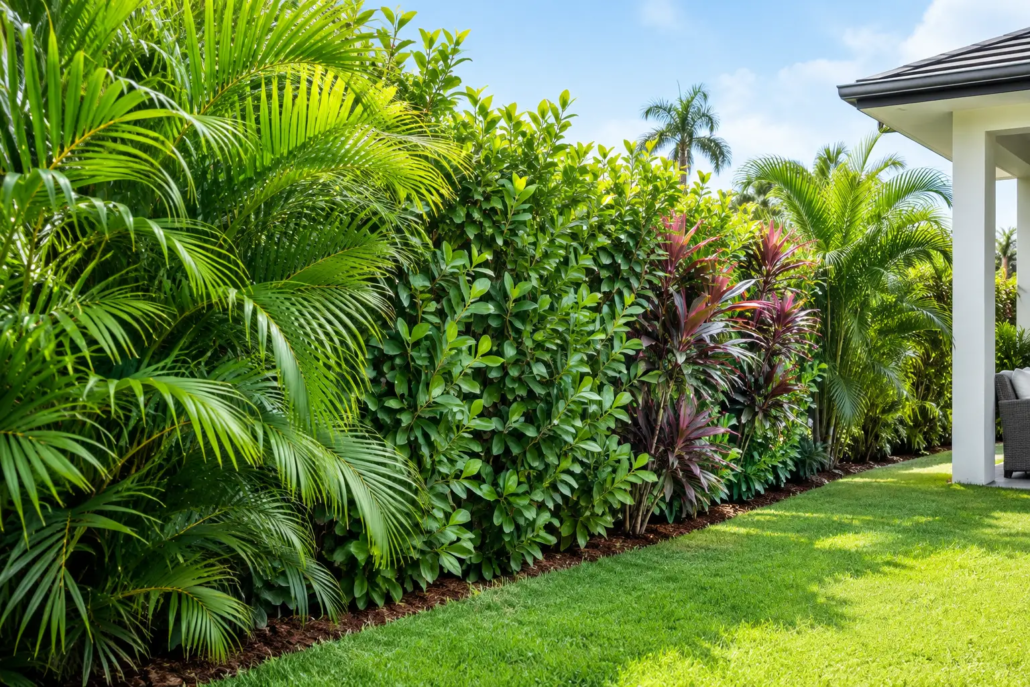
10 Best Plants for Florida Privacy Screens
A privacy screen in Northeast Florida has to do more than block a neighbor’s view. It needs to handle long summers, heavy rain, sandy or uneven soil, salt air in coastal areas, and the occasional cold snap. The best plants for Florida privacy create a fuller view fast without turning your yard into a constant trimming project.
For St. Augustine and Jacksonville homeowners, the right choice depends on how much sun the planting area receives, how quickly you need coverage, and how much space is available between the property line and your home. A tall plant may look good at the nursery, but it can become a problem if it outgrows the bed, crowds irrigation, or needs aggressive pruning every few weeks.
What Makes a Good Florida Privacy Plant?
Evergreen foliage is usually the first priority. A privacy screen should still work when the weather turns cooler, not disappear when leaves drop. Dense branching matters just as much as height. A plant that grows 20 feet tall but stays thin at the base will not provide the coverage most homeowners want around patios, pools, driveways, or fences.
Local conditions also matter. Many yards around St. Augustine have sandy soil that drains quickly, while lower areas can stay wet after summer storms. Full sun is common along new construction lots, but mature neighborhoods may have shade from live oaks and palms. Choosing a plant that fits the site from day one leads to a healthier screen and fewer replacement costs later.
Before planting, consider mature width, not just mature height. Privacy plants need enough room for air circulation and regular access for trimming. Planting too tightly can create quick coverage, but it often leads to stressed roots, disease pressure, and a hedge that thins out from the bottom over time.
10 Best Plants for Florida Privacy
1. Clumping Bamboo
Clumping bamboo is one of the fastest ways to add a tall, tropical-looking screen. Unlike running bamboo, clumping varieties stay in a more contained footprint and can create a soft green wall along a fence or property line. It works especially well when you need height without building a wide hedge.
The trade-off is maintenance. Bamboo needs consistent water while it establishes, and older canes should be removed periodically to keep the planting clean and full. Choose a true clumping variety and give it room – even clumpers expand over time.
2. Podocarpus
Podocarpus is a dependable choice for clean, formal privacy hedges. Its narrow, deep-green foliage gives it a refined look that works with both traditional homes and modern landscapes. It can be kept neatly shaped or allowed to grow into a taller, looser screen.
This plant is a strong fit for sunny to partly shaded yards, though it will need regular watering during establishment. Podocarpus is not the quickest option on this list, but homeowners who are willing to wait for a polished, long-lasting hedge are often pleased with the result.
3. Sweet Viburnum
Sweet viburnum is a favorite for Florida privacy because it grows quickly, fills in well, and tolerates heat. Its broad green leaves create a more substantial visual barrier than many narrow-leaf hedge plants. Left untrimmed, it can become a small tree, so it is best for larger properties or areas where there is space to manage its size.
Regular hedge trimming keeps sweet viburnum dense and attractive. Without occasional shaping, the lower branches can become sparse and the screen can lose its tidy appearance. For homeowners who want fast coverage and have room to work with, it remains one of the most practical choices.
4. Areca Palm
Areca palms provide immediate tropical character and a naturally soft screen around pools, patios, and side yards. Their multiple stems and feathery fronds create privacy without making a yard feel closed in. They perform best in warm, bright locations with dependable irrigation.
They are less suited to exposed sites that receive strong cold winds or hard freezes. Areca palms also need enough width to mature gracefully, so avoid forcing them into a narrow strip between a sidewalk and fence.
5. Clusia
Clusia has thick, glossy leaves and a bold, modern look. It is commonly used for dense living walls in sunny Florida landscapes and can be pruned into a very crisp hedge. The large leaves provide excellent visual coverage once plants begin to knit together.
In Northeast Florida, cold tolerance is the key consideration. Clusia can struggle after a hard freeze, particularly in open, unprotected areas. It is often a better fit for warmer microclimates near the home than for an exposed perimeter line.
6. Simpson’s Stopper
Simpson’s stopper is a Florida-friendly native option that brings more than privacy to the yard. It has evergreen foliage, small flowers, and berries that can attract birds. It works nicely as an informal screen where homeowners want a more natural landscape rather than a perfectly squared hedge.
Growth is moderate, not rapid, but the plant is well adapted to Florida conditions once established. It is a smart choice for property owners who value native character and do not need an instant wall of greenery.
7. Wax Myrtle
Wax myrtle is another useful native for larger privacy plantings. It grows quickly, handles heat well, and has an airy, natural texture that fits coastal and wooded properties. It can be trained as a hedge, but it looks best when given a little freedom rather than sheared into a tight box.
Because its foliage is finer, wax myrtle may not block a close view as completely as clusia or viburnum. It is better for screening a property edge, softening a fence line, or creating separation without a heavy visual barrier.
8. Ligustrum
Ligustrum, often called privet, can create a dense hedge with regular trimming. It tolerates shaping well and is useful when a homeowner wants a traditional, manicured boundary. Some varieties grow quickly and establish a screen faster than slower-growing ornamental shrubs.
The downside is upkeep. A ligustrum hedge that is neglected can become woody and uneven. It also needs careful variety selection, since certain privets can spread aggressively in Florida. A local landscape professional can help identify a suitable option for your yard.
9. Oleander
Oleander offers fast growth, evergreen leaves, and colorful blooms. It handles sun, heat, and dry conditions well once established, making it useful along hot fence lines or driveways. Its upright form can create a tall screen where other flowering shrubs may struggle.
However, oleander is toxic if eaten. It is not the right choice for every household, especially where young children or pets may have access to the planting. It also needs thoughtful placement away from high-traffic play areas.
10. Southern Red Cedar
Southern red cedar gives homeowners a more structured, upright privacy option. It is well suited to sunny sites and can tolerate coastal conditions better than many common hedge plants. Its narrow shape is helpful where there is limited room for a wide shrub border.
This is not a fast, instant screen, but it offers reliable year-round foliage and a strong vertical accent. Spacing is important. Crowding cedars can reduce airflow and make it harder for each tree to develop evenly.
Match the Plant to the Problem
For fast privacy along a wide property line, sweet viburnum or wax myrtle may be the best fit. For a narrow side yard, podocarpus, clumping bamboo, or southern red cedar can add height without consuming the entire planting bed. Around a pool, areca palms provide a softer, more relaxed screen, while clusia gives a bolder and more formal look in a protected warm spot.
A fence can also change the equation. If you already have a six-foot fence, you may only need plants that soften the view and add a few feet of height. In that case, a layered bed with palms, shrubs, and mulch often looks better than one oversized hedge planted too close to the fence.
Plan for Water, Mulch, and Trimming
New privacy plants need regular irrigation until their roots spread into surrounding soil. That first year is when many screens fail, especially in sandy yards where water moves through quickly. Irrigation should soak the root zone rather than briefly wet the leaves and surface soil.
A proper mulch layer helps retain moisture, moderates soil temperature, and gives the bed a finished appearance. Keep mulch a few inches away from trunks and stems to prevent moisture-related issues. Once the planting begins filling in, regular trimming is the difference between a healthy screen and an overgrown row of shrubs competing for light.
American Blade Lawn Care can help homeowners plan privacy landscaping around the real conditions in their St. Augustine-area yards, from irrigation needs and mulch installation to ongoing hedge care. The best screen is not simply the tallest plant available – it is the one that grows full, stays healthy, and makes your outdoor space feel like your own.


Leave a Reply
Want to join the discussion?Feel free to contribute!