
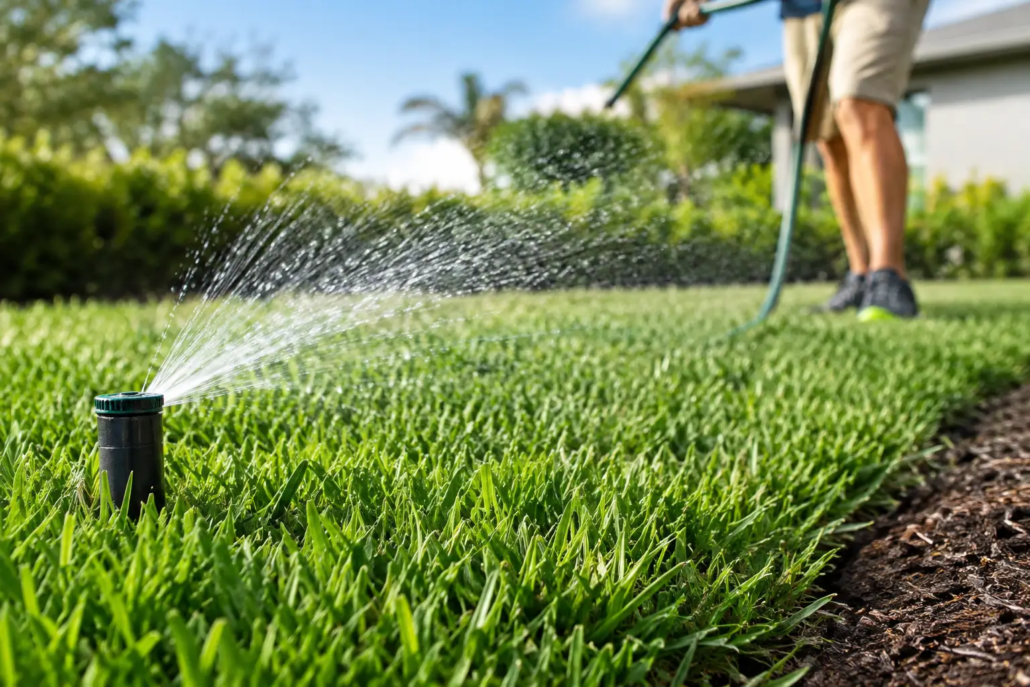
How to Maintain New Sod in St. Augustine
A freshly sodded yard can make a property look finished in a single day, but the work is not over once the last pallet is installed. To maintain new sod successfully in St. Augustine, homeowners need to focus on one priority first: helping the roots grow into the soil below. Proper watering, limited foot traffic, careful mowing, and fast attention to irrigation problems will determine whether that new green lawn takes hold or starts to thin out.
Northeast Florida heat, sandy soil, heavy summer rain, and occasional dry stretches can all affect how quickly sod establishes. A routine that works in another part of the country may not work here. Your sod needs steady care during the first month, then a smart transition into normal lawn maintenance.
Start With Consistent, Deep Watering
Water is the biggest factor in the first few weeks after installation. New sod has shallow roots and cannot yet pull enough moisture from the existing soil. It needs moisture at the sod-to-soil layer so the roots can knit into the ground.
For the first 7 to 10 days, water new sod often enough to keep it consistently moist. In warm, sunny weather, that may mean watering once or twice per day for shorter cycles. Early morning is the best time to run irrigation because the grass can dry through the day. Watering late at night leaves blades wet for too long and can encourage fungus.
Do not rely on a quick look at the grass from the driveway. Lift a corner of the sod and feel the soil beneath it. It should be damp, not dusty or bone dry. At the same time, it should not be muddy or squishy underfoot. Standing water and saturated soil can prevent roots from getting oxygen, causing sod to yellow, rot, or pull apart.
After the first week, begin transitioning to fewer, longer watering cycles. This encourages roots to follow moisture deeper into the soil. By weeks three and four, most established sod should be watered more deeply two to three times per week, depending on rainfall, grass type, sun exposure, and soil conditions.
A summer thunderstorm does not always mean your lawn received enough useful water. Heavy rain can run off compacted or sandy areas before soaking in. Check the soil rather than assuming the rain handled the job.
Check Irrigation Coverage Before Problems Spread
A new lawn quickly reveals irrigation issues. If one section begins turning gray-green, curling, or drying faster than the rest, the problem may be a missed sprinkler zone, a clogged nozzle, poor spray overlap, or a damaged irrigation head.
Run each zone during daylight and watch where the water lands. Every piece of sod should receive coverage, including narrow side yards, corners near landscape beds, and strips along driveways. Sprinklers should not be spraying the street, house, or mulch while leaving the turf dry.
This is also the time to make sure your controller schedule matches the season. Florida watering needs change with weather conditions. A schedule that was necessary during a hot, dry installation week may be excessive after several days of rain. Adjusting the system protects your sod and helps avoid wasted water.
If your irrigation system is inconsistent or you are not sure how long each zone should run, have it inspected early. A small adjustment now is far less expensive than replacing sod that never rooted properly.
Keep Off the Lawn While Roots Establish
New sod needs contact with the soil and time to root. Children playing, pets running, lawn chairs, and frequent foot traffic can shift seams, compress wet soil, and leave low spots before the grass is established.
For the first two weeks, keep activity on the new lawn to a minimum. Avoid parking equipment on it, dragging hoses across the same seams, or using it as a shortcut to the backyard. If you must walk across the sod to check moisture or move a sprinkler, step carefully and vary your path.
You can test whether sod is rooting by gently lifting an edge after about two weeks. If it resists lifting, that is a good sign. Do not tug hard enough to tear new roots. Areas with weak attachment may need more consistent moisture, better soil contact, or closer irrigation coverage.
Mow at the Right Time and Height
Mowing too early can pull up sod that has not rooted. Wait until the grass is firmly attached and has grown enough to need trimming, which is commonly around two to three weeks after installation. Before mowing, make sure the ground is not overly wet and the mower blades are sharp.
For most St. Augustine lawns, a mowing height around 3.5 to 4 inches helps shade the soil, support the root system, and reduce stress during hot weather. Zoysia and Bermuda have different preferred heights, so follow the recommendation for your specific grass variety.
Never remove more than one-third of the grass blade in a single mowing. Cutting too much at once shocks a new lawn and exposes more soil to the Florida sun. Bagging heavy clippings can be useful during the first mow if the turf is tall, but light clippings can usually remain on the lawn once the sod is established.
Keep mower tires off the edges of newly installed pieces when possible. Those outer seams are especially vulnerable to drying out.
Fertilize Carefully, Not Aggressively
New sod does not need a heavy dose of fertilizer immediately after installation unless the installation plan specifically calls for it. Too much fertilizer can burn stressed grass, create fast top growth before roots are ready, and wash away during heavy rainfall.
Many sod installations include a starter fertilizer applied to the soil or sod at installation. If that was done, wait before adding anything else. In general, a follow-up fertilizer application may be appropriate after the lawn has rooted, but the timing and product should match the grass type, season, and local conditions.
A customized recommendation is better than grabbing the strongest fertilizer on the shelf. St. Augustine grass, for example, can develop problems when it receives the wrong nutrient balance or too much nitrogen at the wrong time. A lawn care professional can evaluate the color, rooting progress, irrigation, and soil conditions before building a fertilization plan.
Watch for Early Signs of Stress
New sod will not always look perfect while it is establishing. A few brown edges, minor seam visibility, or temporary color variation can happen. The goal is to catch true stress early before a small issue becomes a large dead patch.
Look for areas that are wilted, blue-gray, crunchy, or pulling up easily. Yellowing can point to excess water, poor drainage, or nutrient issues. Circular brown areas, spotting, or grass that declines quickly after extended wet weather may indicate fungus.
Do not treat every discoloration with more water. Overwatering is one of the most common mistakes homeowners make with new sod. First check the soil moisture, inspect irrigation coverage, and look at the pattern of the damage. A dry strip near a driveway needs a different solution than a soggy low area holding water after every rain.
Keep weeds out of the new lawn by hand-pulling only the obvious ones during establishment. Avoid applying broad weed control products until the sod is rooted and mature enough for treatment. Some herbicides can stress tender grass, especially during hot weather.
Give Problem Areas Extra Attention
Not every part of a yard establishes at the same speed. Sod near pavers, concrete, pool decks, and south-facing walls may dry faster because those surfaces reflect heat. Shaded areas beneath trees can hold moisture longer and may need less watering. Low spots can stay wet and develop disease pressure.
If an edge begins to shrink back or curl, gently press it into good contact with the soil and water the area appropriately. Small gaps between pieces may close as the turf grows, but large gaps, sunken seams, or loose sections should be addressed promptly. Waiting can create a lasting uneven appearance and a place for weeds to move in.
This is where local experience makes a difference. A healthy lawn in St. Augustine is not maintained on a fixed national schedule. It is maintained by watching what the grass, soil, shade, and irrigation system are doing on your property.
When to Call for Professional Lawn Help
Call for help if the sod is turning brown despite regular watering, pulling up after several weeks, developing widespread fungus-like patches, or sitting in standing water. It is also wise to bring in a professional if your irrigation system is not covering evenly or if you are unsure what grass was installed.
American Blade Lawn Care can evaluate new sod, irrigation performance, mowing needs, and ongoing lawn care requirements for properties across St. Augustine and nearby Northeast Florida communities. A customized plan can protect the investment you just made and keep the lawn looking clean, full, and ready for everyday use.
Give new sod the first few weeks of attention it deserves, and it will reward you with more than quick curb appeal. It becomes the strong, healthy foundation for an outdoor space your family can enjoy for years.


Leave a Reply
Want to join the discussion?Feel free to contribute!