
Best Mulch for Weed Prevention in Florida Beds
A freshly mulched landscape bed can make a St. Augustine home look cared for overnight. But looks are only part of the job. The best mulch for weed prevention creates a barrier that blocks sunlight from reaching weed seeds, helps the soil hold moisture, and gives planting beds a clean, finished edge.
For most Northeast Florida properties, pine bark mulch is the most dependable choice. It performs well in heat, looks natural around palms and shrubs, and breaks down gradually enough to improve the soil without disappearing after one season. Still, the right choice depends on where the bed sits, what is planted there, and how much maintenance you want to avoid.
Why mulch matters in Florida landscapes
Florida weeds do not need much encouragement. Warm temperatures, regular rain, sandy soil, and long growing seasons give them plenty of opportunities to show up in shrub beds, around trees, and along walkways. Mulch cannot stop every weed, especially aggressive weeds that spread by roots or seeds blowing in from nearby areas. It does make the job much easier.
A proper layer shades the soil surface. Without that light, many weed seeds cannot germinate or grow strongly enough to become a visible problem. Mulch also reduces evaporation, which helps ornamental plants handle dry spells between irrigation cycles. In a climate where intense sun can dry a bed quickly, that moisture protection matters.
The key is to treat mulch as part of a complete bed-maintenance plan. Existing weeds should be removed before new mulch goes down. Edges should be defined so grass runners do not creep into the bed. When needed, targeted weed control can handle weeds that make it through the mulch layer.
Pine bark is usually the best mulch for weed prevention
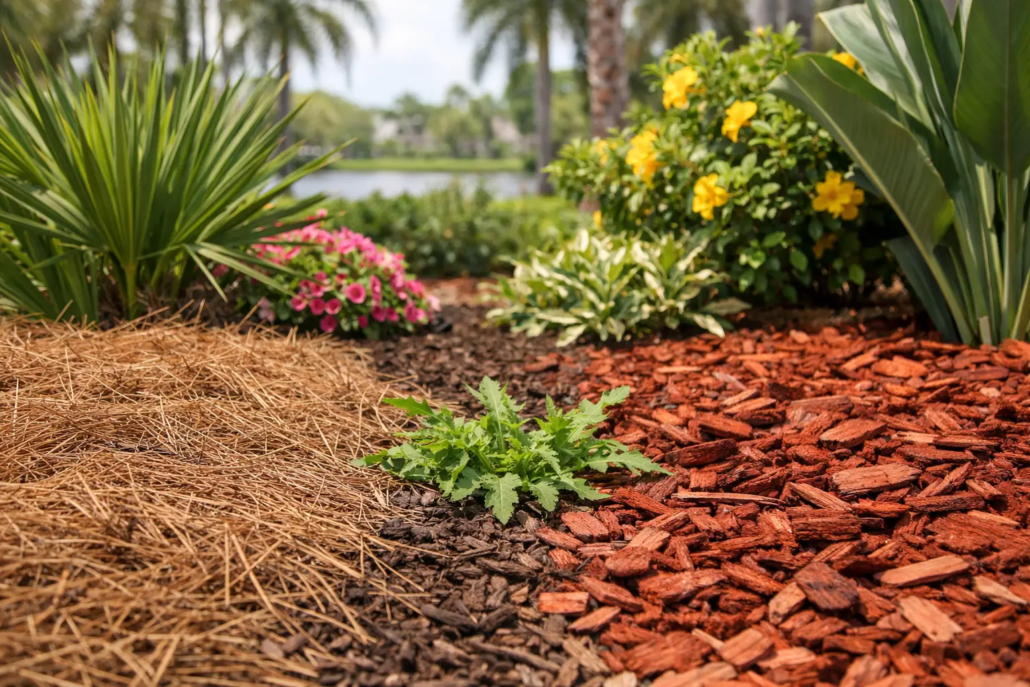
Pine bark comes in several forms, including nuggets, mini nuggets, and shredded pine bark. For many residential flower beds, shredded pine bark or mini nuggets offer the best balance of appearance and weed suppression. The pieces knit together more tightly than large nuggets, leaving fewer open areas where sunlight can reach the soil.
Pine bark also fits the character of Northeast Florida landscapes. Its natural brown color complements palms, ornamental grasses, flowering shrubs, and mature live oaks without making the property look overly formal. As it breaks down, it adds organic material to Florida’s sandy soils, which can help improve soil structure over time.
Large pine bark nuggets can still work well, particularly in larger beds around established trees and broad shrubs. They tend to stay in place better than lightweight mulches during normal irrigation. Their trade-off is coverage: larger pieces leave bigger gaps, so they are not always the strongest option in a bed with constant weed pressure.
For homeowners focused mainly on keeping weeds down, a finer-textured pine bark mulch installed at the right depth is usually the smarter selection.
What about cypress mulch?
Cypress mulch remains a popular option because it has a clean, uniform look and holds up well in wet conditions. It can be a good fit for shaded beds, areas with moisture-loving plants, and properties where a lighter brown mulch is preferred.
However, cypress mulch is often lighter than pine bark and may shift more easily in heavy rain or near downspouts. It can also dry out and become less effective when it is spread too thin. It is a solid landscape material, but it is not automatically better than pine bark for weed control.
Hardwood mulch can work, with the right upkeep
Shredded hardwood mulch is another effective weed barrier because it forms a fairly dense mat across the soil. It is often dark in color and provides a polished contrast against green plants and light-colored homes.
The downside in Florida is that hardwood mulch can decompose quickly in heat and humidity. When it breaks down, the layer becomes thin, and weeds gain an opening. It may need refreshing more often than pine bark, especially in irrigated beds. Hardwood can be a good choice when appearance is the top priority, but it should be checked regularly.
Mulch depth matters more than most homeowners think
Even the best mulch will not prevent weeds if it is installed incorrectly. A layer that is too thin allows sunlight through and dries out quickly. A layer that is too deep can hold excessive moisture against plant crowns and tree trunks, creating conditions that stress roots and invite disease.
For most planting beds, aim for about 2 to 3 inches of mulch after installation. This is enough coverage to suppress weeds while allowing water and oxygen to reach the soil. In beds that already have older mulch, there is rarely a reason to keep adding full layers year after year. The existing material should be assessed, loosened if it has become compacted, and topped off only as needed.
Keep mulch pulled several inches away from the base of shrubs, palms, and trees. Mulch should never be piled against a trunk in a mound. That common practice, sometimes called volcano mulching, traps moisture where it does not belong and can cause bark decay, pest issues, and root problems.
Choose mulch based on where it will be installed
No single product is perfect for every corner of the yard. Beds under oak trees, sunny foundation plantings, poolside landscaping, and drainage-prone areas all have different demands.
In a shaded bed beneath mature trees, pine bark or cypress mulch can help maintain more even soil moisture. Around drought-tolerant shrubs in full sun, pine bark is often a strong choice because it holds up well while still helping the soil stay cooler. For a bed near a roofline or downspout, choose a mulch with enough weight and texture to resist washing away, and make sure drainage is corrected before installation.
Rubber mulch is sometimes advertised as a long-lasting, low-maintenance option. It does not break down, but it also does not improve the soil and can retain heat in sunny areas. For most home landscapes, natural mulch provides better overall value and a more natural finish.
Rock can reduce some weed growth, but it is not a simple substitute for mulch in Florida beds. It absorbs heat, can be difficult to remove, and allows windblown debris to collect between stones. Once organic debris builds up, weed seeds can sprout right on top of the rock. Rock is best reserved for specific design features, drainage areas, or low-planting zones rather than every landscape bed.
New mulch will not fix weeds growing underneath it
One of the most frustrating landscaping mistakes is covering a weedy bed with fresh mulch and expecting the weeds to disappear. Perennial weeds, grass runners, and established roots can push directly through a new layer. The result is a bed that looks good briefly, then becomes harder to clean because the weeds are tangled in fresh material.
The right process starts with bed preparation. Existing weeds and grass should be removed, compacted mulch should be raked out or loosened, and the bed edge should be restored. A professional can then apply appropriate weed control where needed before placing fresh mulch evenly across the area.
Landscape fabric may be helpful beneath decorative rock in selected areas, but it is not always the best answer under organic mulch. Fabric can become clogged with soil and decomposed mulch, weeds can root into the top surface, and removing it later is often a headache. In planted beds, proper mulch depth and routine maintenance are usually more practical.
How often should mulch be refreshed?
Most St. Augustine and Jacksonville-area properties benefit from a mulch refresh once or twice a year. Spring is a popular time because it prepares beds for the growing season and improves curb appeal right away. A fall touch-up can restore beds after summer storms, heavy rain, and the fast decomposition that comes with Florida heat.
You may need attention sooner if mulch has washed away, faded heavily, become thin around plants, or started to look matted and compacted. The goal is not to pile on more material every visit. It is to maintain a clean, even layer that continues to suppress weeds and protect the plants below.
American Blade Lawn Care can help homeowners choose a mulch that fits their landscape, prepare beds correctly, and install a clean, consistent layer without burying plants or making a mess of surrounding turf. A professional mulch installation is one of the fastest ways to improve curb appeal while reducing the weekly battle with weeds.
A well-maintained mulch bed gives your plants room to stand out and gives weeds far fewer places to take hold. Start with the material that fits your yard, apply it at the proper depth, and keep the bed edges clean so the finished look lasts.


Leave a Reply
Want to join the discussion?Feel free to contribute!