
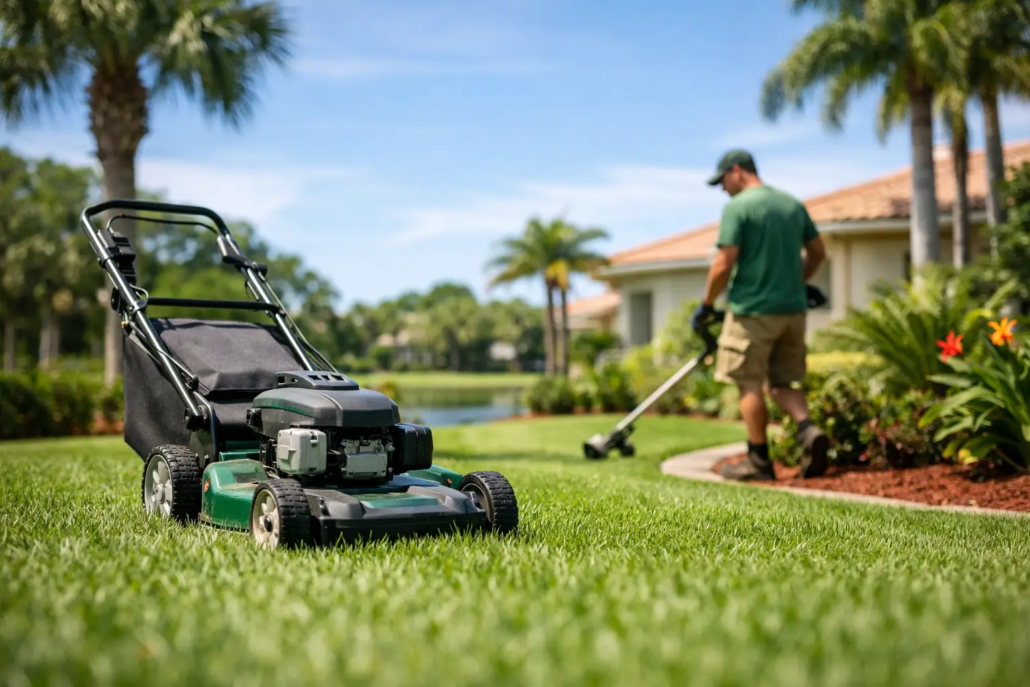
Recurring Lawn Mowing Plans for Florida Yards
A St. Augustine lawn can look freshly cut on Friday and noticeably shaggy by the following week. Between fast-growing warm-season grass, heavy summer rain, sandy soil, and long growing seasons, recurring lawn mowing plans are not a luxury for many Northeast Florida homeowners. They are the practical way to keep the property looking cared for without giving up your weekends to the mower.
A dependable plan does more than shorten the grass. It creates a consistent maintenance rhythm that supports cleaner edges, healthier turf, stronger curb appeal, and a yard that is ready when guests, neighbors, or prospective buyers pull up.
What Recurring Lawn Mowing Plans Should Include
A quality mowing visit should be built around the whole appearance of your lawn, not just a quick pass across the grass. At a minimum, routine service should include professional mowing at an appropriate height, trimming around trees, fences, beds, and other obstacles, edging along hard surfaces, and blowing clippings from driveways, sidewalks, patios, and entryways.
That finishing work matters. A neatly cut lawn with ragged edges or grass scattered across the driveway still looks unfinished. Clean lines around sidewalks and beds make the property look sharper, while regular trimming prevents turf from creeping into areas where it does not belong.
The right plan also accounts for the season. Florida grass does not grow at the same speed all year. During warm, rainy stretches, a yard may need weekly attention to avoid excess growth and clumping. In slower periods, the schedule may be adjusted based on grass growth, weather, and the condition of the property. Good service is consistent, but it is not careless or one-size-fits-all.
Why Consistency Helps Florida Lawns
Letting grass get too tall before mowing creates more than an appearance problem. Removing too much blade height at once can stress the lawn, especially during heat, drought, pest pressure, or heavy foot traffic. It can leave the turf looking thin, uneven, or scalped in spots.
Routine mowing helps maintain a more even canopy across the lawn. That canopy shades the soil, helps retain moisture, and gives the property a fuller, more finished look. Consistent service also makes it easier to spot problems early, such as bare patches, irrigation overspray, weeds taking hold, or areas that are not receiving enough water.
For homeowners, the biggest benefit is often simple reliability. You do not have to watch the forecast, haul equipment from the garage, buy fuel, or spend your day off trying to catch up on an overgrown yard. The work gets handled on a predictable schedule by a crew that knows what a properly maintained Florida lawn should look like.
Choosing the Right Mowing Frequency
Weekly service is often the best fit for St. Augustine and Jacksonville-area lawns during the active growing season. Frequent rain and high humidity can make grass grow quickly, and weekly mowing keeps the property from looking unruly between visits. It also keeps edging and trimming under control, which makes a major difference around driveways, curbs, and landscaping.
Biweekly service may work during cooler months or for properties with slower growth, limited irrigation, or lighter turf coverage. The trade-off is that grass can become taller and harder to manage after a wet week. A biweekly schedule can save money in the short term, but it is not always the best choice for homeowners who want a consistently polished appearance.
The most effective approach is based on your actual yard. Grass type, shade, irrigation coverage, drainage, soil conditions, and how you use the property all matter. A lawn with full sun and working irrigation will often grow differently than a shaded yard with dry spots under mature trees.
Weekly Mowing Is Often Best When
Weekly visits are especially useful for homes with actively growing St. Augustine grass, Bahia grass, or Zoysia; properties on busy streets where curb appeal is highly visible; rental homes; and yards with lots of landscaped edges. If your lawn regularly looks overgrown before the next service, the schedule is probably too far apart.
Biweekly Service Can Make Sense When
A less frequent schedule may be appropriate in winter, during a prolonged dry spell, or when growth slows naturally. It can also be a reasonable choice for a property that is not occupied full time. Still, a professional should evaluate the condition of the turf rather than choosing frequency based on price alone.
A Mowing Plan Is More Valuable With Local Knowledge
Florida lawns are not maintained the same way as lawns in colder climates. Mowing height, blade condition, moisture levels, and timing all affect results. Cutting too low can expose soil, stress grass, and invite weeds. Mowing with dull blades can tear the grass rather than making a clean cut, leaving tips that turn brown and making the lawn look rough even after service.
Local experience also helps when weather changes the plan. A rain-heavy week may require a different mowing approach than a dry, windy stretch. Areas with standing water, newly installed sod, or irrigation repairs may need extra attention. A professional team should know when to adjust, communicate clearly, and protect the lawn instead of rushing through a standard route.
That is one reason homeowners value a local company over an anonymous, volume-driven service. American Blade Lawn Care works with the grass types, weather patterns, and outdoor challenges found throughout St. Augustine and nearby Northeast Florida communities. The goal is not simply to complete a visit. It is to leave the property looking noticeably better every time.
When Mowing Alone Is Not Enough
A recurring plan keeps the lawn orderly, but mowing cannot solve every turf problem. If the grass is thin, weeds are spreading, mulch beds are faded, or the irrigation system is missing sections of the lawn, additional services may be needed to get the yard where you want it to be.
This is where an all-in-one lawn care provider can save time. Instead of calling separate companies for mowing, hedge trimming, weed control, mulch installation, irrigation repair, aeration, or power washing, homeowners can get practical recommendations from one local team. The work can be scheduled around the condition of the property rather than treated as disconnected chores.
For example, a lawn that stays brown in one corner may not need more mowing at all. It may need an irrigation adjustment. A yard that looks messy despite regular cuts may need bed edging, hedge trimming, or fresh mulch to create contrast and definition. A good service plan looks at the full property, not just the grass.
Questions to Ask Before Starting Service
Before choosing a provider, ask what is included on each visit and whether trimming, edging, and cleanup are standard. Ask how the company handles rain delays, whether the schedule changes with seasonal growth, and how they communicate if they notice a lawn issue. You should also ask whether they offer free estimates and can help with related landscape or irrigation needs.
Price matters, but the lowest quote is not always the best value. A bargain service that skips edges, leaves debris behind, or cuts the grass too short can cost more in frustration and lawn recovery later. Look for a provider that is responsive, shows up reliably, and takes pride in the details homeowners see every day.
Put Your Yard on a Schedule That Works
Your lawn is one of the first things people notice about your home, and it should not become another item that hangs over your weekend. The right recurring mowing schedule keeps growth under control, protects the appearance of your property, and gives you a dependable starting point for a healthier outdoor space.
If your yard is growing faster than you can manage or the current service is leaving it looking unfinished, ask for a local evaluation. A customized plan can make regular lawn care easier, cleaner, and far more dependable season after season.


Leave a Reply
Want to join the discussion?Feel free to contribute!