
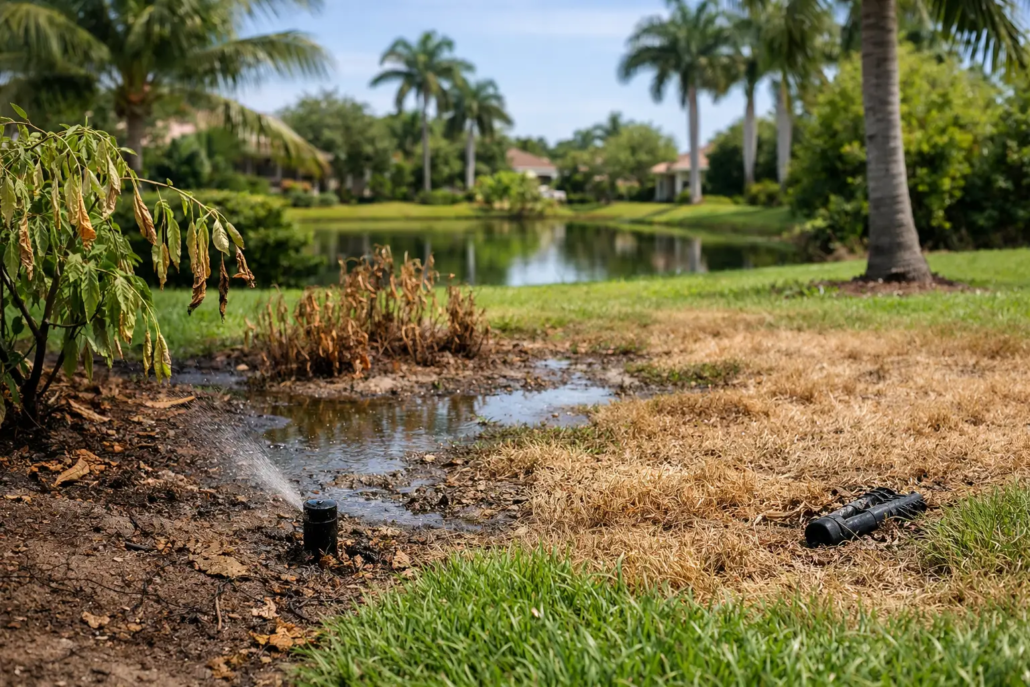
10 Signs of Irrigation Failure in Florida Yards
A St. Augustine lawn can look fine on Friday and stressed by Monday, especially when heat, sandy soil, and afternoon rain all pull your irrigation system in different directions. Knowing the signs of irrigation failure helps you catch a small sprinkler issue before it turns into brown turf, wasted water, muddy beds, or an expensive landscape repair.
Signs of Irrigation Failure to Watch For
1. Dry, brown, or thinning patches in the lawn
One of the clearest warning signs is a patch of grass that turns dull, gray-green, or brown while the rest of the lawn stays healthy. In Northeast Florida, this often points to a sprinkler head that is clogged, tilted, blocked by grass, or simply not reaching the area it should.
Do not assume every brown patch means the grass needs more water. Chinch bugs, disease, compacted soil, and shade can cause similar damage. The key question is whether the problem follows the shape of a sprinkler zone. A dry wedge near the edge of the yard or a strip along a fence line often means poor coverage, not a lawn-wide health problem.
2. Water pooling near sprinkler heads or walkways
Standing water after a cycle is not always a sign that the system is working well. A puddle around one sprinkler head may mean the head is cracked, its seal is failing, or the nozzle is sending water too close to the ground. Water collecting along a sidewalk, driveway, or patio can also signal a broken line underground.
Besides wasting water, pooling can soften the soil around turf roots and create muddy areas that are hard to mow. It can also send runoff onto hard surfaces, where it carries fertilizer, mulch, and debris toward storm drains. In a Florida yard, drainage and irrigation need to work together.
3. A sprinkler head will not pop up or retract
Sprinkler heads sit low to stay out of the way of mowing and foot traffic. Over time, sand, grass clippings, mulch, and shifting soil can keep one from rising properly. If a head does not pop up, water may spray into the surrounding grass instead of over it.
A head that stays up after the cycle ends deserves attention too. It is easy to hit with a mower, and even a small impact can break the fitting or affect the spray pattern. This is a straightforward repair in many cases, but leaving it alone can lead to a larger leak.
4. Sprinklers spray the street, siding, or driveway
Irrigation should support your lawn and landscape beds, not water concrete, cars, windows, or the side of the house. Overspray is often caused by a misaligned nozzle, a damaged head, too much pressure, or a head that has been pushed out of position.
This is more than a curb appeal issue. Constant water against siding can encourage mildew and staining. Overspray on driveways and sidewalks can leave rust-colored irrigation stains, particularly when water contains iron. It also raises your water bill without giving your turf any benefit.
5. One zone has weak pressure or uneven spray
When some heads in a zone barely spray while others mist or blast water, the system may have a pressure problem. A leak in the line, a partially closed valve, a clogged nozzle, or too many heads on one zone can all create uneven performance.
A misty spray is a common clue that pressure is too high. Fine mist blows away in the wind before it reaches the root zone. Weak streams, on the other hand, can leave dry pockets across the lawn. Both problems create uneven watering, which makes it harder to maintain consistent grass color and growth.
6. Your water bill jumps without a clear reason
A sudden increase in water use is one of the most expensive signs of irrigation failure. It may be a visible leak, but underground leaks are often harder to spot. You may notice a soggy spot in the yard, unusually green grass in one small area, soil that stays soft, or water running from a low point long after the system has shut off.
If your bill rises during a hot, dry stretch, some increase may be normal. But a major change without an adjustment to your watering schedule is worth investigating promptly. A small underground leak can waste a surprising amount of water over several weeks.
7. The controller runs at the wrong time or skips zones
Sometimes the sprinklers themselves are fine, but the controller is not. A power outage, worn backup battery, outdated programming, faulty wiring, or a damaged rain sensor can cause a system to run at odd times, skip a zone, or water far longer than needed.
Homeowners often discover this when they hear sprinklers running in the middle of a rainstorm or notice one section of the yard has been dry for days. Seasonal adjustments matter in St. Augustine. A schedule that worked during a dry spring may be excessive during a rainy summer, while a winter schedule may not support the lawn during a warm, windy stretch.
8. Landscape beds are soaked while the lawn is dry
Mulch beds, hedges, palms, and turf do not always need the same amount of water. When a mixed zone waters everything on one schedule, you may see wet mulch, stressed shrubs, or dry grass all at once. This may not be a broken part, but it is still an irrigation design or adjustment problem that affects the health of your landscape.
Overwatered beds can promote fungal issues and wash mulch out of place. Underwatered turf may thin out and invite weeds. A system should be adjusted around the specific needs of your grass, plants, soil, sun exposure, and drainage conditions.
9. You hear hissing, bubbling, or water running after shutoff
Your irrigation system should be quiet once a zone finishes. A persistent hissing sound, bubbling near a valve box, or the sound of running water after the cycle may indicate a valve that is not closing fully or a leak in the supply line.
Check the area carefully without digging into pipes or wiring. If the soil is unusually wet, water is surfacing, or the sound continues, professional inspection is the safer choice. Finding the exact source early can prevent damage to roots, hardscape edges, and nearby utility areas.
10. Your lawn needs constant extra watering to stay green
If you regularly hand-water areas that should be covered by sprinklers, the system is not doing its job. That does not automatically mean you need a complete replacement. A nozzle change, head adjustment, coverage correction, valve repair, or controller update may be enough.
The right fix depends on the yard. Older systems may need more substantial work, especially after landscaping changes, new patios, tree growth, or years of settling soil. A system installed for an open lawn may no longer provide proper coverage once hedges, palms, and beds have matured.
What to Do When You Notice Irrigation Problems
Run each irrigation zone during daylight at least once every few weeks. Walk the property while it operates and look for dry gaps, overspray, low heads, leaks, and unusual runoff. This simple check is the fastest way to spot a problem before your lawn begins showing stress.
Avoid turning up the timer just because the grass looks dry. More runtime will not fix a broken head, a hidden leak, or poor coverage. It can make drainage problems worse and encourage shallow roots. Start by identifying whether the issue is mechanical, programming-related, or connected to lawn health.
For homeowners who want a dependable answer without the guesswork, American Blade Lawn Care can evaluate irrigation performance alongside the condition of the lawn and landscape. That matters because the best repair is not just the one that gets water flowing again. It is the one that delivers the right amount of water where your Florida yard actually needs it.
A healthy lawn should not depend on crossed fingers every time the sprinklers turn on. If one area is dry, another is flooded, or your water use suddenly climbs, schedule a repair assessment before a manageable issue becomes visible damage across the yard.


Leave a Reply
Want to join the discussion?Feel free to contribute!