
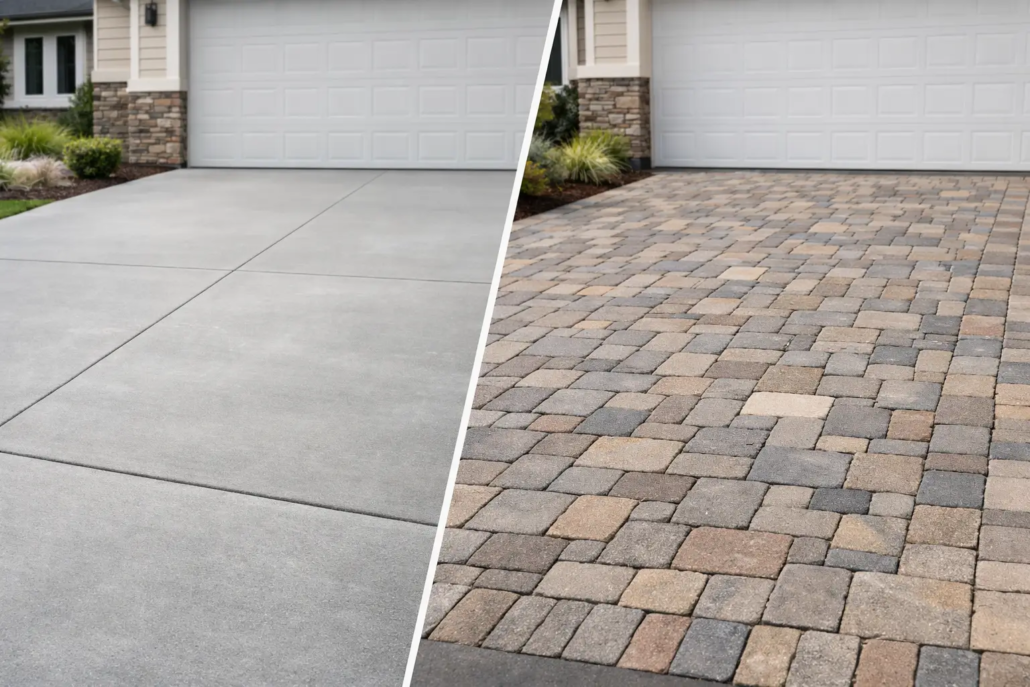
Concrete Versus Paver Driveway: Which Is Better?
A driveway has to do more than get cars from the street to the garage. In Northeast Florida, it also has to stand up to punishing sun, sudden downpours, humidity, irrigation overspray, and the everyday wear of a busy home. When comparing a concrete versus paver driveway, the better choice comes down to your budget, drainage needs, maintenance expectations, and the look you want for your property.
For many St. Augustine and Jacksonville homeowners, pavers are the stronger long-term option when curb appeal, repairability, and water management are priorities. Concrete can still be a smart, clean-looking choice for a straightforward driveway with a lower upfront price. The right answer depends on the condition of your site and how you plan to use the space.
Concrete Versus Paver Driveway: The Main Difference
A concrete driveway is poured as one continuous slab. Once it cures, it creates a solid, uniform surface that works well for many homes. It can be broom-finished for traction, stamped for more decorative appeal, or colored to better suit the exterior of the house.
A paver driveway is built from individual concrete, brick, or natural-stone units installed over a carefully prepared base. The pavers interlock, while edge restraints and joint sand help hold the surface in place. That layered construction takes more time and attention during installation, but it provides advantages that matter in Florida soil and weather conditions.
Concrete offers simplicity. Pavers offer flexibility. Neither material can make up for poor site preparation, however. A driveway that lacks a stable base, proper slope, and dependable drainage can settle, crack, or hold water no matter what surface is installed on top.
Upfront Cost and Long-Term Value
Concrete usually costs less upfront than a professionally installed paver driveway. It requires fewer individual materials and generally takes less labor to install. For homeowners who need a functional replacement without adding a major design feature, concrete can be a practical fit.
Pavers typically have a higher initial investment because the installation requires excavation, grading, compacted base material, bedding sand, edge restraints, and detailed placement of each unit. Patterns, borders, multiple colors, curves, and larger driveway layouts can also add to the price.
The long-term value calculation is different. A cracked concrete slab may require patching, resurfacing, or replacement of a large section to restore its appearance. With pavers, a damaged or stained area can often be lifted and repaired one section at a time. That can help protect the investment when settling, plumbing work, tree roots, or a future irrigation repair affects part of the driveway.
For a home where appearance plays a major role in resale value or neighborhood curb appeal, pavers often deliver a more noticeable visual return. A well-designed paver driveway can tie together the front walk, landscape beds, entryway, and outdoor living areas in a way plain concrete rarely does.
How Florida Weather Affects Each Material
Florida heat, moisture, and heavy rain make drainage and movement major considerations. Concrete expands and contracts as temperatures change. Control joints are installed to manage that movement, but concrete can still crack over time. Small cracks may be mostly cosmetic, while larger cracks, uneven sections, or sinking areas can become safety and drainage concerns.
Pavers are designed as a flexible system. The joints between them allow for minor movement without creating one large visible crack across the surface. If the base is properly compacted and the edges are secured, pavers can handle normal settling well.
Water is another reason to look closely at the site before choosing. A driveway should direct runoff away from the home, garage, and low areas of the yard. Pavers can be installed with drainage-friendly planning in mind, and permeable paver systems may be appropriate for properties that need improved stormwater management. Standard pavers are not automatically permeable, so the design and base materials matter.
Concrete sheds water across its surface when it is correctly sloped. That can work well, but a low spot or improper pitch may leave standing water after a summer storm. Pooling water can stain the surface, encourage algae growth, and create a slippery area near the garage or front entry.
Appearance and Design Flexibility
This is where pavers have a clear advantage. They are available in many shapes, colors, textures, and laying patterns. A driveway can have a simple, traditional pattern or a more custom design with a contrasting border. Pavers also work naturally with walkways, patios, retaining walls, and landscape beds, helping the entire front yard feel intentional rather than pieced together.
Concrete has come a long way from basic gray slabs. Decorative finishes, stamping, and color can give it a more finished appearance. Still, many homeowners prefer the depth and detail of individual pavers, especially on Spanish, coastal, Mediterranean, and newer Florida-style homes.
There is a practical side to appearance as well. Concrete stains can be difficult to hide, particularly from rust, leaf tannins, oil, fertilizer, or irrigation water with high mineral content. Pavers can stain too, but replacing a few affected units is often easier than trying to blend a concrete repair into an existing slab.
Maintenance Needs for Concrete and Pavers
Both driveway types benefit from routine care. Power washing helps remove algae, mildew, dirt, and tire marks that build up in Florida’s humid environment. Keeping nearby irrigation heads aimed away from the driveway can also reduce mineral staining and overspray.
Concrete may need periodic sealing, especially if it is decorative or stained. Sealing can help reduce surface staining and moisture intrusion, but it does not prevent cracking caused by settling or structural movement. Avoid harsh de-icing products if you have vehicles returning from trips to colder states, since chemical residue can damage concrete over time.
Paver driveways may need joint sand refreshed periodically. Over time, rain, cleaning, and normal traffic can reduce the sand between pavers. Polymeric sand can help lock joints together and discourage weed growth when installed correctly. Some paver driveways are also sealed to enhance color and make cleaning easier, though sealing is optional and should be selected carefully to avoid an overly slick finish.
Weeds between pavers are often a sign that debris and seeds have collected in the joints, not that weeds are growing up from below. Regular cleaning and proper joint-sand maintenance make a big difference. If a paver section begins to dip, addressing it early is far easier than waiting until the base has washed out further.
Repairs: Where Pavers Often Win
A single concrete crack can be frustrating because repairs rarely disappear completely. Even a well-done patch may differ in color and texture from the surrounding slab. If a section has settled badly, contractors may need to remove and repour a substantial area.
Pavers make localized repairs more manageable. A crew can remove individual pavers, correct the base, replace damaged pieces if needed, and reinstall the surface. This is especially useful when access is needed for underground utility lines, irrigation repairs, or drainage work.
That advantage depends on having extra pavers available. If you choose pavers, save a small number from the original installation. Manufacturers can change colors or discontinue styles, and stored pavers make future repairs easier to match.
Which Driveway Is Right for Your Home?
Choose concrete when you want a clean, dependable driveway at a lower initial cost and do not need extensive decorative detail. It can be an excellent solution for a simple rectangular driveway on stable ground with good drainage.
Choose pavers when you want stronger curb appeal, more design options, and the ability to repair smaller areas without replacing a full slab. They are particularly worth considering for properties with drainage challenges, homes with a detailed landscape plan, or driveways that need to make a strong first impression.
Before making a final decision, have the property evaluated for slope, runoff, soil condition, vehicle use, and the relationship between the driveway and your landscape beds. A beautiful driveway should not send water toward the foundation, damage your lawn, or create a maintenance headache around the front of the home.
A driveway upgrade is also a good time to improve the full exterior picture. Fresh edging, clean mulch beds, healthy turf, properly aimed irrigation, and a maintained hardscape can make the property look cared for from the moment someone pulls up. American Blade Lawn Care can help homeowners plan exterior improvements that fit the way their yard performs in the Florida climate, not just the way it looks on installation day.
The best driveway is the one that suits your home, drains correctly, and still looks good after years of Florida sun and summer rain.


Leave a Reply
Want to join the discussion?Feel free to contribute!