
Power Washing vs Pressure Washing: What’s Different?
A black streak on a roofline, green mildew on a patio, and tire marks across a driveway may look like the same kind of cleaning problem. They are not. When homeowners ask about power washing vs pressure washing, the real question is which method will remove the buildup without damaging the surface underneath. In St. Augustine and across Northeast Florida, that distinction matters because heat, humidity, salt air, shade, and frequent rain give algae and mildew plenty of opportunities to return.
Power Washing vs Pressure Washing: The Main Difference
Both services use pressurized water to clean exterior surfaces. The key difference is water temperature.
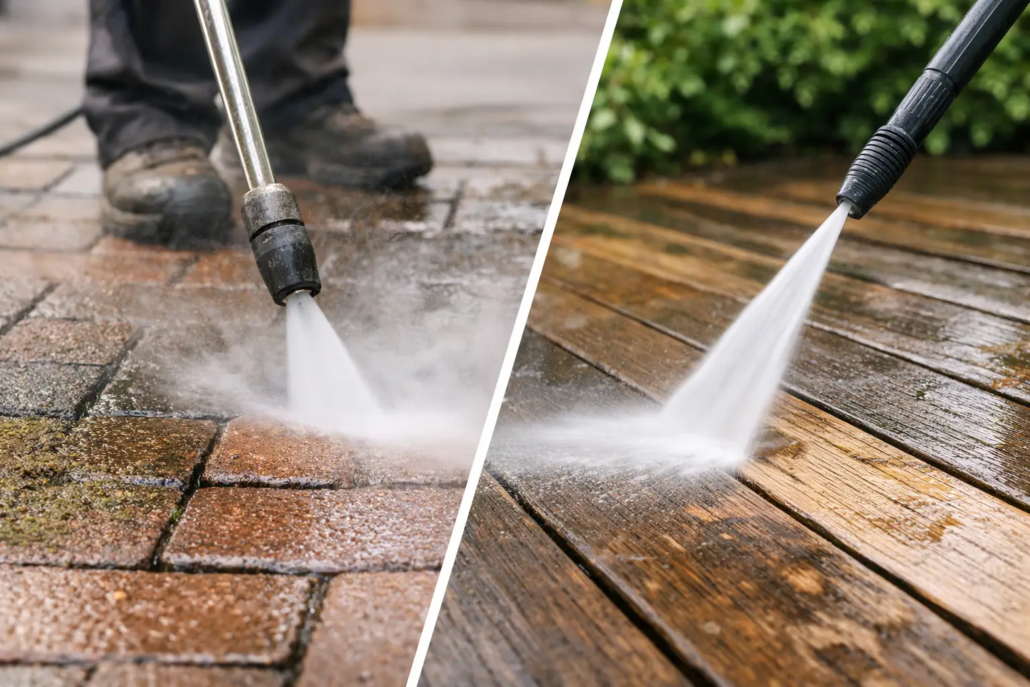
Pressure washing uses unheated water delivered at controlled pressure. It is highly effective for removing dirt, loose debris, algae, mildew, pollen, and many everyday exterior stains. For most residential cleaning jobs, it provides the right balance of cleaning power and surface protection.
Power washing uses heated water along with pressure. Hot water can break down greasy, oily, and stubborn grime more effectively than cold water alone. It is often the better choice for surfaces affected by automotive fluids, heavy grease, gum, or deeply embedded buildup.
The terms are often used interchangeably, and many homeowners use “power washing” to describe any exterior washing service. That is understandable. Still, the method should be chosen based on the material, the stain, and the condition of the property – not simply the name of the service.
Why Water Temperature Changes the Job
Think about washing a greasy pan. Cold water may rinse away loose residue, but warm water helps cut through oil. The same principle applies outdoors. Heated water can help lift petroleum-based stains and grease from concrete, commercial walkways, and work areas where vehicles or equipment have left residue behind.
That extra cleaning strength is useful, but it is not automatically better for every surface. Heat and excessive pressure can be hard on older concrete, painted finishes, vinyl, wood, certain sealers, and delicate masonry. The best approach is the least aggressive method that still produces a clean, lasting result.
For a typical Florida home, algae, mildew, pollen, and dirt are more common than grease. Those issues can often be handled effectively with the proper detergents, rinse technique, and carefully adjusted pressure. A professional evaluates what is growing or staining the surface before deciding how to clean it.
Which Method Works Best on Common Home Surfaces?
Every exterior material has limits. A driveway can tolerate a different cleaning approach than a screened patio, and a paver walkway needs different care than a painted porch ceiling.
Concrete Driveways and Sidewalks
Pressure washing is commonly used on concrete driveways, sidewalks, curbs, and patios. It removes surface dirt, muddy footprints, algae, and dark organic staining that can make concrete look neglected. When oil spots or greasy vehicle stains are present, heated power washing may help, especially when paired with the right cleaning solution.
Older concrete deserves extra care. High pressure held too close to the surface can leave visible lines, expose aggregate, or create an uneven finish. Cleaning should be consistent and controlled, not a race to use the highest setting possible.
Pavers and Hardscapes
Pavers are popular throughout St. Augustine because they add definition to patios, pool decks, walkways, and outdoor living areas. They can also collect sand, weeds, algae, and staining in the joints. Pressure washing can restore their appearance, but it must be done carefully to avoid blasting out joint sand or disturbing the base beneath the pavers.
A good cleaning plan may include a gentle surface wash, targeted treatment for organic growth, and re-sanding or sealing recommendations when needed. If pavers have heavy cooking grease near an outdoor kitchen, heated water may be useful. For normal seasonal buildup, controlled pressure washing is usually the practical choice.
Vinyl Siding, Painted Surfaces, and Stucco
These surfaces are where homeowners most often run into trouble with DIY washing. A strong stream can force water behind siding, strip paint, damage caulk, or leave scars in softer stucco finishes. In many cases, the safest method is low-pressure washing combined with a cleaning solution designed to address mildew and algae.
This is often called soft washing. It is not the same as blasting a wall with a pressure washer from a few feet away. The cleaning solution does much of the work, while a low-pressure rinse removes the loosened buildup. For exterior walls, the goal is a clean finish without creating a repair project.
Decks, Fences, and Wood Features
Wood can look refreshed after washing, but it is easy to damage. Too much pressure can fur up the grain, leave wand marks, splinter boards, and shorten the life of stain or paint. A lower-pressure process, appropriate cleaning product, and patient rinse are generally safer for wood fences, decks, and pergolas.
Power washing with hot water is rarely the first choice for residential wood. The material responds better to a careful, surface-specific process.
Roofs and Gutters
Roof cleaning should not involve high-pressure washing. Shingles, tiles, flashing, and roof coatings can be damaged when pressurized water is applied incorrectly. For black streaks, algae, or mildew on a roof, a low-pressure treatment is the appropriate route.
Gutters can benefit from exterior cleaning to remove streaks and mildew, while interior gutter cleaning focuses on leaves, pine needles, and drainage. These are separate problems that may require separate services.
Florida’s Climate Makes Method Matter
Northeast Florida homes deal with conditions that homeowners in drier climates may not see as often. Humidity encourages mildew. Summer storms carry pollen and debris. Shaded areas stay damp longer. Coastal air can leave residue on exterior surfaces, and irrigation overspray can create stubborn mineral marks or green growth along walls and walkways.
That means a driveway may look dirty again faster than expected if the underlying organic growth is only rinsed away rather than properly treated. It also means a patio near mature trees may need more frequent cleaning than a sunny, open concrete area.
Local experience helps set realistic expectations. Cleaning can make a major immediate difference in curb appeal, but the right maintenance schedule depends on shade, drainage, landscaping, irrigation patterns, tree cover, and how the space is used. There is no one-size-fits-all timeline for every property.
When Power Washing Is the Better Choice
Power washing is especially useful when the stain is oily, greasy, sticky, or heavily embedded. It can be a strong option for garage floors, heavily stained concrete, areas around grills, commercial-grade walkways, and surfaces exposed to automotive or equipment fluids.
Even then, the surface needs to be suitable for heat and pressure. A newer sealed concrete driveway and a weathered patio slab may call for different settings and products. The presence of grease does not mean every part of the property should receive hot-water treatment.
When Pressure Washing or Soft Washing Is Better
For routine residential exterior cleaning, pressure washing is usually the more common solution. Driveways, sidewalks, patios, pool decks, and many hardscape surfaces can respond well to the right pressure level and surface cleaner.
Soft washing is typically the safer choice for siding, stucco, painted trim, screens, roofs, and other vulnerable surfaces. It can also be more effective against algae because it treats the growth rather than relying only on force. The method matters more than the label on the truck.
The Risks of Choosing Based on Price Alone
Exterior cleaning is one of those services where the lowest quote can become expensive if the work is rushed or performed with the wrong equipment. Etched concrete, stripped paint, damaged window seals, displaced paver sand, and scarred wood are all preventable problems.
Before scheduling service, ask what surfaces will be cleaned, how the crew plans to treat algae or mildew, and whether the method will be adjusted for delicate materials. A dependable provider should be able to explain the process plainly. You should not have to guess whether a powerful stream of water is appropriate for your home.
A Cleaner Property Starts With the Right Approach
The choice between power washing and pressure washing is not about choosing the strongest option. It is about matching the cleaning method to the stain and the surface. For many St. Augustine homeowners, that means controlled pressure washing for hard surfaces and low-pressure cleaning for more delicate areas.
American Blade Lawn Care approaches exterior cleaning with the same practical attention given to lawns, irrigation, and landscaping: assess the property, use the right method, and leave the space looking cared for. A clean driveway, patio, or walkway does more than improve the view from the curb. It makes the entire outdoor space feel ready to enjoy again.


Leave a Reply
Want to join the discussion?Feel free to contribute!