
Does Mulch Attract Termites? Florida Yard Facts
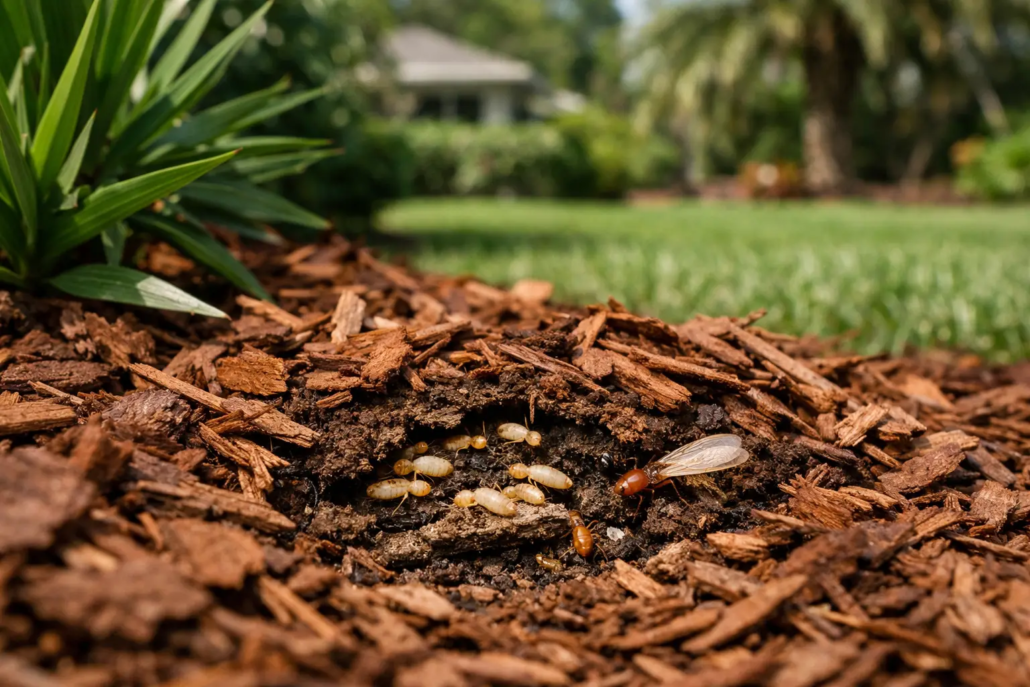
A fresh layer of mulch can make a St. Augustine landscape look finished in a single afternoon. It holds moisture, helps suppress weeds, and gives planting beds a clean, well-kept appearance. But does mulch attract termites? Not in the simple, automatic way many homeowners fear. Mulch can create conditions termites like, especially when it is installed too close to the house or kept consistently wet. The real concern is not mulch alone. It is moisture, wood-to-soil contact, and an easy hidden path to your home.
For Northeast Florida property owners, that distinction matters. Our humidity, frequent rain, warm temperatures, and sandy soils can support termite activity for much of the year. You do not need to give up attractive mulch beds. You do need a plan that protects both your landscape and your foundation.
Does Mulch Attract Termites or Create a Termite Risk?
Termites are always looking for food, moisture, and shelter. Most termite problems around Florida homes involve subterranean termites, which live in the soil and travel through protected pathways to reach wood. Wood mulch contains cellulose, the same basic plant fiber found in lumber and dead roots, so termites may move through it or feed on it. However, mulch is rarely the reason termites first arrive on a property.
A termite colony can forage across a broad area underground. If termites are already nearby, a moist mulch bed may provide cooler, more protected conditions as they search for food. Trouble develops when that mulch is piled against siding, covers foundation inspection areas, or stays soggy because of poor drainage or irrigation problems. In those situations, mulch can hide termite activity and make it easier for pests to reach structural wood without being noticed.
Think of mulch as a landscape material that needs proper placement, not as a termite magnet. Installed correctly, it remains one of the best ways to protect plant roots and improve curb appeal.
Why Florida Mulch Beds Need Extra Attention
St. Augustine and Jacksonville homeowners deal with a climate that is tough on lawns, planting beds, and exterior structures. Heavy summer rains can saturate beds. Irrigation zones may run longer than needed. Shade from mature trees can keep soil damp for days, while hot weather speeds up the breakdown of organic mulch.
As mulch decomposes, it can hold even more moisture near the soil surface. That is helpful around shrubs and flowers, but it is not helpful when the bed runs directly against a home’s exterior. A thick, wet layer near the foundation can also conceal mud tubes, damaged trim, and other early warning signs that deserve attention.
The goal is balance. Your landscaping should retain enough moisture for healthy plants while allowing water to move away from the home and leaving key foundation areas visible for inspection.
Mulch does not replace drainage correction
If water is collecting near your home, changing mulch types will not solve the bigger issue. Downspouts, grading, compacted soil, damaged irrigation heads, and overwatering can all keep a foundation bed too wet. Correcting those conditions protects the landscape and reduces the kind of moisture pests seek.
A properly adjusted irrigation system is especially important in Florida. Sprinklers should water turf and plants, not repeatedly soak the side of the house, fence, or wood trim.
How to Use Mulch Without Inviting Problems
The safest mulch strategy is simple: keep it moderate, keep it separated from the structure, and keep it dry enough to do its job without becoming waterlogged.
For most landscape beds, a mulch depth of about 2 to 3 inches is enough. Deeper is not always better. A heavy layer can trap too much moisture, limit oxygen around plant roots, and create a hiding place for pests. Before adding a new layer, check what is already there. Many beds become 5 or 6 inches deep after years of topping off mulch without removing old material.
Leave a clear gap between mulch and your home’s siding, door frames, and exterior trim. A strip of exposed soil, gravel, or another non-organic border near the foundation gives you a better view of the area and prevents mulch from bridging up to wood components. Do not allow mulch to touch stucco weep screeds or cover ventilation openings.
Around trees and shrubs, keep mulch pulled back from trunks and stems. Mulch volcanoes can hold moisture against bark, encourage disease, and attract pests to vulnerable plant material. A flat, even ring is far healthier than a mound piled high at the base.
Is One Mulch Type Better Than Another?
No mulch is completely termite-proof if it is installed against a home in a wet bed. Still, material choice can affect moisture retention, longevity, and appearance.
Pine bark and wood chips are common choices because they look natural and break down into the soil over time. They work well in planting beds when properly maintained. Cypress mulch is often promoted as pest-resistant, but it should not be treated as a termite barrier. Any wood-based mulch can become part of a favorable environment if it stays wet and contacts the structure.
Pine straw is widely used across Northeast Florida and can be an attractive option under trees and in natural-looking beds. It also needs attention around the foundation because it can hold moisture and obscure inspection areas.
Stone, gravel, or rubber mulch does not provide termites with wood fiber, but those materials have trade-offs. Rock can become very hot in full Florida sun, may complicate future planting, and can be difficult to remove. Rubber mulch can retain heat and does not improve soil as organic mulch does. For many homes, the best approach is not replacing every mulch bed with rock. It is using quality organic mulch where plants benefit from it and maintaining a clear inspection zone beside the house.
Signs Your Mulch Bed May Need Attention
A healthy mulch bed should look neat, smell earthy, and drain reasonably well after rain. It should not stay swampy, pile up against the exterior, or bury the lower edge of siding.
Take a closer look if you notice mulch consistently packed against the house, soft or damaged wood trim, bubbling paint, unexplained cracks in trim, or narrow mud tubes on the foundation. Mud tubes are shelter tunnels subterranean termites use to travel between the soil and a food source. If you see them, avoid disturbing the area until a licensed pest professional has evaluated it. Breaking a tube does not solve the problem and may make activity harder to confirm.
You should also watch for irrigation overspray, leaking spigots, clogged gutters, and downspouts that discharge directly into landscape beds near the foundation. These problems are common, fixable, and more meaningful than the presence of mulch alone.
A Better Approach to Mulch Installation
Good mulch work is about more than spreading material until the bed looks full. The bed should be cleaned, edged, and shaped so water flows as intended. Existing mulch should be assessed before more is added, and plant material should be kept clear at the base. Near the home, installers should preserve visibility around the foundation and avoid covering vents, utility access points, and drainage features.
This is where local experience pays off. A landscape plan that works in a dry climate may not work through a Florida summer. The right mulch depth can vary with sun exposure, soil, plant selection, drainage, and how your irrigation system is set up. A bed beneath live oaks may need a different approach than a sunny front entry with low-maintenance shrubs.
American Blade Lawn Care can help homeowners build and refresh mulch beds with the full property in mind – clean edges, healthy plant spacing, proper material depth, and a polished result that does not create avoidable concerns around the house.
Keep the Landscape Beautiful and the Foundation Visible
Mulch is not something to fear. It is a valuable part of a healthy, finished-looking yard when it is installed with care. Keep it a few inches deep, keep it back from the structure, correct moisture issues, and make termite inspections easy rather than hidden. That gives your plants the benefits of mulch while helping you spot small exterior issues before they become expensive repairs.


Leave a Reply
Want to join the discussion?Feel free to contribute!