
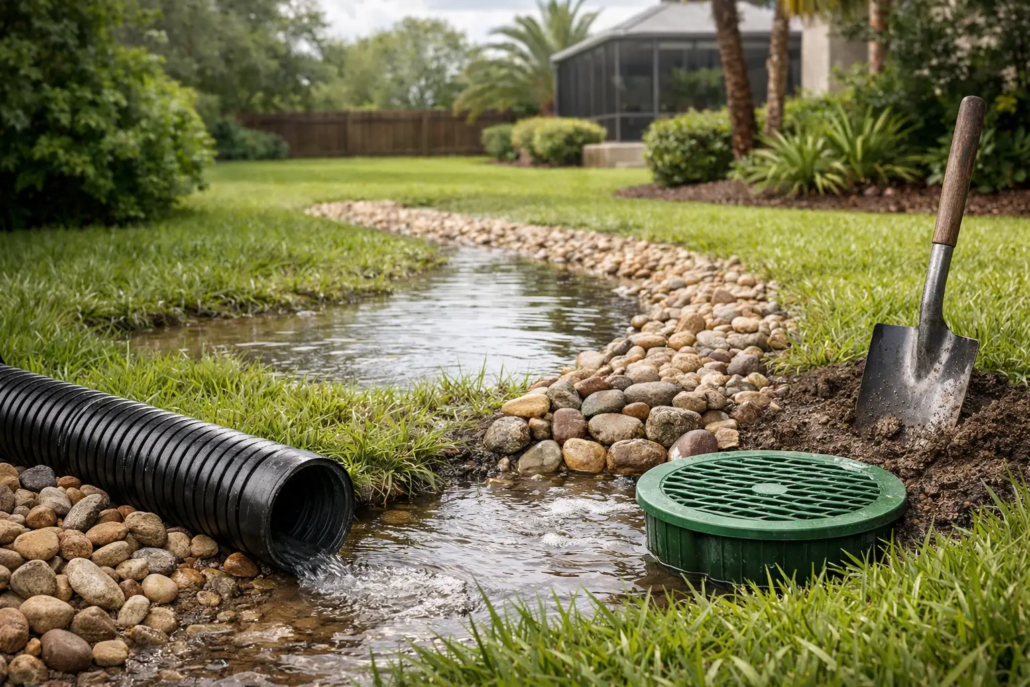
How to Improve Yard Drainage in Northeast Florida
A St. Augustine downpour can expose a drainage problem in minutes. Water gathers along the patio, pools beside the foundation, turns a walkway slick, or leaves the lawn soft for days. If you are wondering how to improve yard drainage, the right answer is not always a bigger drain. It starts with understanding where the water comes from, where it naturally wants to go, and what is preventing it from moving.
Northeast Florida yards face a particular mix of challenges: intense summer rain, flat lots, high water tables, compacted areas from foot traffic, and landscaping that has changed the original grade. A drainage fix that works well on one property may not suit the home next door. That is why a site-specific plan matters.
Start by Finding the Source of the Water
Before installing a drain or bringing in soil, watch the yard during a normal rainstorm and again after it stops. Notice whether water is spilling from gutters, running off a driveway, collecting in a low section of turf, or seeping up from saturated ground. These details point to different solutions.
A puddle directly under a roof edge often means the downspout is releasing too much water too close to the house. Water that collects in a broad, open section of lawn may be caused by a low grade or compacted soil. If the lawn stays wet even when there has been little rain, a high water table or poor soil structure may be part of the issue.
Also look at the timing. A shallow puddle that disappears within a day is different from standing water that remains for several days. In Florida, turf and landscape beds need time to dry after heavy rain, but persistent pooling can weaken grass roots, invite mosquitoes, wash mulch away, and create conditions that stress plants.
Correct the Grade Before Adding More Hardware
Most effective yard drainage improvements use gravity. The goal is to guide surface water away from your home and toward a safe drainage area without creating a problem for a neighbor.
Small grading adjustments can make a major difference. A low spot may need to be filled and reshaped so water moves gradually toward a swale, a designated drain, or a suitable lower area of the property. Near the home, the soil should slope away from the foundation. The exact slope depends on the site, but the principle is simple: water should not be encouraged to sit against the house.
This work requires care. Adding a few inches of soil near a foundation without considering siding, vents, irrigation heads, or existing drainage can create new issues. Raising an entire yard can also affect fences, patios, tree roots, and neighboring properties. For larger grade changes, an experienced landscaping team can evaluate the full layout rather than treating one puddle in isolation.
Swales Can Move Water Naturally
A swale is a shallow, wide channel shaped into the landscape to carry runoff across the yard. Unlike a narrow trench, it can blend into a lawn and remain easy to mow. Swales are often a smart option for larger open yards where water needs a clear path away from a low area.
The key is proper placement and slope. A swale that ends in another low spot simply relocates the problem. It needs an approved outlet or a section of the property that can safely handle the water. In some neighborhoods, drainage easements, retention areas, and local rules also affect what can be done.
Manage Roof Runoff First
Your roof sends a surprising amount of water into the yard during a Florida storm. When gutters overflow or downspouts discharge beside the foundation, even a well-maintained lawn can become saturated.
Keep gutters clear so water reaches the downspouts instead of spilling over the edge. Then extend downspout discharge away from the home, using a route that does not send water toward a driveway, patio, or neighboring property. Depending on the yard, a surface extension may be enough, or the downspout may need to connect to a buried solid pipe that directs water to an appropriate outlet.
Do not assume an underground pipe is automatically better. Pipes need the correct slope, a clear discharge point, and protection from clogs. If there is nowhere for the water to exit, the system can back up and leave the same soggy area you started with.
Choose the Right Drain for the Problem
Drains work best when they match the type of water you are dealing with. A catch basin is commonly used where surface water collects quickly, such as near a patio edge, driveway, or low point in a landscape bed. It captures runoff and sends it through pipe to a planned outlet.
French drains are designed to collect water moving through the soil. They generally use perforated pipe surrounded by gravel and covered with filter fabric. They can help along wet lawn edges or beside hardscapes, but they are not a cure-all. In a yard with a high water table, a French drain may stay full because the surrounding soil is already saturated. The outlet still determines whether the system can work.
Channel drains are often useful across the edge of a driveway, pool deck, or patio where runoff flows over a hard surface. They are more visible than buried systems, but they can keep water from crossing the surface where people walk and from washing into nearby beds.
A professional drainage assessment should consider the water source, soil, elevation, outlet, and how the new system will fit around irrigation lines, utilities, turf, and existing landscaping. Installing the wrong drain can mean paying twice for the same problem.
Improve Compacted Soil and Protect the Lawn
Drainage is not always a drainage-pipe problem. Compacted soil sheds water from the surface instead of allowing it to soak in gradually. In high-traffic areas, around play spaces, or in lawns with heavy equipment use, compaction can leave turf thin and waterlogged after rain.
Core aeration removes small plugs of soil and creates openings for air, water, and nutrients to reach the root zone. It can improve infiltration in a compacted lawn, especially when paired with proper irrigation and healthy turf care. Aeration will not fix a badly graded yard or a failed drain, but it can be an important part of improving overall lawn drainage.
Be cautious about adding heavy layers of sand or topsoil without a plan. Many local yards already have sandy soil, while others contain compacted fill or layered material that drains unevenly. The wrong amendment can create a perched wet area, bury grass crowns, or make the lawn harder to maintain.
Use Landscape Beds to Slow and Direct Water
Landscape design can support drainage rather than fight it. Well-defined beds can help guide runoff, protect bare soil from erosion, and create room for plants that tolerate periodic moisture. Mulch helps reduce splash and soil loss, but it should be installed at an appropriate depth and kept away from the base of plants and structures.
For a wet section of the property, choose plants based on how long the soil stays moist, not just how the area looks on a dry day. A plant that needs consistently dry roots will struggle in a spot that receives roof runoff every afternoon. The same goes for hardscape work. Patios, pavers, and edging should be planned with drainage in mind so they do not form a dam across the yard.
Avoid These Common Drainage Mistakes
Homeowners often try quick fixes because standing water is frustrating. A few shortcuts can make a manageable issue worse:
- Filling a low spot without checking where the water will go next.
- Sending downspout water toward a property line or a neighbor’s yard.
- Installing a French drain with no usable outlet.
- Covering wet soil with mulch, gravel, or artificial turf and expecting the water problem to disappear.
- Raising soil too high against the home’s foundation, siding, or vents.
If water is entering the home, threatening the foundation, or repeatedly flooding a major area, treat it as a priority. Temporary measures may protect the area during a storm, but a lasting repair should address the flow of water across the entire property.
When to Call a Local Drainage Professional
A professional evaluation is especially worthwhile when drainage involves foundation runoff, buried pipes, hardscape surfaces, irrigation repairs, or major grading. It is also the right move when previous fixes have failed or when the yard’s drainage pattern is affecting several areas at once.
American Blade Lawn Care works with Northeast Florida property conditions every day, from compacted turf and washed-out mulch beds to irrigation concerns and landscape grading needs. A customized plan can combine drainage improvements with lawn care and landscaping work, so the finished yard looks clean, drains better, and stays easier to maintain.
A dry, usable yard does not have to mean covering every problem with pipe and gravel. Often, the best result comes from a few well-planned changes that move roof runoff, reshape the grade, protect the lawn, and give water a safe place to go. A careful evaluation after the next heavy rain can show exactly where to start.


Leave a Reply
Want to join the discussion?Feel free to contribute!