
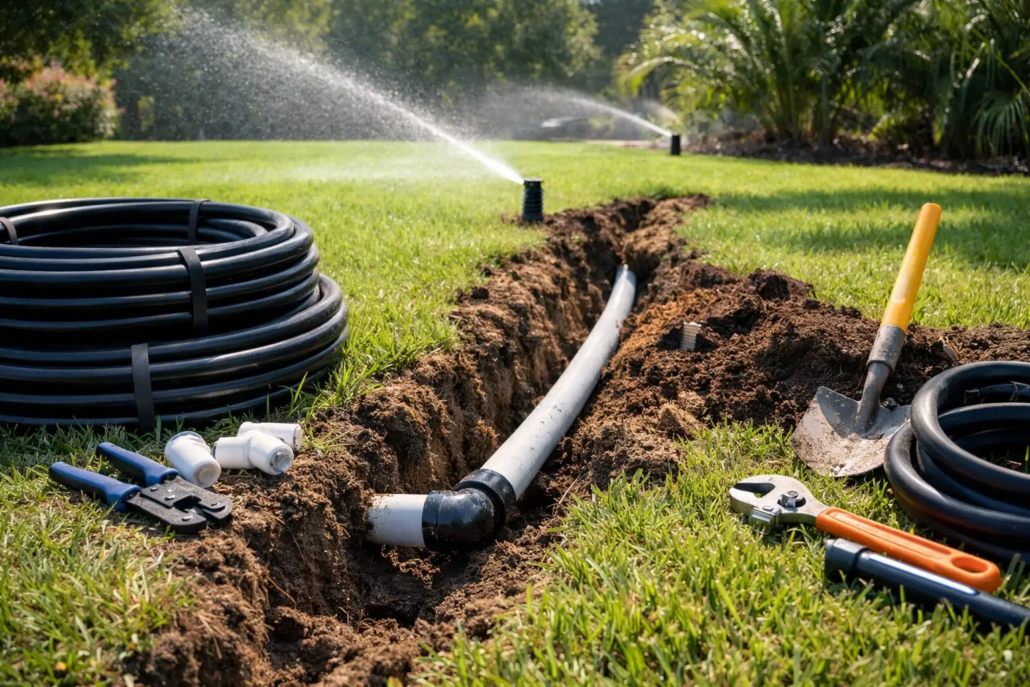
Irrigation Pipe Replacement for Florida Lawns
A sprinkler head that barely pops up, a soggy spot that never dries, or grass that turns brown in one strip while the rest of the yard stays green can point to the same hidden issue: damaged irrigation piping. Irrigation pipe replacement is not always the first fix a homeowner expects, but it can be the right move when repeated leaks and weak water pressure are keeping a Florida lawn from getting the consistent care it needs.
In St. Augustine, Jacksonville, and surrounding Northeast Florida communities, irrigation systems work hard for much of the year. Sandy soil, summer heat, frequent rain, tree roots, lawn equipment, and shifting ground can all take a toll on underground lines. A professional inspection helps separate a simple repair from a pipe problem that will keep coming back.
Signs Your Irrigation Pipes May Be Failing
A broken pipe is not always obvious. Because most irrigation lines are underground, the first clues usually show up in the lawn or in the way the sprinkler system performs. Water pooling near a valve box, a soft or sunken area in the yard, and unexplained muddy patches are common warning signs.
You may also notice one zone that has low pressure while other zones operate normally. Sprinkler heads may sputter, fail to rise fully, or spray only a short distance. That does not automatically mean the heads are bad. A cracked pipe, loose fitting, or crushed section of line can reduce the water reaching every head in that zone.
A higher water bill is another reason to take a closer look. Florida lawns need water at certain times of year, but an abrupt increase in usage without a change in your watering schedule may mean water is escaping below the surface. Leaving that leak alone can waste water, weaken turf, and create an inviting environment for weeds and disease.
Repeated repairs in the same area deserve attention as well. Replacing a fitting once is normal. Digging up the same zone every few months is a sign that the surrounding pipe may be brittle, improperly supported, damaged by roots, or nearing the end of its useful life.
When Irrigation Pipe Replacement Makes More Sense Than Repair
The best solution depends on the location and extent of the damage. A single clean break in an otherwise sound PVC line can often be repaired quickly. There is no reason to replace a long stretch of pipe if a targeted repair will restore dependable operation.
Replacement becomes the better value when the pipe has multiple cracks, the material has become fragile, or past repairs have created a patchwork of weak spots. Old pipe can split under normal pressure changes, especially when it has been stressed by roots or soil movement. Replacing the compromised section gives the system a stronger foundation instead of asking the next weak point to hold.
The pipe location matters, too. A leak beneath a driveway, patio, mature landscape bed, or hardscape feature may require more planning than a leak in open turf. In some cases, rerouting a line around an obstacle is more practical than repeatedly disturbing finished areas. A qualified irrigation technician can evaluate access, pipe depth, system layout, and the condition of nearby components before recommending the least disruptive option.
For homeowners, the goal is not simply to stop water from leaking today. It is to restore even coverage and avoid spending money on repairs that do not last. That is why a thorough inspection should come before any major irrigation pipe replacement work.
Florida Soil and Roots Create Different Challenges
Northeast Florida’s sandy soil drains quickly, which can make underground leaks harder to spot at first. Water may disappear into the ground rather than forming a large puddle. At the same time, erosion around a leaking pipe can leave voids under turf or landscape edging, creating uneven areas that become more noticeable over time.
Tree roots are another local concern. Roots naturally seek moisture, and a small leak can attract them to an irrigation line. Once roots press against or grow around a pipe, they can create cracks, shift fittings, and make future repairs more difficult. Cutting roots without considering the health and stability of the tree is not a good long-term plan. The right repair may involve replacing damaged pipe and adjusting the route where possible.
What a Professional Pipe Replacement Visit Should Include
Reliable irrigation work starts with finding the true source of the problem. A visible wet spot is helpful, but water can travel along a trench or low area before it reaches the surface. The actual break may be several feet away.
A professional service visit should include testing the affected zone, checking sprinkler pressure and coverage, inspecting accessible valves and connections, and locating the damaged portion of pipe as accurately as possible. Once the issue is confirmed, the technician can expose only the area needed for repair or replacement, rather than unnecessarily tearing up the yard.
After the new pipe and fittings are installed, the zone should be tested again. This step verifies that the repair holds under pressure and that nearby heads are spraying correctly. Replacing a damaged line without checking the rest of the zone can leave a homeowner with a repaired pipe but poor lawn coverage caused by a clogged nozzle, broken head, or misaligned sprinkler.
The work should also include restoring the disturbed area as neatly as conditions allow. Freshly repaired turf may need time to settle and recover, especially during hot weather. A good irrigation contractor will explain what was repaired, what to watch for, and whether any adjustments to the watering schedule are needed while the lawn recovers.
Protecting Your Lawn After Pipe Work
Once the system is operating properly, take a few minutes each month to run every irrigation zone and watch it work. Look for heads spraying onto sidewalks, water bubbling from the ground, weak streams, or dry areas between sprinkler patterns. Catching a minor issue early is easier on your lawn and your budget.
Keep sprinkler heads clear of mulch, grass clippings, and soil. When beds are refreshed with mulch or new plants are installed, irrigation lines and heads can be covered, bumped, or accidentally cut. Let your lawn and landscape provider know where work is planned so the irrigation system can be protected.
It also helps to avoid setting the timer and forgetting it. Seasonal conditions change quickly in Florida. Summer rain may reduce watering needs, while dry stretches can expose coverage gaps. Overwatering is not a substitute for a properly functioning system. It can create shallow roots, encourage fungus, and leave your yard looking worse even while using more water.
Repairing the System Is Only Part of Lawn Health
A healthy lawn depends on more than working sprinklers. Grass type, sun exposure, soil condition, mowing height, drainage, and weed pressure all affect how the yard responds after an irrigation repair. A zone that appears to have a pipe problem may also have compacted soil or turf that is struggling for another reason.
That is why an all-in-one local approach can make a real difference. American Blade Lawn Care can assess the irrigation issue while keeping the bigger picture in view: how water is reaching the grass, whether the landscape is draining correctly, and what the lawn needs to recover its color and thickness.
If your sprinkler system is leaving wet spots, dry patches, or weak coverage behind, do not wait for a small underground leak to become a larger lawn problem. A prompt inspection and a clear recommendation can protect your water, your turf, and the curb appeal you work hard to maintain.


Leave a Reply
Want to join the discussion?Feel free to contribute!