
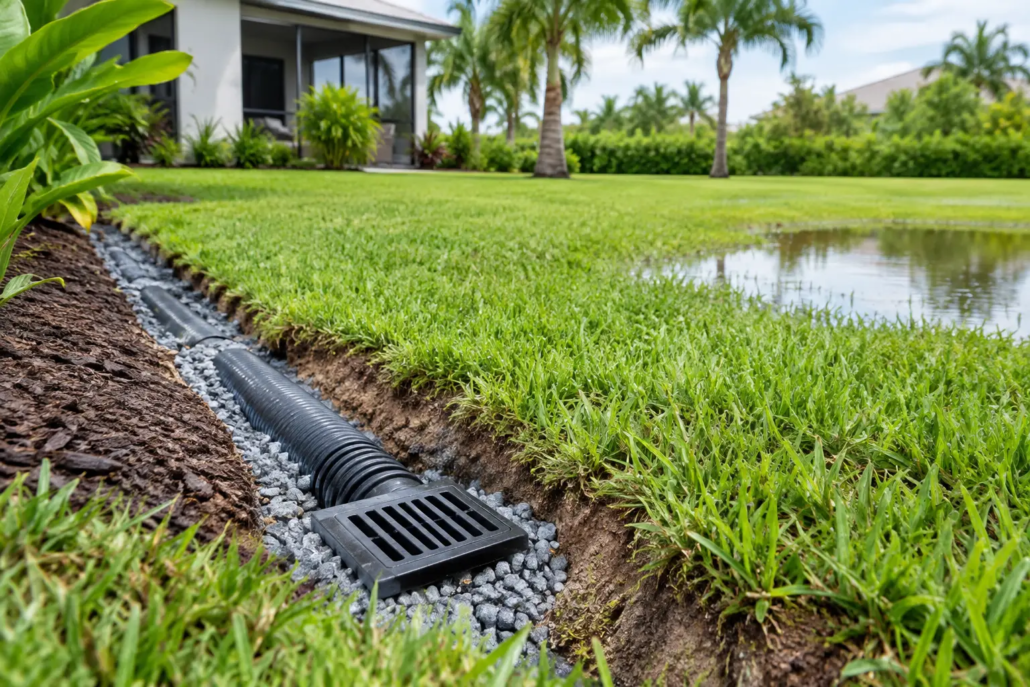
Top Florida Lawn Drainage Solutions for Wet Yards
A puddle that lingers by the driveway after a St. Augustine afternoon storm is more than an eyesore. It can soften turf, invite mosquitoes, wash mulch into the lawn, and leave bare patches where grass never gets a fair chance to root. The top Florida lawn drainage solutions are not one-size-fits-all fixes. The right answer depends on where the water starts, where it collects, how quickly it needs to move, and what your property can safely handle.
Northeast Florida yards face a difficult mix of intense rainfall, flat terrain, sandy soil, high water tables, and irrigation systems that may be running when they should not. A dependable drainage plan starts by identifying the source of the water instead of simply covering up the muddy spot.
Why Florida Lawns Hold Water
Florida sand can drain quickly in some areas, but that does not mean every yard drains well. Compacted soil, construction debris below the surface, thick thatch, low spots, and poorly directed roof runoff can all trap water at ground level. In older neighborhoods, settling can gradually change the grade around patios, walkways, and foundations.
Irrigation is another common cause. A broken sprinkler head, leaking valve, misaligned spray pattern, or controller set for too many cycles can keep one section of the yard wet even when it has not rained. Before installing a drain, it makes sense to rule out an irrigation issue. Repairing the actual source may save a homeowner from paying for drainage work they never needed.
The location of the standing water matters just as much as the amount. Water near a home’s foundation, pool deck, driveway, or outdoor living area needs prompt attention. Water in an open lawn may be less urgent, but repeated saturation can still weaken grass, encourage weeds, and create a soft, rutted surface that is hard to mow.
Top Florida Lawn Drainage Solutions for Common Problems
A professional property evaluation looks at slope, soil, downspouts, gutters, irrigation, hardscape, and the direction water naturally wants to travel. From there, these are the most effective options for many Florida properties.
Regrading and Swales for Broad, Low Areas
When water sits across a wide section of the lawn, regrading is often the strongest starting point. This means carefully reshaping the soil so water moves away from the house and toward an appropriate drainage area. Even a small grade adjustment can make a major difference on a flat lot.
A swale is a shallow, gently sloped channel that carries surface water across the yard without looking like a ditch. It can be grass-covered and blended into the landscape, making it a practical choice for homeowners who want drainage improvement without a highly visible system.
Regrading and swales work especially well when the problem is surface runoff after heavy rain. They are not always enough when water is coming from underground seepage or concentrated roof runoff. In those cases, they may be paired with a catch basin or buried drain line.
French Drains for Saturated Soil
A French drain is designed to collect water below the surface. It typically uses a gravel-filled trench, filter fabric, and perforated pipe to intercept water and direct it toward a suitable discharge point. This is a solid option for consistently soggy lawn edges, areas beside patios, or locations where water seeps downhill into a landscape bed.
French drains need correct depth, slope, materials, and outlet placement. A drain with no place for the water to go will eventually fail. In parts of Florida with a high water table, the system also needs to be designed realistically. It can manage localized saturation, but it cannot force water to drain far below the groundwater level.
The finished surface can be restored with turf, mulch, or landscape materials, so the system does its job without taking away from curb appeal.
Catch Basins for Low Spots and Downspouts
Catch basins collect water at specific low points. They are especially useful where driveway runoff, roof water, patio drainage, or a natural dip in the lawn creates repeated pooling. The basin connects to solid drainage pipe that carries water away from the problem area.
This is often the right approach when the water is concentrated rather than spread across the yard. For example, if one downspout dumps several gallons of stormwater beside the home, extending it into a catch basin and drainage line can protect the foundation planting bed and stop erosion.
Catch basins do require occasional cleaning. Leaves, mulch, and pine straw can collect in the grate, particularly after a storm. Keeping the basin clear is a simple part of protecting the system’s performance.
Channel Drains Around Hardscapes
Water that crosses a patio, collects by a pool deck, or runs toward a garage calls for a different solution. Channel drains are narrow surface drains installed along the edge of concrete, pavers, or other hardscape. They intercept water before it reaches the area you want to keep dry.
A properly placed channel drain can make a walkway safer, reduce staining on hard surfaces, and help prevent washout around pavers. It is a targeted solution, not a replacement for fixing an entire yard’s grade. When hardscape drainage and lawn drainage are connected, both parts need to work together.
Dry Wells and Drainage Fields Where Conditions Allow
Dry wells and drainage fields collect runoff and let it disperse gradually into surrounding soil. They can be useful on properties with enough room and soil conditions that support infiltration. They are not the right fit for every St. Augustine or Jacksonville-area property, especially where groundwater is high or the soil stays saturated for long periods.
This is where local experience matters. Installing a dry well in the wrong spot can leave a homeowner with a buried system that fills during every major storm. A site-specific assessment helps determine whether water should infiltrate on-site or be routed to a permitted and appropriate outlet.
Irrigation Repairs and Smarter Watering
Drainage improvements can be undermined by an irrigation system that overwaters the lawn. A zone that runs too long, sprays onto pavement, or leaks at the valve box creates unnecessary saturation. Adjusting watering schedules for rainfall and seasonal conditions is often part of a complete drainage plan.
Healthy grass needs water, but it also needs oxygen around its roots. If your lawn feels spongy days after irrigation, has yellowing turf in one area, or develops fungus repeatedly, an irrigation inspection should be part of the conversation.
Drainage Fixes That Protect Lawn Health
Once water movement is addressed, lawn recovery may require more than waiting for the ground to dry. Compacted soil can benefit from aeration, which opens pathways for air, water, and nutrients to reach the root zone. Thin turf may need better mowing practices, weed control, or grass-appropriate care to fill in after a wet season.
Mulch beds also deserve attention. Heavy rain can wash mulch into the grass or expose plant roots when beds have no edge or slope. Refreshing mulch, improving bed borders, and directing runoff away from plants can keep the landscape looking clean while reducing maintenance headaches.
Avoid quick fixes such as adding a thin layer of sand to a low spot without correcting the slope underneath. It may look better for a few weeks, then settle or wash away. Similarly, covering wet soil with more mulch does not solve the drainage issue and can create a breeding ground for fungus and pests.
What a Good Drainage Plan Should Consider
The best drainage work moves water without creating a new problem for a neighbor, adjacent property, or another part of your own yard. It should account for local grading requirements, utility locations, existing irrigation lines, and the path water takes during a real storm.
Homeowners should also consider how the fix will affect the property’s appearance and upkeep. A visible swale may be the most affordable answer for a broad lawn area. A buried French drain may be better where curb appeal or usable yard space is a priority. Catch basins and channel drains are often worth the investment where water threatens concrete, structures, or high-traffic areas.
The most reliable time to assess a drainage problem is soon after rainfall, when the evidence is still visible. Photos of pooling water, washed-out mulch, and runoff paths can help pinpoint the issue. A professional can then recommend a practical combination of grading, drainage installation, irrigation repair, and lawn care instead of selling a single solution for every yard.
For homeowners who are tired of planning outdoor activities around muddy grass and standing water, American Blade Lawn Care can evaluate the full property and recommend a solution built for local conditions. A dry, healthy lawn starts with giving rainwater a clear place to go.


Leave a Reply
Want to join the discussion?Feel free to contribute!