
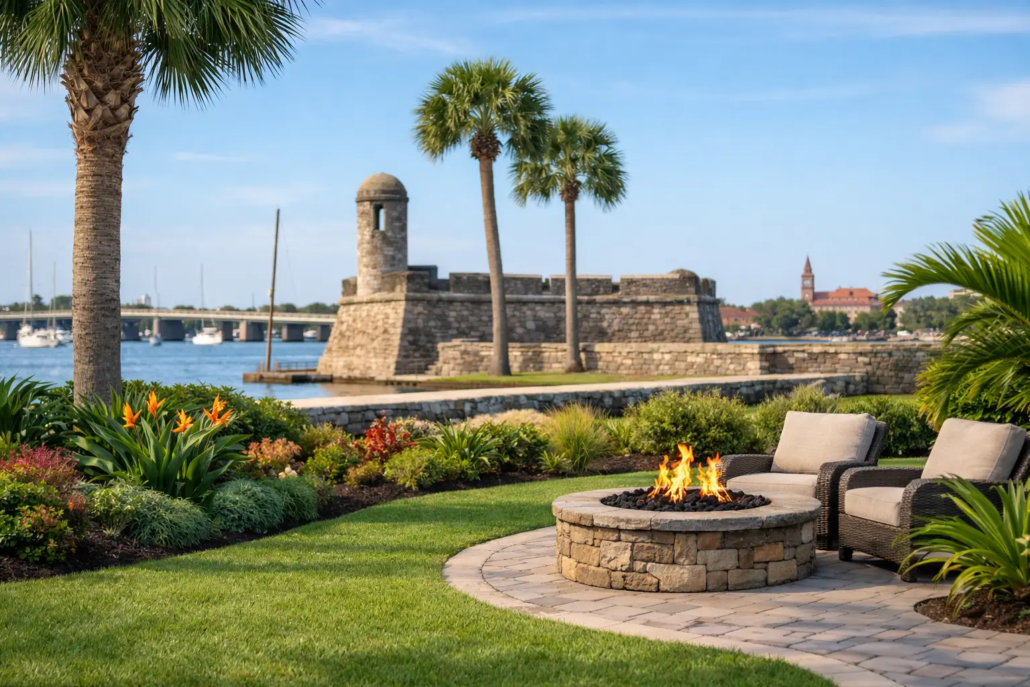
Landscape Design That Works in St. Augustine
A beautiful yard in Northeast Florida has to do more than look good on the day it is installed. It needs to stand up to summer heat, sudden downpours, sandy soil, shade from mature trees, and, in some neighborhoods, salt air. The right landscape design accounts for those conditions from the beginning, so your property looks cared for without turning into a weekly headache.
For homeowners in St. Augustine and Jacksonville, the best results come from a plan built around the way you actually use your outdoor space. That may mean a cleaner front entry with defined planting beds, a backyard that gives the family room to gather, or a low-maintenance upgrade for a rental or second home. Good design connects curb appeal, lawn health, drainage, irrigation, and ongoing maintenance rather than treating each one as a separate project.
Start Landscape Design With the Property You Have
Every yard has strengths and limitations. A flat, sunny lot needs a different approach than a property with dense oak shade, standing water after storms, or an irrigation system that misses half the landscape bed. Before choosing plants, stone, or mulch color, take a close look at how the property performs throughout the day and after rainfall.
Sun exposure is one of the biggest deciding factors. A plant that thrives in full Florida sun can struggle beneath a canopy of live oaks, while a shade plant may burn out along a hot driveway or west-facing wall. Soil matters too. Much of our area has sandy soil that drains quickly and does not hold nutrients well, which can affect plant selection and watering needs.
Drainage deserves attention early. Water that pools near a foundation, runs across a walkway, or leaves turf thin and muddy will not be solved by adding more plants. Sometimes the answer is grading, a drainage improvement, a revised bed layout, or a more appropriate choice of groundcover. Addressing the underlying issue first protects the investment you make in the finished landscape.
Create a Landscape Design Plan Around Daily Use
Landscape design should make the property easier to enjoy and easier to maintain. A front yard often needs visual structure: clean bed lines, healthy turf, balanced shrubs, and an entry that feels welcoming from the street. A backyard may need privacy, open lawn for kids or pets, room around a patio, or plantings that soften a fence without swallowing the space.
Start by identifying the areas that matter most. If the front of the home feels plain, a refreshed foundation bed and properly scaled plant material may make a stronger impact than changing the entire yard. If the backyard is where you spend weekends, it may be worth prioritizing a patio edge, pathways, privacy screening, or hardscape features that define an outdoor living area.
Scale is where many DIY plans go wrong. Small shrubs placed too close together can look neat at first but become crowded within a few growing seasons. Oversized plants can hide windows, block walkways, and require constant trimming. A professional plan considers mature plant size, sightlines, access for maintenance, and enough spacing for healthy airflow.
Choose Plants for Florida Conditions, Not Just a First Impression
Florida-friendly plant choices do not mean every yard has to look the same. They mean selecting plants with a realistic chance of thriving in the available light, soil, and moisture conditions. The goal is a landscape with color, texture, and structure that does not depend on excessive watering or repeated replacement.
Evergreen shrubs can provide a dependable framework around the home, while flowering plants and seasonal color add interest where it counts. Ornamental grasses, palms, groundcovers, and native or adapted plant varieties can all have a place when selected for the right location. The best mix depends on your home’s architecture, the amount of maintenance you want, and whether the yard is sunny, shaded, exposed, or protected.
There are trade-offs. A landscape packed with seasonal flowers can deliver bright color, but it will require more frequent replacement and care. A plant-forward, low-maintenance design may rely more on foliage, mulch beds, and well-shaped shrubs. Neither approach is wrong. The right choice is the one that matches your expectations and the time you want to spend maintaining the property.
Use Mulch, Edging, and Hardscape to Add Definition
The details around your plantings have a major effect on the finished appearance. Fresh mulch helps retain moisture, moderates soil temperature, reduces weed pressure, and gives beds a clean, finished look. It also helps individual plants stand out instead of getting lost in bare soil or patchy grass.
Defined edges are just as important. Clean bed lines separate turf from planting areas, make mowing and trimming more efficient, and prevent a landscape from looking overgrown. Depending on the layout, edging materials, stone borders, pavers, or a simple professionally cut edge can create the right amount of structure.
Hardscape-related improvements can make a yard more functional as well as more attractive. A walkway can protect turf in a high-traffic area. A patio border can create a clearer transition between the house and the yard. Retaining features or stone accents may help organize a sloped or awkward space. These additions should support the property, not compete with it. Too much hardscape can make a smaller yard feel hot and crowded, while too little structure can leave an outdoor area feeling unfinished.
Make Irrigation Part of the Design, Not an Afterthought
A healthy landscape needs water in the right places and at the right times. That is especially true during dry stretches, but overwatering creates problems too. Saturated soil can encourage disease, waste water, and weaken plants that are not suited to constantly wet conditions.
Irrigation should be adjusted for different zones of the yard. Turf, new plantings, established shrubs, and shaded beds may all need different watering schedules. Sprinkler heads should reach their intended areas without soaking driveways or siding, and drip irrigation can be useful in planting beds where targeted watering is needed.
If plants repeatedly fail in one area, the answer may not be more water. It could be poor drainage, too much shade, damaged irrigation, compacted soil, or a plant that simply does not fit the site. A careful assessment can prevent the cycle of replacing the same plants year after year.
Plan for Maintenance From Day One
The most successful landscape is one that stays attractive after installation. That means choosing a design that can be maintained with regular mowing, edging, hedge trimming, weed control, mulch refreshes, and irrigation checks. A yard that looks great only when it is newly installed is not a practical long-term solution.
Ask how each part of the plan will be cared for. Will shrubs need frequent shaping? Can crews access the beds without stepping on plants? Is there enough open space for mowing? Are trees and larger plants far enough from the roof, fences, and utility areas? These practical questions protect both your budget and the appearance of the property.
American Blade Lawn Care approaches landscape projects with the full property in mind. When design, lawn maintenance, irrigation repair, mulch installation, and exterior cleanup work together, it is easier to keep the finished result looking sharp through every season.
A well-planned yard should give you a reason to enjoy pulling into the driveway, not another project waiting for the weekend. Start with the problems you want to solve, build around your property’s Florida conditions, and choose improvements that will still make sense after the plants have had time to grow.


Leave a Reply
Want to join the discussion?Feel free to contribute!