Sod vs Seed Florida: Which Lawn Choice Wins?
A bare patch after a hot Northeast Florida summer can make a homeowner ask one practical question: sod vs seed Florida – which one will actually produce a lawn worth looking at? The answer is rarely as simple as choosing the cheaper option. In St. Augustine, Jacksonville, and nearby communities, grass type, irrigation, soil condition, shade, timing, and how quickly you need results all matter.
For many local properties, sod is the clear path to an immediate, uniform lawn. Seed can make sense in certain situations, but it is not a reliable replacement for sod when you want to establish the warm-season grasses that perform best in our climate. A good decision starts with the yard in front of you, not a one-size-fits-all rule.
Sod vs Seed in Florida: The Main Difference
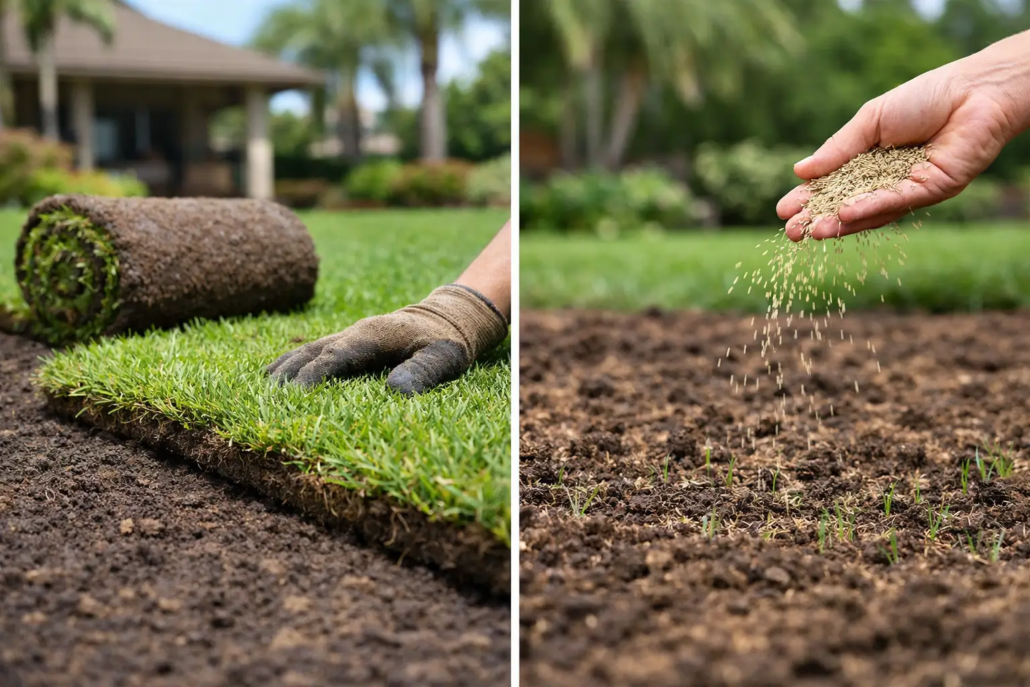
Sod is mature turfgrass that has been professionally grown, cut into pieces, delivered, and installed over prepared soil. It gives your property green coverage right away, protects exposed soil, and starts developing roots as it settles into the yard.
Seed requires more patience. The lawn must germinate, fill in, and become strong enough to handle heat, foot traffic, mowing, weeds, and Florida rain. That process can be worthwhile for grass varieties that establish well from seed, but it comes with more uncertainty.
The biggest difference for Florida homeowners is the type of grass available. St. Augustinegrass, a popular choice across St. Augustine and coastal Northeast Florida, is generally established by sod, plugs, or sprigs rather than seed. If your goal is a full St. Augustine lawn, sod is usually the practical choice.
Bahiagrass and some Bermuda varieties can be seeded. Those grasses have different strengths, appearances, and maintenance needs. Bermuda handles sun and traffic well but needs plenty of direct sunlight and regular mowing. Bahiagrass is hardy and lower-input, but its coarser texture and tall seed heads are not every homeowner’s idea of a polished residential lawn.
When Sod Is the Better Choice
Sod is the right fit when you need a finished appearance quickly or when you are replacing a lawn with St. Augustinegrass, Zoysia, or another grass that is not commonly established from seed. It is especially useful after major landscape work, irrigation repairs, drainage corrections, construction damage, or a full lawn renovation.
A newly sodded yard also gives weeds less room to take over than an open, freshly seeded area. That matters in Florida, where weeds can move fast after rain and warm temperatures. Sod does not eliminate weed pressure, but dense, healthy turf is a far better starting point than thin seedlings competing with crabgrass, dollarweed, and broadleaf weeds.
Appearance is another advantage. Fresh sod creates a consistent color and texture that can improve curb appeal almost immediately. For homeowners preparing to sell, welcoming guests, finishing a pool project, or simply tired of looking at dead patches, that quick transformation carries real value.
Sod does require careful installation and follow-through. The ground needs to be cleared, graded, and prepared so the roots can contact healthy soil. Poorly installed sod can fail just as quickly as a poorly seeded lawn. It also needs frequent watering during its first few weeks, then a gradual transition to a deeper, more efficient watering schedule as roots establish.
Cost is usually the main trade-off. Sod costs more upfront because you are paying for mature grass, delivery, soil preparation, installation, and early-care needs. Still, homeowners should compare the full cost of success, not just the initial price. Multiple rounds of seed, weed control, erosion repair, and extra watering can narrow the gap when a seed project struggles.
Best times to install sod locally
Spring through early fall is generally the strongest window for sod installation in Northeast Florida. Warm temperatures help warm-season turf root and grow. Installation is possible outside that window when conditions are right, but sod laid during cooler months establishes more slowly and needs closer attention.
Summer installation can work very well with working irrigation, but it is not a set-it-and-forget-it project. High heat can stress new sod quickly if watering is uneven. Before installation, make sure sprinkler coverage reaches every section of the lawn. Dry corners, broken heads, and overspray onto driveways are small problems that become expensive once new turf is down.
When Seeding Can Make Sense
Seeding is most reasonable when you are planting a grass variety that grows reliably from seed and your timeline is flexible. A sunny, open area suited to Bermuda may be a candidate, particularly if you are comfortable giving it regular attention during establishment. Bahiagrass seed can also fit larger, more natural-looking properties where a fine, manicured lawn is not the priority.
Seed is often less expensive at the start, and it can be useful for filling appropriate grass types over a large area. But it demands consistency. The seedbed must stay evenly moist during germination, which can mean light, frequent watering. Heavy rain can wash seed away, birds can disturb it, and a missed watering cycle during hot weather can set the project back.
Seed also asks homeowners to be patient with visual results. Germination does not mean the lawn is ready. Young grass needs time to thicken before it can handle normal mowing and foot traffic. In a busy household with children, pets, or frequent outdoor use, protecting a seeded area can be difficult.
Avoid treating grass seed as a universal repair tool. Spreading generic seed over thin St. Augustinegrass will not restore a St. Augustine lawn. It may create a mismatched lawn or simply leave you with more weeds. First identify the grass already growing in your yard and the reason it declined.
Your Yard May Need More Than New Grass
A lawn that keeps dying in the same places has a cause. Adding sod or seed without solving that cause can leave you right back where you started. In our area, common problems include irrigation gaps, poor drainage, shade from mature trees, compacted soil, chinch bug damage, disease, mowing too low, and improper fertilizer use.
Shade deserves special attention. Most turfgrass needs sunlight to stay dense. St. Augustinegrass tolerates more shade than Bermuda, but no grass performs well in deep shade all day. If a section receives limited sun because of large oaks or a home addition, a landscape bed, mulch area, or shade-tolerant ground cover may be a better long-term investment than repeatedly replacing grass.
Drainage matters, too. Standing water after heavy rain can weaken roots and invite disease. On the other hand, sandy soil dries quickly and may reveal irrigation problems before the rest of the lawn shows stress. A lawn evaluation should look at water movement, sprinkler coverage, soil conditions, and the existing grass before anyone recommends a replacement method.
How to Choose Between Sod and Seed
Start with your preferred grass type. If you want St. Augustine or Zoysia, sod is typically the answer. If Bermuda or Bahiagrass fits your property and expectations, seed may be an option.
Next, consider your schedule and your tolerance for risk. Sod offers fast coverage and a more predictable appearance when installed correctly. Seed takes longer, needs more hands-on attention, and is more vulnerable during the early stages. If you need a lawn that looks presentable soon, sod usually earns its higher upfront cost.
Then look at the irrigation system. Both methods need water, but new sod needs reliable coverage to root in, while seed requires very consistent moisture to germinate. If your system has broken heads, poor pressure, or areas that never receive enough water, address those issues first.
Finally, be honest about the site. Full sun, partial shade, pet traffic, drainage, tree roots, and soil compaction all influence the right choice. The best lawn is not the one that looks good on installation day. It is the one that can stay healthy through August heat, afternoon storms, and everyday family life.
Protecting Your Investment After Installation
Whether you choose sod or seed, proper early care determines the outcome. Keep equipment and heavy traffic off the area until the turf has rooted or seedlings have matured. Mow only when the grass reaches the proper height, use a sharp blade, and never remove too much of the leaf blade at one time.
New sod should be checked daily at first. Lift a corner gently after several days to see whether roots are beginning to grab the soil. As rooting improves, shift from frequent shallow watering to less frequent, deeper watering that encourages roots to grow down. Seeded areas need moisture near the surface during germination, followed by a gradual reduction in frequency as plants mature.
Fertilizer and weed control should also be timed carefully. Applying the wrong product too early can stress young turf or interfere with establishment. A locally tailored plan is safer than guessing, especially when you are working with a newly installed lawn and Florida weather that can change quickly.
For homeowners who want the fastest path to a full, healthy lawn, professionally installed sod paired with irrigation and ongoing maintenance is often the strongest choice. American Blade Lawn Care can evaluate the conditions in your St. Augustine-area yard and recommend the option that makes sense for your grass, budget, and goals. A lawn should not just look green for a week – it should be built to hold up season after season.


Leave a Reply
Want to join the discussion?Feel free to contribute!